Freeze Drying Dairy, Eggs and Baked Goods: The Operator Guide
June 26, 2026

Freeze drying dairy, eggs, and baked goods works, but it is the hardest food category most home operators ever load. Fat resists sublimation, liquids climb tray walls, and none of it gets a safety pass from the machine — freeze drying lowers water activity, it does not pasteurize. In my batch log, this group runs 25 to 45 hours and demands more pre-freeze discipline than anything from the garden.
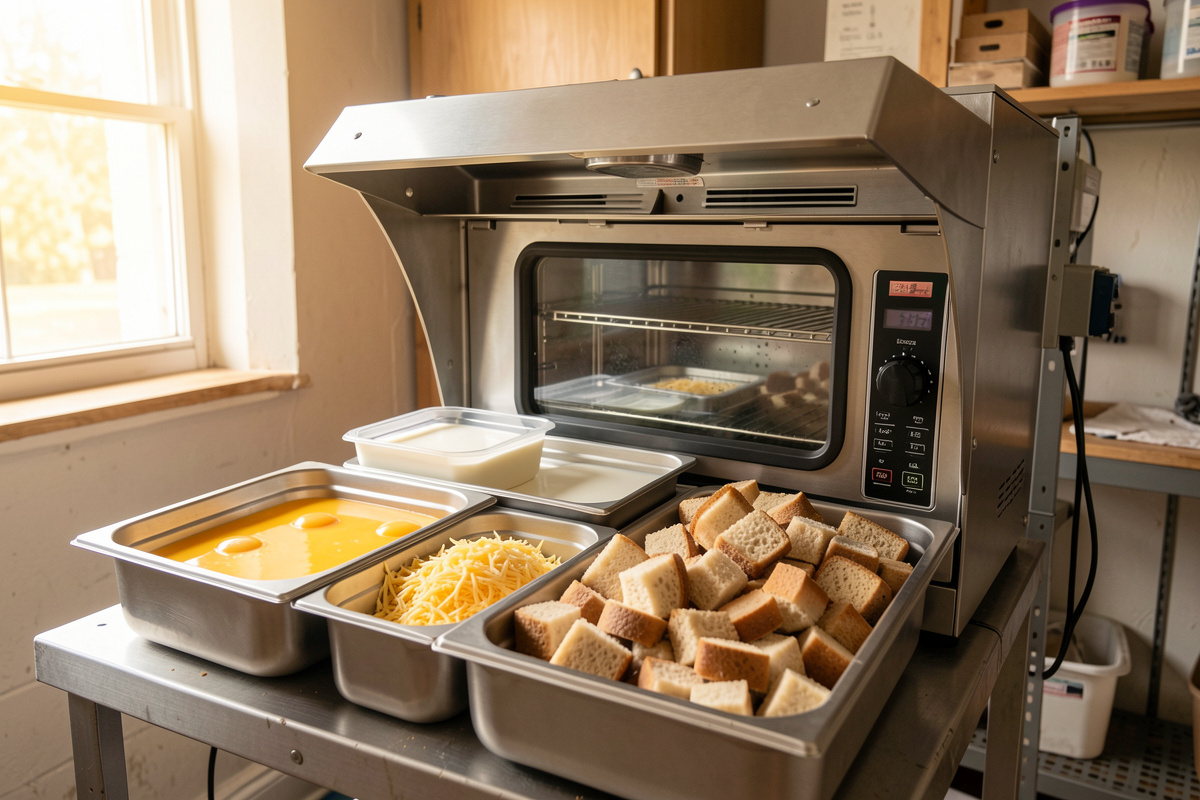
That single fact reorganizes everything you do with milk, eggs, cheese, butter, and bread. I run a Harvest Right Medium in a utility room I planned around its noise and heat, and I have logged enough dairy and egg loads to know where the easy wins are and where the marketing quietly skips the truth. This guide is the map: what each food actually does in the chamber, how to keep it safe on the way in and out, and which of these loads are worth your power bill. The detailed walkthroughs live in the spoke guides linked throughout — this page is the operator overview that ties them together.
Why Dairy, Eggs, and Baked Goods Are Their Own Category
This group behaves nothing like berries or zucchini. Three properties set it apart: high fat in cheese and butter, high free water in milk and yogurt, and trapped structural moisture in bread. Each fights the cycle differently, which is why I treat them as a distinct bench rather than lumping them with garden harvest loads.
Fat is the real antagonist. Sublimation removes ice, not oil, so the fat in a full-fat cheese or a stick of butter never leaves — it stays liquid-soft at room temperature and goes rancid on a clock fat sets, not one the machine controls. Free water is the opposite problem: milk and yogurt are mostly water that wants to slosh, foam, and creep up the tray sidewalls before it freezes solid. And bread hides its moisture inside a starch matrix that re-absorbs humidity the moment the chamber opens. Same machine, three completely different failure modes, and you plan each load around the one you are fighting.
My curing chamber taught me to trust logs over feelings, and that habit pays off here more than anywhere. The first time I ran cheese the way I run strawberries, I pulled a load that looked done and felt greasy — the snap test passed on the edges and failed in the center. The log told me what my eyes did not.
The Food-Safety Reality (Read This Before You Load Anything)
Here is the line I will not cross on this site: freeze drying is not a kill step. The cycle removes water and drops water activity low enough to stall microbial growth, but it does not destroy pathogens already present. USDA and FDA guidance treats commercial dried egg and dairy products as pasteurized precisely because the heat step happens before or during processing — your home machine does no such thing. Whatever you put in is what you get back, minus the water.
That has concrete consequences. Use pasteurized milk and dairy, never raw. With eggs, the Salmonella risk that lives in the raw product survives the chamber intact, so rehydrated freeze-dried eggs must be cooked thoroughly — USDA guidance for eggs is to cook until both the white and yolk are firm. I cover the specifics in the eggs guide, but the headline is non-negotiable: freeze-dried eggs are raw eggs with the water removed.
On storage, I report what operators commonly find and what manufacturers state — I do not guarantee shelf life, and neither should anyone selling you bags. Low water activity inhibits the bacteria and molds that need moisture, which is the whole point of getting a true final dry. But high-fat items break that rule on a different axis: rancidity is oxidation, not microbial spoilage, and no oxygen absorber stops fat from going off on its own timeline. When I judge a rehydrated dairy load, I am judging taste and texture — that is a quality call, never a safety clearance. If a product smells or tastes off, it goes in the bin regardless of how recently it was sealed.
For anything canning-adjacent or low-acid, I point you to USDA and the National Center for Home Food Preservation and stop there. Freeze drying does not replace those processes or their safety math.
How Each Food Behaves in the Chamber
The table below is the condensed version of my batch log for this category — what to expect before you commit a cycle. Cycle times are from my Medium-class machine at typical tray density; yours will vary with load weight and ambient temperature. Treat difficulty as “how easily a first-timer gets a clean result.”
| Food | Pre-Freeze | Typical Cycle | Difficulty | Storage Note | Rehydration |
|---|---|---|---|---|---|
| Whole milk | Pre-freeze in trays | 28-36 hrs | Moderate | Good (low fat risk in skim) | Whisk into water |
| Yogurt | Spread thin, pre-freeze | 24-30 hrs | Easy | Good, eat dry too | Stir, rest 5 min |
| Whole eggs (beaten) | Pre-freeze recommended | 26-34 hrs | Moderate | Good if fully dry | Rehydrate, then cook |
| Hard cheese (shredded) | Pre-freeze, shred fine | 30-45 hrs | Hard (fat) | Shorter; fat rancidity | Powder or melt |
| Butter | Pre-freeze in dollops | 30-40 hrs | Hard (fat) | Shortest; oxidizes | Limited success |
| Bread / baked goods | Slice, pre-freeze | 20-28 hrs | Easy | Good if sealed fast | Eat dry or refresh |
Notice the pattern: the easy wins (yogurt, bread) are low-fat and structurally cooperative, while the hard loads (cheese, butter) are fighting the one thing the machine cannot fix. If you are new to this category, start with yogurt drops and bread cubes before you spend a 40-hour cycle learning that butter barely works.
Pre-Freeze and Tray Prep: The Step That Makes or Breaks This Category
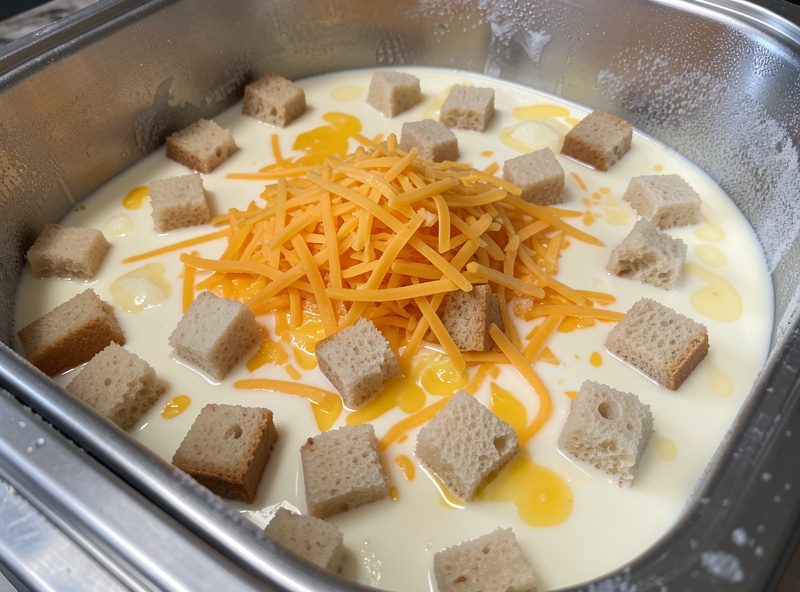
If there is one habit that separates a clean dairy load from a chamber I have to scrape out, it is pre-freezing. Loading liquid dairy or beaten egg into a tray and letting the machine’s freeze stage do all the work invites foaming, splatter, and uneven freezing that drags the whole cycle. I pre-freeze everything in this category solid in the chest freezer first, flat, then transfer the rigid trays straight into the chamber. The pre-freeze step is not optional insurance here the way it is for sturdier foods — it is the technique.
Tray depth is the other half. For milk, yogurt, and egg, I keep the liquid no deeper than a third of the tray, because a thick layer freezes a skin on top while the underside stays liquid, and that is exactly the load that fails the center check. Shallow and even beats deep and fast every time. For shredded cheese and bread cubes, I follow my normal tray density rules — single layer, room for vapor to escape, weighed and logged so the next batch has a reference. I write the load weight on a sticky note on the tray before it goes in; that number is what tells me, against the final weight, whether the dry actually finished.
One more prep note specific to eggs and milk: pre-freezing also gives you a safety buffer on the cold chain. You are putting a perishable product into a process that does not pasteurize it, so the less time it spends warm and wet, the better. Beat, pour, freeze solid, load — and keep the warm-and-liquid window short.
Milk, Yogurt, and Liquid Dairy
Liquids are a technique problem before they are a drying problem. The skill is getting an even, shallow layer that freezes solid before the vacuum pulls, because a sloshing tray is how you coat your chamber walls in frozen milk. I borrow directly from my liquids-on-trays method: fill no more than a third deep, pre-freeze the trays flat in the chest freezer, and load them already solid.
Milk freeze-dries into a sweet, shelf-stable powder that whisks back into water at roughly the original ratio — about a cup of water per cup of milk you started with, adjusted to taste. Skim and low-fat milk store far better than whole, because the lower fat content sidesteps the rancidity clock. Whole milk works and tastes better rehydrated, but I rotate it faster and accept that it is not a decade-long item. The full method, ratios, and my batch-log cycle times are in the milk guide.
Yogurt is the friendliest load in the entire category and the one I recommend to every new owner. Spread thin, it dries into tart, crispy shards that my kids eat straight off the tray, and it rehydrates into a usable yogurt for cooking. Live-culture survival is a question I get constantly — operators report that some cultures survive freeze drying and many commercial probiotic products are freeze-dried, but I describe that as reported, not as a guarantee I can make about your specific batch. The yogurt guide covers thickness, sweetening, and storage.
Eggs: The Most Useful Load With the Strictest Rules
Freeze-dried eggs are the prize of this category and the one with the least room for error. Beaten whole eggs dry into a powder that, properly rehydrated and cooked, makes genuinely good scrambled eggs — the single most practical dairy-aisle item a home operator can bank. But everything in the safety section above applies double here.
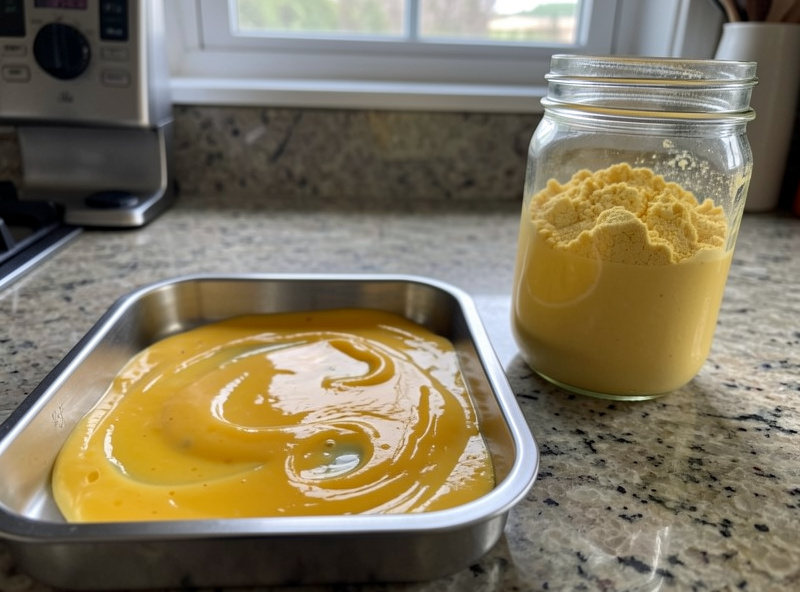
I beat the eggs first — never freeze-dry them in the shell — because uniform liquid dries evenly and there is no safe way to dry a whole egg in its shell. Pre-freezing the beaten egg helps the cycle and reduces splatter. The finished powder must be bone-dry: any residual moisture in a high-protein food is a storage problem you do not want. And the rule that governs the whole load: rehydrate, then cook thoroughly to firm, exactly as USDA advises for any egg dish. I lay out the beating ratio, dry-check, and powdering in the eggs at home guide.
Cheese and Butter: The Fat Problem
This is where I get blunt, because the affiliate-review genre will not. Cheese and butter are the two loads in this category that fight the machine on its weakest axis, and your results depend entirely on managing fat you cannot remove.
Hard, low-moisture cheeses — sharp cheddar, parmesan, shredded fine — give the best results. They freeze-dry into crunchy bites or powder, and the powder is excellent on popcorn or stirred into sauces. Soft, high-fat, high-moisture cheeses are a poor bet: they take forever, often fail the center snap test, and store badly. The honest verdict, with my full method and the cheeses I have actually run, is in the cheese guide.
Butter is the most-asked, least-rewarding load I run. It is nearly all fat, so there is very little water to sublimate, the cycle drags, and the result is greasy rather than dry. Some operators report success with butter powder for backpacking, and I describe the technique honestly in the butter guide — but I also tell you plainly that this is the one load where I think the power and the trays are usually better spent elsewhere. Fat rancidity is the same clock that limits my long-term storage on any high-fat item.
Bread and Baked Goods: Easy In, Fast Out
Bread is the surprise of this category — genuinely easy, fast, and useful, as long as you respect one rule: the moment the chamber opens, baked goods start pulling humidity back out of the air. Speed to the mylar bag matters more here than anywhere else.
Sliced bread, bagels, cake, and cookies all freeze-dry well because their moisture is modest and accessible. I slice or cube, pre-freeze, and run a short cycle — 20 to 28 hours in my log. The result is crisp and light, perfect for camping, and it either gets eaten dry or briefly refreshed. The catch is the same starch matrix that makes bread cooperative also makes it hygroscopic, so I seal fast with a fresh oxygen absorber and do not leave a tray sitting on the counter “to cool.” The full slicing, pre-freeze, and sealing routine is in the bread and baked goods guide.
Storage, Packaging, and Getting It Back
Packaging this category is where the food-safety humility and the fat clock collide. Everything here goes into mylar with an oxygen absorber sized to the bag, sealed with an impulse sealer, and labeled with the date — my standard line for any freeze-dried food. The difference is the rotation schedule.
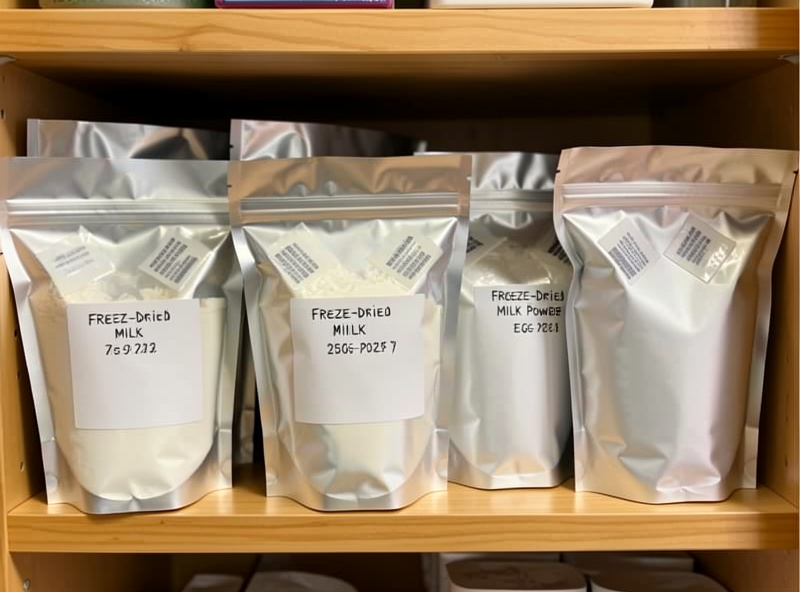
Low-fat items — skim milk powder, yogurt, eggs, bread — are the long-storage members of this group when fully dry and properly sealed, and operators commonly report multi-year storage under the manufacturer-stated conditions. High-fat items — whole milk, hard cheese, butter — get rotated on a much shorter clock because oxygen absorbers do nothing for rancidity. For anything I will use within weeks, I skip the mylar and use jar storage with an absorber, which makes daily kitchen use easy. Use the oxygen absorber sizing chart so you are not guessing.
Rehydration is its own skill, and dairy behaves differently from meat or vegetables — powders want whisking and a rest, not a soak. I pulled the dairy-specific technique into a dedicated freeze-dried dairy rehydration guide because the ratios and the “let it sit” timing are what separate usable milk from a grainy mess. Getting a true final dry in the first place is what makes any of this storage math hold.
The Batch Economics of This Category
I will not tell you a freeze dryer “pays for itself” on dairy and eggs, because the math depends entirely on what you put in and what you would have done with it otherwise. But I can give you the honest framing from my own log. Eggs are the standout value case: when a neighbor with hens has a glut, or eggs are cheap in season, banking a few dozen as powder for winter baking and camping is a genuinely sensible use of a cycle. Bought at full retail in midwinter purely to freeze-dry, the same eggs are a hobby expense, not a saving.
Milk follows the same logic. Powdering milk you already have before it turns is preservation; buying milk specifically to run a 30-hour cycle and pay for that power rarely beats commercial powdered milk on cost alone — it wins on control, ingredient knowledge, and not having a dozen tiny packets. Cheese and butter almost never pencil out on pure economics; they are convenience and novelty loads, and I run them knowing that. The discipline I borrowed from costing out my curing chamber is simple: log the input cost, the power, and the yield, and judge each load on its own line rather than on a fantasy ROI for the whole machine.
The Failures I Logged So You Can Skip Them
Every clean process in my batch log is paid for by an earlier failed one. The most common dairy failure is the false-done load: a milk or egg tray that snaps crisp on the rim and is still cold and pliable in the center. The fix is patience and weight — if the load has not lost the water mass the log predicts, it goes back in for extra dry time rather than into a bag. Sealing a not-quite-dry dairy load is how you grow something in a mylar bag.
The second failure is the foamed liquid load, which is almost always a pre-freeze shortcut — I poured warm milk straight into the chamber to save twenty minutes and spent an hour cleaning frozen froth off the acrylic door. The third is the greasy cheese load that never reaches a true dry because there was too much fat and too much depth; that one taught me to shred fine and accept a shorter storage window. None of these are safety failures in the way undercooked eggs would be — they are quality failures — but logging them is what turned this category from frustrating into routine.
The Gear That Actually Earns Its Place
This is a low-equipment category once you own the machine — the spend is consumables, not gadgets. The two things I will not run dairy without are a reliable impulse sealer and correctly sized oxygen absorbers, because a high-protein or high-fat load sealed in a weak bag is a load you cannot trust. A box of food-grade mylar bags with oxygen absorbers sized for your typical batch is the one purchase that pays for itself in peace of mind across this whole cluster. As an Amazon Associate I earn from qualifying purchases.
Beyond that, the useful extras are things you probably own: a chest freezer for pre-freezing, a kitchen scale to log load weights against final-dry weight, and a fine grater for cheese. I do not powder milk or egg in anything special — a clean blender jar handles it. Resist the accessory upsells the category loves; the discipline and the log do more for your results than any gadget. If you are still equipping the machine itself, my day-one accessories list covers what genuinely matters.
Where This Category Fits on the Preservation Bench
Fermentation, curing, and freeze drying are the same hobby at three different water activities — I just keep adding benches to the preservation line. Dairy and eggs are exactly where that perspective earns its keep, because freeze drying is often not the right tool for them. Hard cheese is frequently better aged than dried. Eggs in season are cheap and store fine in the fridge for weeks without burning a 30-hour cycle. The honest decision tree lives in my freeze drying vs other methods comparison and the more focused freeze drying vs dehydrating piece.
The case for freeze-drying this category is specific: you want shelf-stable scrambled eggs for camping, powdered milk for the pantry, or yogurt drops the kids will actually eat. The case against it is just as specific, and I would rather you run the cycle on the right load than learn the hard way that freeze drying is not always worth it. Before you commit, it is worth re-checking the running costs and your cycle-time expectations — a 40-hour butter load reads differently once you have priced the power.
Frequently Asked Questions
Does freeze drying make dairy and eggs safe to eat?
No. Freeze drying removes water and lowers water activity, which stalls microbial growth, but it does not kill pathogens. It is not pasteurization. Use pasteurized dairy, and cook rehydrated eggs thoroughly until firm, exactly as USDA advises for any egg dish.
How long does freeze-dried milk or eggs actually last?
Operators commonly report multi-year storage for fully dried, low-fat items like skim milk, eggs, and yogurt under manufacturer-stated mylar-and-oxygen-absorber conditions. High-fat items like whole milk, cheese, and butter rotate much faster because oxygen absorbers do not stop fat rancidity. These are reported figures, not guarantees.
Why is freeze drying cheese and butter so hard?
Sublimation removes ice, not fat. Cheese and butter are high in fat that never leaves the food, so the cycle drags, the center often fails the snap test, and the result stays greasy. Hard, low-moisture cheeses work best; butter is the least rewarding load in the category.
Can you freeze-dry whole eggs in the shell?
No. Always beat eggs first and dry them as a thin liquid layer. There is no safe way to freeze-dry an egg in its shell, and beaten egg dries evenly into a powder. Pre-freezing the beaten egg reduces splatter and helps the cycle.
Which dairy and egg loads should a beginner start with?
Yogurt drops and sliced bread are the easiest, fastest, most forgiving loads in this group. Both are low-fat and structurally cooperative. Save cheese and butter, which fight the fat clock, until you have a few clean cycles logged.
Do live yogurt cultures survive freeze drying?
Operators report that some cultures survive and many commercial probiotic supplements are freeze-dried, so survival is plausible. I describe it as commonly reported rather than guaranteed, because I cannot verify culture counts in a home batch without lab testing.