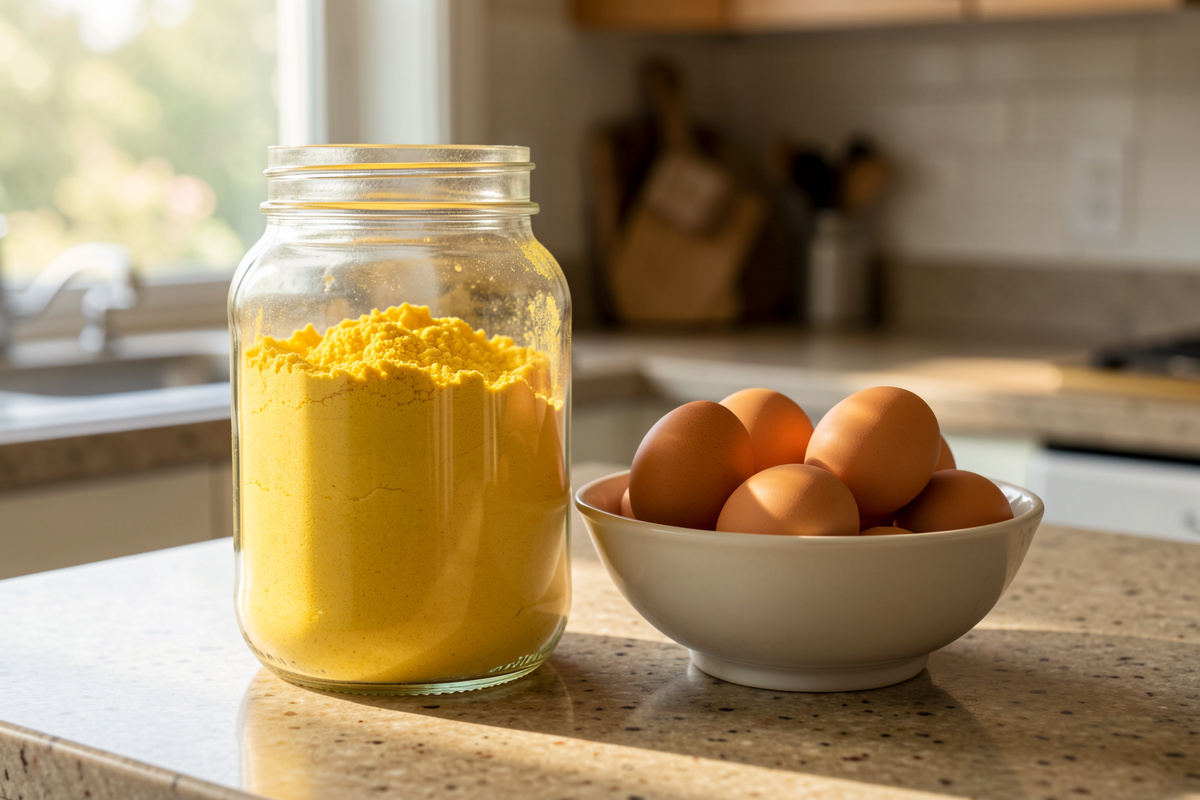

Freeze drying eggs at home means beating whole eggs, drying the liquid into a fine powder, and rehydrating it later into genuinely good scrambled eggs. In my batch log a Medium-class machine runs beaten egg in about 26 to 34 hours. It is the single most useful dairy-aisle item a home operator can bank — and the one with the strictest safety rules, because freeze drying does not pasteurize. Freeze-dried eggs are raw eggs with the water removed.
I run eggs more carefully than anything else on this bench, and this guide reflects that. Below is the method I actually use, the food-safety line I will not cross, and the storage and rehydration that turn a tray of beaten egg into breakfast months later. The wider category context is in my dairy, eggs and baked goods guide.
The Safety Rules, First and Non-Negotiable
This is a YMYL topic and I treat it like one. Freeze drying removes water and lowers water activity, which stalls microbial growth, but it is not a kill step — any Salmonella present in the raw egg survives the chamber intact. USDA and FDA treat commercial dried egg products as pasteurized precisely because a heat step happens during processing; your home machine does no such thing. That gives you three hard rules:
One: rehydrate, then cook thoroughly. USDA guidance for eggs is to cook until both the white and the yolk are firm. Never eat rehydrated egg raw or undercooked, and never sample raw beaten egg or raw egg powder. Two: keep the warm-and-liquid window short. Beat, pour, and freeze quickly so the egg spends as little time as possible warm and wet. Three: judge a finished batch only on whether it is bone-dry, not on whether it “looks safe.” Dryness is a quality and storage requirement; the cook step is the safety control. If you would not eat a raw egg, do not eat rehydrated egg that has not been cooked.
Always Beat First — Never the Shell
There is no safe way to freeze-dry an egg in its shell, so the first step is always to crack and beat. Uniform liquid dries evenly into a powder; a whole egg in its shell does not dry and is a contamination problem waiting to happen. I beat whole eggs smooth — yolks and whites together — with no added salt or milk for plain egg powder I want to store long term.
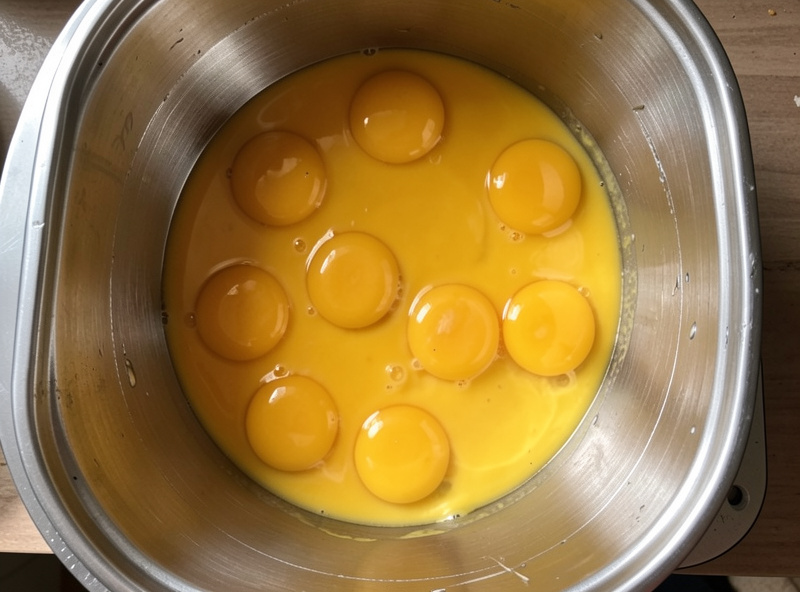
Then pre-freeze. I pour the beaten egg no deeper than a third of the tray, pre-freeze it flat and solid in the chest freezer, and load it rigid — the same pre-freeze discipline and liquids on trays method I use for milk. Pre-freezing reduces splatter, helps the cycle, and shortens that warm-and-liquid window the safety rules care about. I log the load weight before it goes in, because the final weight against that number is how I confirm the powder is truly dry.
The Cycle and the All-Important Dry Check
Beaten egg runs about 26 to 34 hours in my log — comparable to milk, since egg is also high in free water. The dry check matters more here than almost anywhere, because residual moisture in a high-protein food is a storage problem you do not want. The finished product must be a completely free-flowing powder or brittle sheet that snaps to dust, with no cool or tacky spots. Any softness in the center means it goes back in for extra dry time, full stop. My complete routine is in how to tell if freeze drying is done.
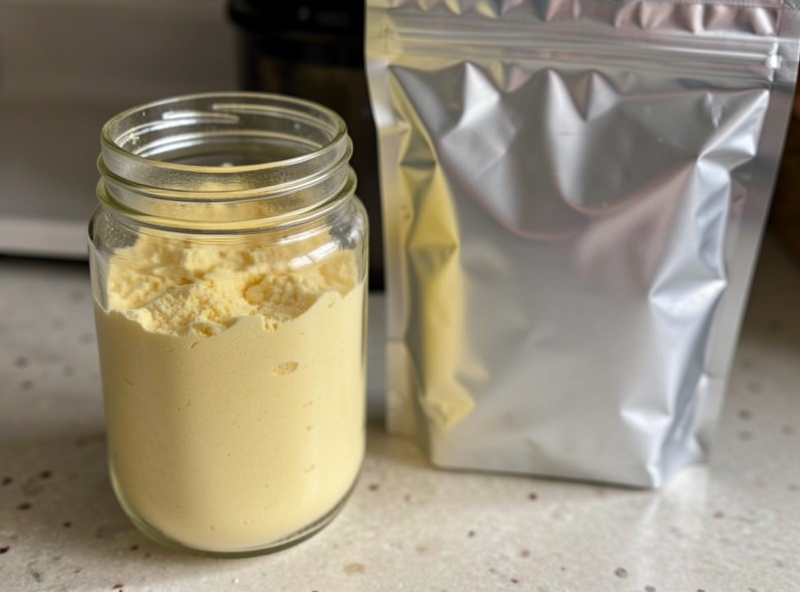
Once it passes, I break the sheets into powder — a clean blender jar does it in seconds — and store immediately, because egg powder is hygroscopic and starts pulling moisture the moment it is exposed. Given the long cycle, it is worth checking your running costs and batching a full machine of eggs when they are cheap or a neighbor’s hens are overproducing.
Which Egg Forms Work
Not every egg preparation freeze-dries equally. Here is what my log says about the common forms.
| Egg Form | Prep | Result | Best Use |
|---|---|---|---|
| Whole beaten (raw) | Beat smooth, pre-freeze | Fine powder | Scrambled eggs, baking |
| Pre-cooked scrambled | Scramble soft, crumble, freeze | Crumbly bits | Camping; cook step already done |
| Whites only | Beat, pre-freeze | Light powder | Baking, meringue (cook) |
| Yolks only | Beat, pre-freeze | Rich powder, fattier | Sauces; shorter storage |
| Whole egg in shell | Do not | Unsafe, will not dry | None |
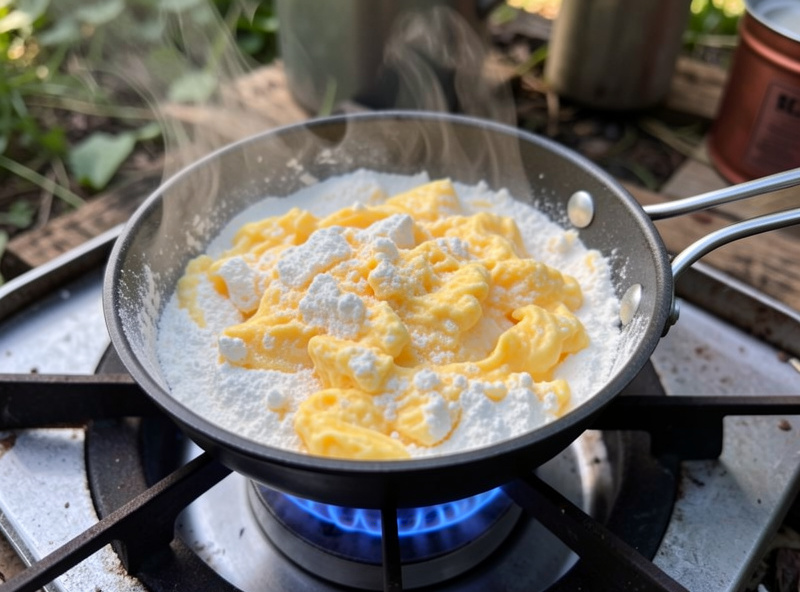
I keep two products on the shelf: plain raw-beaten whole-egg powder for the most flexibility, and pre-cooked scrambled crumble for camping. The pre-cooked route is worth understanding — scrambling soft first means the cook step is already done, so on the trail you only rehydrate and warm. It stores a little less elegantly than powder but it is the simpler field food. Yolk-only powder is richer and fattier, so I treat it as shorter-storage, the same fat logic that limits cheese.
Rehydrating and Cooking
To rehydrate, whisk roughly two tablespoons of egg powder with two tablespoons of water per egg you want, then let it rest a couple of minutes to fully hydrate before it hits the pan. The mix should look like beaten egg again. Then cook it the way you cook any egg — until firm, never runny — because the cook is your safety step, not the drying. The general whisk-and-rest technique for the whole category is in my dairy rehydration guide.
For baking, you can often add the egg powder to the dry ingredients and the corresponding water to the wet, the same trick that makes powdered milk so handy. Because the baked good is cooked through, this handles the egg safely as well. Rehydrated whole-egg powder makes legitimately good scrambled eggs — this is the payoff that makes eggs the prize of the category.
What Egg Powder Is Actually For
The reason eggs top this category is range. Powdered whole egg goes anywhere a fresh egg does once it is cooked: scrambles and omelets on a camping trip, the egg in a loaf of bread or a batch of pancakes, the bind in meatballs. A backpacking breakfast built around rehydrated egg weighs a fraction of the fresh version and needs no cold chain on the trail, which is exactly why it lives in my camping meal kit.
The honest economics, the same framing I bring from costing out every bench in my preservation line: eggs are a genuine value case when they are cheap or a neighbor’s hens are overproducing, and a hobby expense when bought at full retail in winter just to dry. Banking a glut you already have is preservation; chasing a payback on the machine is fantasy. If eggs turn out to be the wrong tool for what you are trying to store, my comparison of preservation methods lays out the alternatives. For eggs, though, when the supply is right, freeze drying is the one dairy-aisle load I would never give up.
Storage
Fully dried egg powder goes into mylar with an oxygen absorber, sealed and dated, sized with the absorber sizing chart. Whole-egg and white powder are low enough in fat to be long-storage members of this category when truly dry — operators commonly report multi-year storage under sealed conditions, which I report rather than guarantee. Label clearly; egg powder and milk powder look nearly identical and you do not want to guess. Keep a working jar of egg powder for everyday breakfasts and leave the mylar sealed for the long haul.
Frequently Asked Questions
Are freeze-dried eggs safe to eat?
Only after cooking. Freeze drying does not pasteurize, so any Salmonella in the raw egg survives. Rehydrate the powder, then cook until both white and yolk are firm, exactly as USDA advises. Never eat raw beaten egg, raw egg powder, or undercooked rehydrated egg.
Can you freeze-dry eggs in the shell?
No. There is no safe way to freeze-dry a whole egg in its shell, and it will not dry properly. Always crack and beat the eggs first so the uniform liquid dries evenly into a powder. Pre-freeze the beaten egg flat before loading.
How much egg powder equals one egg?
Roughly two tablespoons of whole-egg powder whisked with two tablespoons of water reconstitutes about one egg. Let it rest a couple of minutes to fully hydrate, then cook until firm. For baking you can add the powder to dry ingredients and the water to wet.
How long does it take to freeze-dry eggs?
In my batch log a Medium-class machine runs beaten whole egg in about 26 to 34 hours. Egg is high in free water, so the cycle is long. The powder must be completely dry with no tacky center before storage.
Should you freeze-dry raw or cooked eggs?
Both work. Raw beaten egg powder is the most flexible for scrambling and baking but must be cooked after rehydration. Pre-cooked scrambled egg, crumbled and dried, has the cook step already done and is simpler for camping, though it stores a little less elegantly.
How long do freeze-dried eggs last?
Operators commonly report multi-year storage for fully dried whole-egg and egg-white powder sealed in mylar with an oxygen absorber. Yolk-only powder is fattier and stores shorter. These are reported figures, not guarantees, and the powder must be bone-dry to begin with.