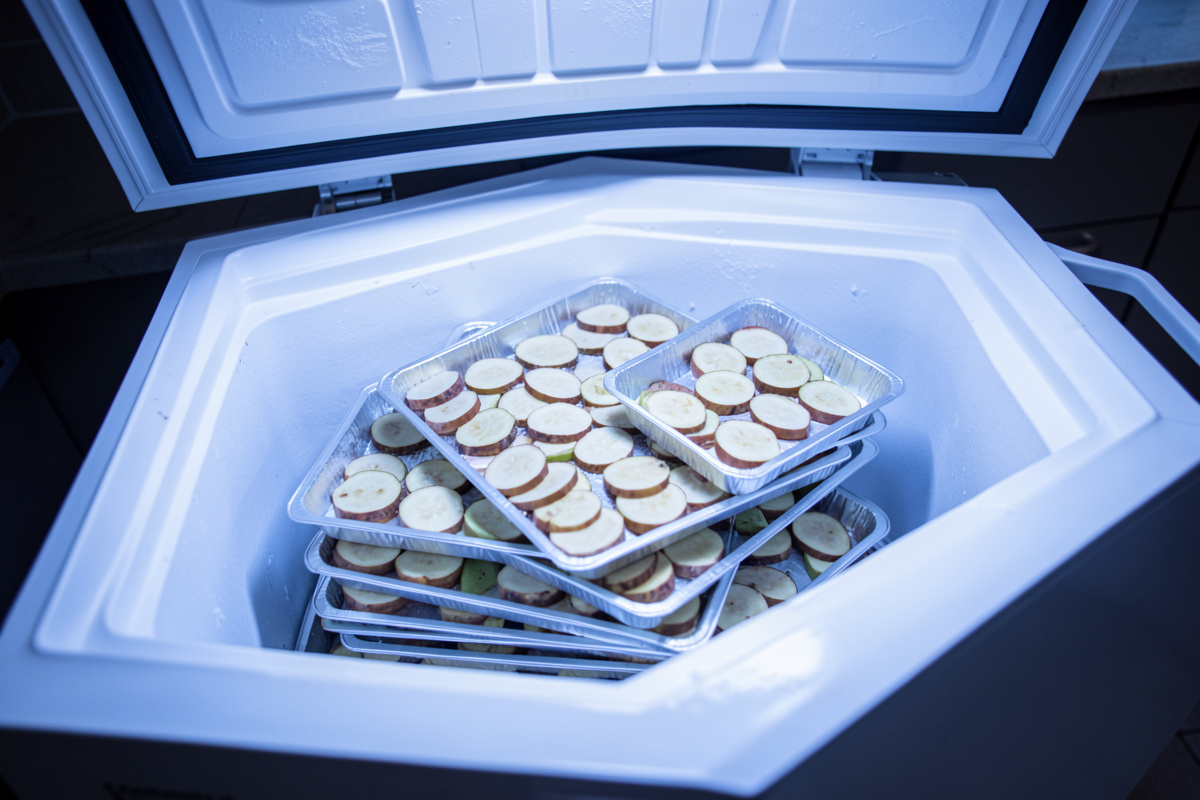

Pre-freezing food solid before it goes into the freeze dryer shortens the cycle, protects yield, and improves texture. In my batch log, pre-frozen loads finish hours faster than the same food rushed in warm, because the machine no longer has to spend its first stage just dropping the food to temperature. It is the cheapest process upgrade you can make, and it costs nothing but a little planning.
When I started, I treated the machine’s built-in freeze stage as enough and loaded food straight from the fridge. The cycles ran long, the results were uneven, and I blamed the machine. The fix was not a new accessory; it was a chest freezer and an overnight head start. Once I began freezing every load hard before it went in, cycle times tightened up and the results got more consistent batch to batch. This guide is the full pre-freezing method from that batch log: why it works, how cold is cold enough, and the chest-freezer routine I settled on.
Why Does Pre-Freezing Speed Up the Cycle?
Pre-freezing speeds the cycle because the freeze dryer’s first job is to get food below freezing before sublimation can begin. Food loaded warm forces the machine to spend hours pulling that heat out, while food already frozen solid skips most of that stage. In my log, that head start regularly trims several hours off a load.
Sublimation, the process that actually dries the food, only happens once the food is frozen and the chamber is under vacuum. The machine’s refrigeration has to freeze a warm load first, and that is dead time where no drying occurs. By freezing the food hard in a separate freezer, you hand the machine a load that is ready to start sublimating almost immediately after pull-down. The freeze stage still runs to be safe, but it has far less work to do. The result is a shorter total cycle and, just as important, a more predictable one, because you have removed the biggest source of variability: how warm the food was when it went in.
How Cold Should Food Be Before Loading?
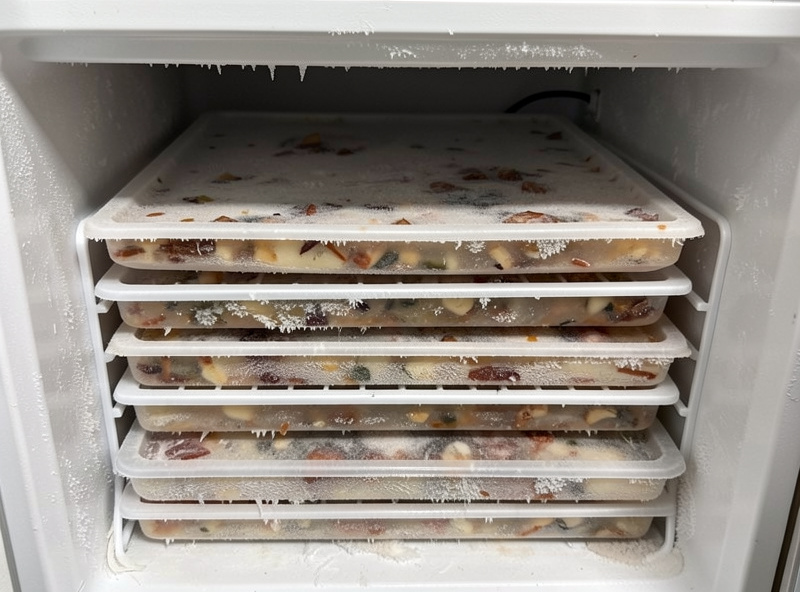
Food should be frozen completely solid, ideally in a chest or deep freezer running near 0°F, before it goes into the freeze dryer. A standard kitchen freezer at the warmer end works but freezes more slowly; a dedicated deep freezer gets food colder and faster, which improves both cycle time and texture.
The target is simple: no soft spots anywhere in the load. A tray that is solid at the edges but still slushy in the center will weep during pull-down and dry unevenly. I give loads a full overnight in the chest freezer, longer for thick or dense items, and I check that pieces are hard before they go in. Faster freezing also matters for quality, because food frozen quickly forms smaller ice crystals that do less damage to cell structure, which is why a deep freezer’s harvest rehydrates closer to fresh than something that froze slowly in a packed kitchen freezer. Cold and fast is the goal, and a chest freezer delivers both.
The Chest-Freezer Pre-Freeze Routine
My routine is to load food into trays or onto sheet pans, freeze them flat and hard overnight in a chest freezer, and transfer straight to the chamber. Freezing flat keeps pieces separate and the layer even, so the food goes into the machine already at the thin, uniform density that dries fastest and most reliably.
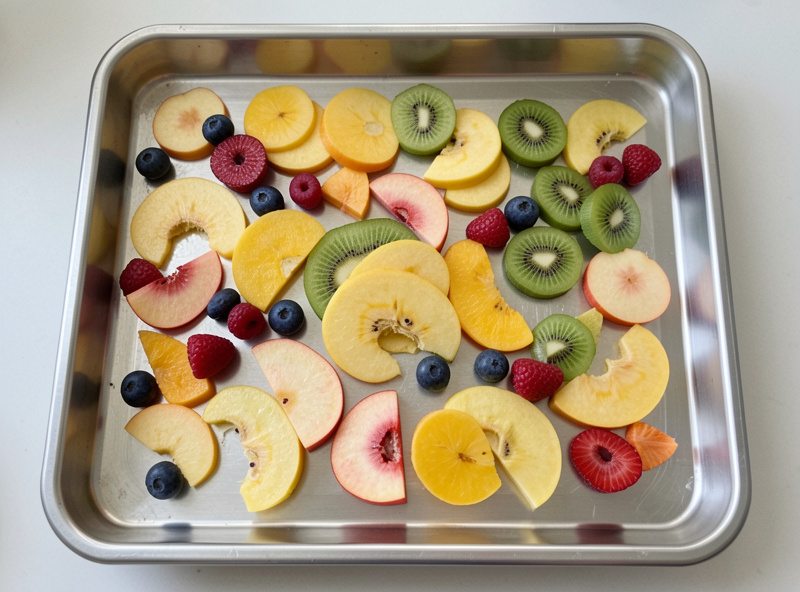
The sheet-pan trick is worth adopting early. Spreading fruit or vegetables flat on a lined sheet pan and freezing them loose stops everything clumping into a solid brick, which means you can load an even single layer into the tray rather than fighting a frozen mass. For things that hold their shape in the tray, I freeze the trays directly. Either way, the food hits the chamber pre-portioned, pre-frozen, and ready. A second chest freezer dedicated to this is one of the few upgrades I actually recommend, because it doubles as overflow storage for the garden glut that justifies the freeze dryer in the first place, a point I make in the wider ownership reality guide. A simple set of stainless half sheet pans is all you need to freeze flat.
As an Amazon Associate I earn from qualifying purchases.
Does Pre-Freezing Affect Tray Density?
Yes, pre-freezing and tray density work together. Freezing food flat lets you load a thin, even single layer, which is the density that dries fastest. A load that is both pre-frozen and thinly spread is the combination that turns an unpredictable cycle into a repeatable one you can log and trust.
The two variables compound. Pre-freezing removes the warm-up stage, and thin even density removes the slow-drying center, so together they attack the two biggest causes of long, failure-prone cycles. When I plan a load, I am thinking about both at once: freeze it hard, and spread it so no piece is buried. That is why the pre-freeze step and the loading step are really one decision. Get them right together and your batch log starts producing cycle times you can actually rely on, which is the whole point of running this machine like process equipment rather than guessing.
Common Pre-Freezing Mistakes
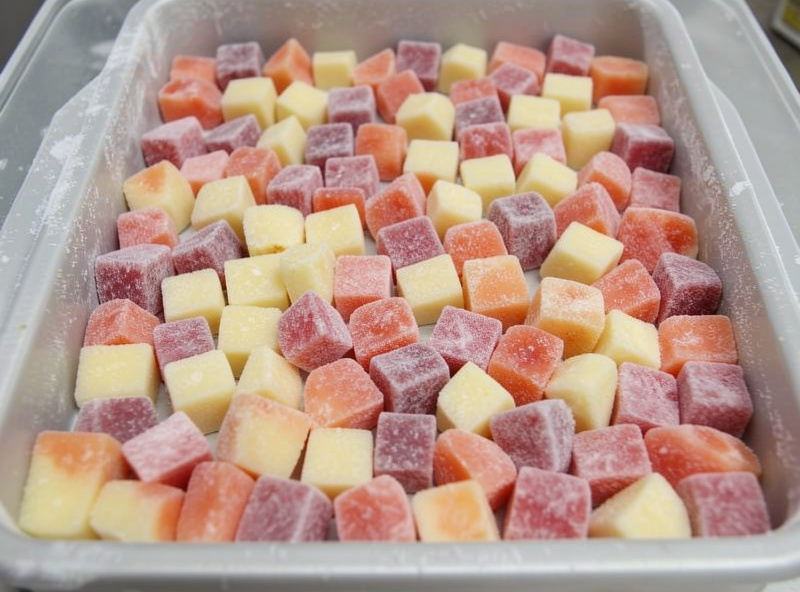
The most common pre-freezing mistakes are not freezing long enough, freezing food in a thick clump, and using a freezer that is too warm. Each leaves part of the load soft, which means uneven drying, a longer cycle, and a higher chance of failing the dry check in the center. All three are easy to avoid with a little planning.
Rushing is the usual culprit. Someone wants to run a load tonight, gives the food two hours in the freezer, and loads it half-frozen. The cycle runs long, the center stays moist, and the machine takes the blame. The fix is to plan a day ahead: prep and freeze in the evening, run the next morning. The other quiet mistake is overpacking the home freezer so it cannot keep up, which slows freezing and warms everything already inside. Give your pre-freeze the space and time it needs and the freeze dryer does the rest. This single habit, more than any setting, is what made my cycle times consistent.
Frequently Asked Questions
Do you have to pre-freeze food before freeze drying?
You do not have to, because the machine has its own freeze stage, but pre-freezing food solid shortens the cycle and improves even drying. Loading warm food forces the machine to freeze it down first, which adds hours of dead time.
How long should you pre-freeze before freeze drying?
Freeze food until it is completely solid with no soft spots, which usually means a full overnight in a chest or deep freezer. Thick or dense items need longer. The target is hard all the way through, not just at the edges.
How cold should food be before going in the freeze dryer?
Aim for food frozen solid in a deep freezer running near 0°F. A standard kitchen freezer works but freezes more slowly. Colder and faster freezing improves both cycle time and the texture of the rehydrated result.
Does pre-freezing improve freeze-dried food quality?
Yes. Faster, colder freezing forms smaller ice crystals that do less damage to cell structure, so the food rehydrates closer to fresh. Food that froze slowly in a packed warm freezer tends to come out mushier after rehydration.
Can you pre-freeze food right in the trays?
Yes, freezing food directly in the trays works well for items that hold their shape. For loose pieces like sliced fruit, freezing flat on a sheet pan first stops clumping so you can load a thin even layer into the tray.
What is the biggest pre-freezing mistake?
Not freezing long enough. Half-frozen food with a soft center weeps during pull-down, dries unevenly, runs a longer cycle, and often fails the dry check in the middle. Plan a day ahead and freeze the load solid overnight.