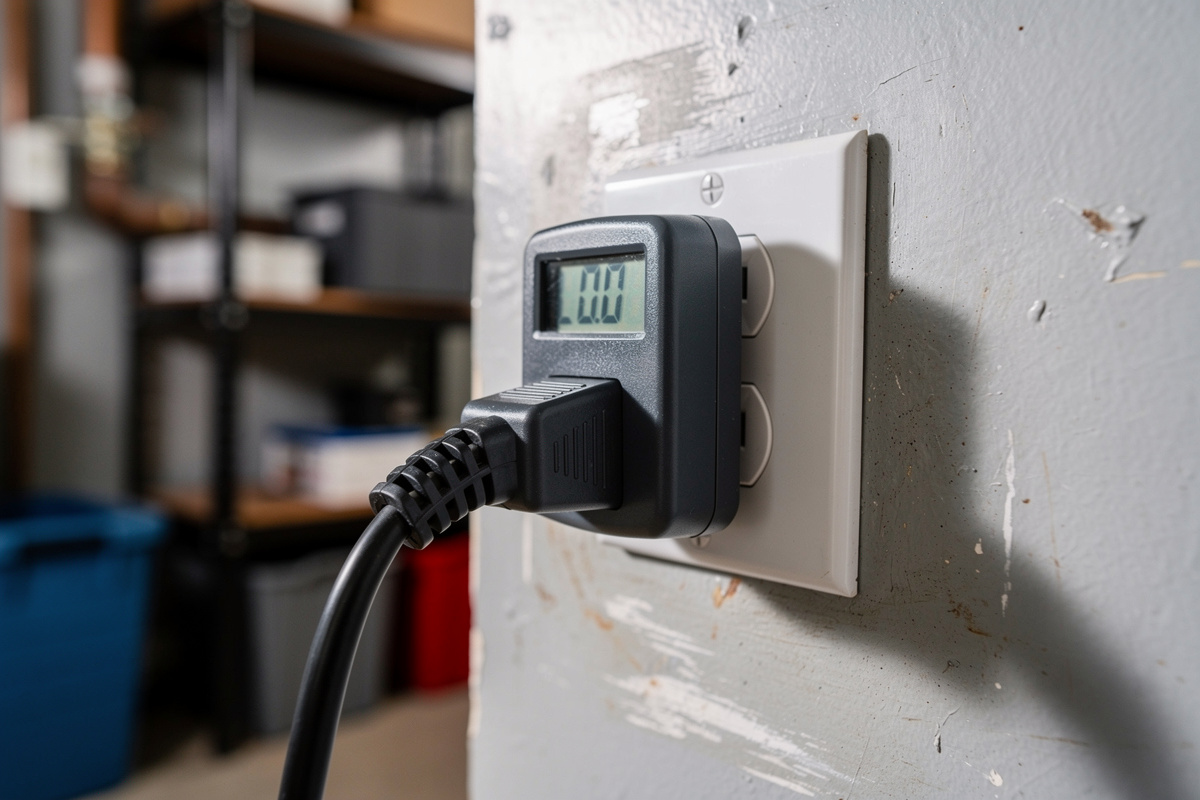

The freeze dryer electricity cost per batch is the number every prospective owner wants and almost nobody states honestly. You will find forum posts with confident single figures, and you should treat all of them — including any I might be tempted to give you — with suspicion, because the honest truth is that the cost swings wildly with your cycle length, your food, your room temperature, and above all your local electricity rate. What I can do, and what this article actually delivers, is show you how I measure mine with a plug-in meter and turn the result into a method you can run for your own kitchen. A measured range you can adapt beats a borrowed number you cannot.
I run a Harvest Right Medium-class machine on a standard oil pump, and I have logged metered batches across seasons and food types. Everything below comes from that log and a plug-in energy meter, not from a spec sheet — because the spec sheet gives you a rated draw, and rated draw is not the same as energy used over a long, variable cycle.
Why a single “cost per batch” number is a trap
A freeze dryer does not draw constant power. It moves through phases — an initial freeze, a long vacuum-and-heat dry phase, and a final-dry tail — and each phase draws differently. The compressor works hardest fighting heat, the heaters cycle as they drive sublimation, and the pump runs continuously throughout. So “watts” off a label tells you almost nothing about “kilowatt-hours used,” which is what your utility actually bills. Energy is power multiplied by time, and the time is the variable that the marketing number quietly fixes at an optimistic minimum.
Stack on top of that the things that change the time and the power: how thoroughly you pre-froze (a warm load makes the machine do the freezing work itself, lengthening everything), how much moisture the food holds, how densely you packed the trays, and how warm the room is. A batch of light, well pre-frozen berries in a cool utility room is a different energy event from a packed load of liquids in a warm summer kitchen. Anyone quoting you one figure has silently assumed one specific scenario.
How I actually measure it
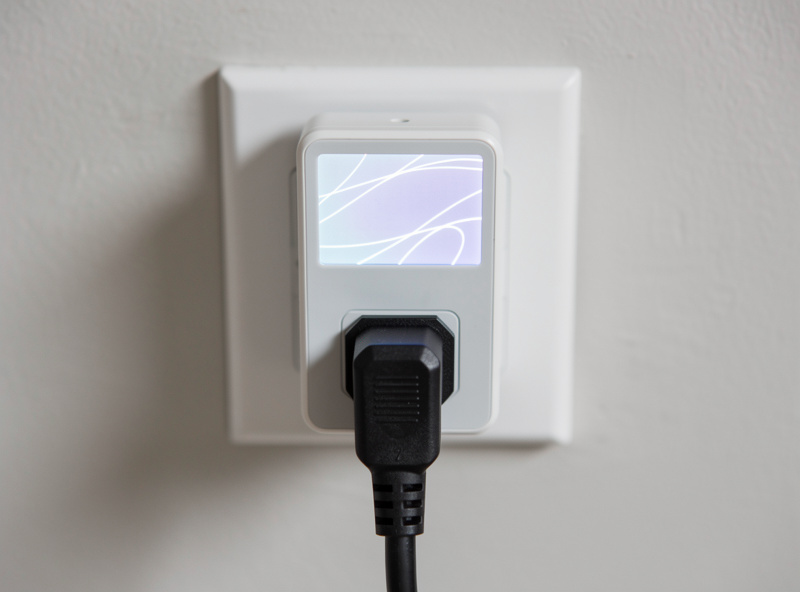
The method is simple and I would rather teach it than hand you a number to memorize. I put a plug-in energy meter — the kind that sits between the wall outlet and the machine’s plug and reads accumulated kilowatt-hours — inline before the batch starts, zero it, and read the total when the cycle and any extra dry time finish. That accumulated kWh figure is the honest energy cost of that specific batch, including every phase and the continuously-running pump.
Then the cost is just arithmetic: kilowatt-hours used multiplied by your electricity rate per kilowatt-hour. That rate is on your utility bill, and it is the single biggest reason costs differ between owners. The same identical batch can cost very different amounts in two different regions purely because of the rate. This is exactly why I refuse to give you a dollar figure as if it were universal — I would be quietly substituting my rate for yours, which can be off by a factor of three or four.
| What drives the cost | Effect on energy used | What you control |
|---|---|---|
| Cycle length | Longer cycle, more kWh — the dominant factor | Pre-freeze well; do not overload moisture or density |
| Pre-freezing | A warm load forces the machine to do more freezing work | Pre-freeze hard in a chest freezer first |
| Food moisture and density | Wetter, denser loads run longer | Spread loads sensibly; mind tray density |
| Ambient room temperature | A warm room makes the compressor work harder | Site in a cooler space, within reason |
| Your electricity rate | Direct multiplier on the whole bill | Nothing per batch — but it is why my number is not yours |
Notice that almost everything in that table is something you influence with batch discipline. The owners who complain about running cost are very often the owners loading warm, wet, densely packed trays and then running long cycles to compensate. Good pre-freezing and sensible loading are not just about food quality — they are the cheapest way to lower your per-batch energy bill.
Putting the method to work: a worked example
Here is the shape of the calculation without me pretending my numbers are yours. Suppose your metered batch reads some accumulated kilowatt-hours on the energy meter at the end of the cycle. You take that figure and multiply by your own rate per kWh from your bill. That product is your true cost for that batch. Run the same measurement across a few different food types and you will quickly build a little table of your own: berries cost roughly this, a packed meal load costs roughly that, a quick light batch costs less. Within a few batches you stop guessing entirely.
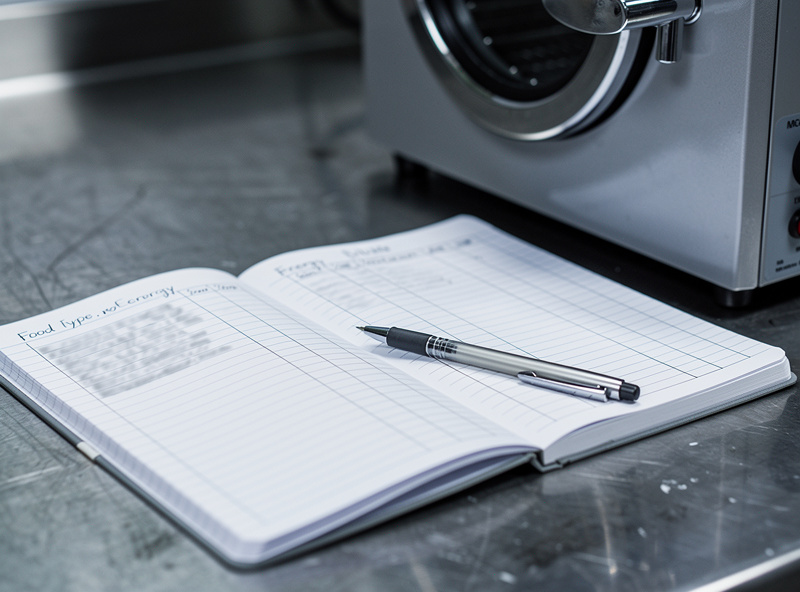
The reason I push the method rather than a figure is that it ages well and travels. Electricity rates change. You might move. You might switch food types. A method you understand keeps working; a number you memorized goes stale the moment any variable shifts. And it protects you from the forum confidently-wrong figures, because once you have measured your own machine you will know exactly how far off those were.
The seasonal and siting lever
One genuinely useful finding from my own log: ambient temperature matters, and it is a lever you can pull. A cooler room means the compressor spends less energy fighting heat, which nudges both the cycle length and the per-batch energy down. This is part of why basements and cool utility rooms are popular machine homes — they are quieter and a bit cheaper to run. But there is a limit. A genuinely freezing garage introduces its own headaches, including how the pump oil behaves in the cold and how the machine handles a cold start, so “colder is cheaper” holds up to a point and then stops. Cool and stable beats cold and extreme.
Affiliate disclosure: The links below are Amazon affiliate links — as an Amazon Associate I earn from qualifying purchases at no extra cost to you. The machine itself is sold direct by the manufacturer, not Amazon. These are the metering tools I actually use to answer this question for my own machine.
- A plug-in energy meter — the single tool that turns this question from guesswork into a number you trust.
- A chest freezer for pre-freezing — the cheapest way to shorten cycles and lower per-batch energy.
So what does a batch cost?
The honest answer is: measure yours and you will know precisely; trust a forum and you will be guessing. Across my logged batches the cost is real but rarely shocking — it is a meaningful line item over a year of regular use, not a reason to leave the machine unplugged. For most owners with a normal electricity rate, the per-batch energy cost is a modest amount that fades into the background of the much larger consumable and time costs. What turns it into a problem is bad batch discipline: warm, wet, overpacked loads running long cycles. Fix the discipline and the energy cost mostly takes care of itself.
Power is one of the five ownership realities I walk through in the full freeze dryer ownership guide — alongside the noise, the install, the pump maintenance, and the cycle times. If the constant running has you thinking about where the machine should live, my piece on how loud a freeze dryer really is covers the siting decision in depth, and the same cooler-room logic that helps the energy bill also helps the noise.
Related reading
- Is a freeze dryer worth it? The full ownership reality
- How loud is a freeze dryer? The noise reality and siting
- Best home freeze dryer: how to choose the right one
Frequently asked questions
How much does it cost in electricity to run a freeze dryer per batch?
It depends on cycle length, food type, tray density, room temperature, and above all your local electricity rate. Rather than trust a single quoted figure, measure your batch with a plug-in energy meter and multiply the accumulated kilowatt-hours by your own rate per kWh. For most owners on a normal rate it is a modest, real cost rather than a shocking one.
Why do people quote such different running costs?
Because every variable differs: cycle lengths, food moisture, loading, ambient temperature, and especially electricity rates, which can vary by a factor of three or four between regions. A confident single number has quietly assumed one specific scenario that may be nothing like yours.
How do I measure my freeze dryer’s energy use?
Put a plug-in kilowatt-hour energy meter between the wall outlet and the machine’s plug, zero it before the batch, and read the accumulated kWh when the cycle and any extra dry time finish. Multiply that by your electricity rate for the true per-batch cost.
Can I lower my freeze dryer running cost?
Yes. Pre-freeze loads hard so the machine does less freezing work, avoid overpacking moisture and density that lengthen cycles, and site the machine in a cooler room within reason so the compressor works less. Most running-cost complaints trace back to warm, wet, overloaded batches running long.
Does running a freeze dryer in a cold garage save money?
A cooler room generally lowers energy use because the compressor fights less heat, but a genuinely freezing garage causes its own problems with cold pump oil and cold starts. Cool and stable saves money; cold and extreme creates new headaches.