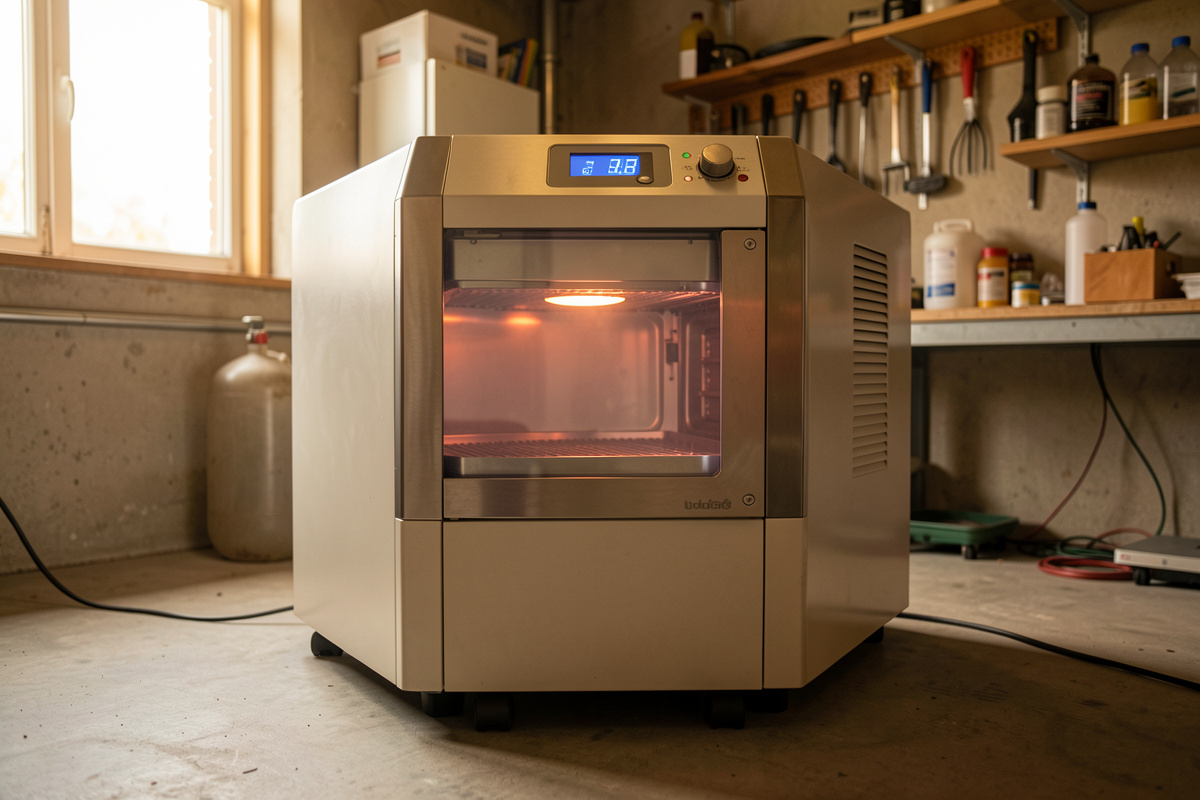

A freeze dryer cycle taking too long is the most over-reported “fault” in the hobby, and in my batch log it is almost never the machine. Cycle length is driven by load weight, tray density, and pre-freeze quality. The same strawberries that finish in roughly 30 hours at a sensible load will push past 45 hours if I crowd the trays. Before you suspect a broken unit, weigh the load and check it against your own baseline.
I run a Harvest Right Medium-class unit on a standard oil pump, and I have logged every batch for years specifically so I can answer this question with data instead of a shrug. A “long” cycle only means something relative to what that exact food at that exact load normally does for you. This guide walks the real causes in the order I check them, the handful that actually point at the machine, and how to stop having long cycles in the first place. It is a deep dive under my broader freeze dryer troubleshooting guide.
What Counts as Too Long?
There is no universal number, and any site that gives you one is guessing. In my log, lean loads of berries or herbs finish in roughly a day to a day and a half; dense or wet loads like soups and heavily loaded meats can run two to three days; and a genuinely overloaded tray set can run longer still. “Too long” means longer than your own logged baseline for the same food at the same load weight, by a meaningful margin and not just a few hours.
This is exactly why the batch log matters more than any published cycle chart. The machine, the room temperature, the altitude, and the food all move the number. My honest timing data lives in the real cycle times reference, but your own log is the only baseline that tells you whether this batch is abnormal or just behaving like the heavy load it is.
The Real Causes, In the Order I Check Them
When a cycle runs long, I work cheap-and-reversible before expensive-and-mechanical. Four causes account for nearly every long cycle in my records: an overloaded or too-dense tray set, a skipped or weak pre-freeze, food loaded too wet or too deep, and a warm room fighting the refrigeration. All four are batch-planning issues, not repairs. The machine causes — tired pump, weak refrigeration — are real but come last because they are rarer and you confirm them by ruling the others out first.
The discipline is to change one variable at a time. If a load ran long, I do not simultaneously thin the trays, pre-freeze harder, and move the machine. I change the single most likely cause from the list above, re-run, and log the result. That is how you learn your machine instead of just reacting to it.
Overloaded and Over-Dense Trays
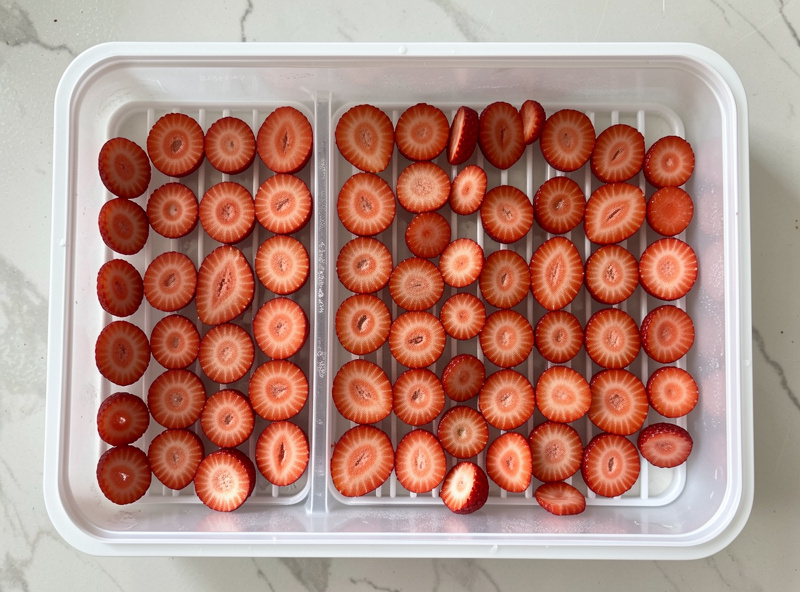
The number one cause, full stop. Sublimation has to pull vapor out of the entire mass of food, and a tray packed into a solid slab dries from the outside in — slowly. Weight is only half of it; density and thickness matter as much. A tray with two pounds spread thin dries faster than a tray with the same two pounds mounded into a brick. In my log, dropping load weight by a quarter and spreading it evenly routinely cuts hours off the cycle.
The fix is to standardize: same trays, same weights, food spread to an even depth with gaps for vapor to escape. My full method is in the tray loading density rules, and it is the single highest-leverage change most owners can make. If your cycles are unpredictably long, you almost certainly have inconsistent loading.
Weak or Skipped Pre-Freeze
Pre-freezing in a chest freezer before the food ever goes in the chamber is the biggest lever I have on cycle time, and skipping it is a classic long-cycle cause. If the machine has to do all the freezing itself from room temperature, the refrigeration spends hours just getting the load cold before sublimation can even begin properly. Food that goes in already deeply frozen lets the vacuum and dry stages start from a better place.
I pre-freeze most loads solid in the chest freezer, ideally overnight, before they ever see the machine. The why and the how are in my pre-freezing guide. If you are not pre-freezing and your cycles run long, fix that before you change anything else — it is free and it works.
Food Loaded Too Wet or Too Deep
High-moisture and liquid loads carry more water to remove, so they legitimately run longer — that is physics, not a fault. The mistake is running them deep. A tray of liquid poured too thick has a long way for vapor to travel out of the center. Soups, purees, and high-water vegetables all benefit from being run shallower and, where it makes sense, pre-concentrated. Expecting a deep tray of soup to match a thin tray of berries is an unfair comparison to put on the machine.
For liquids specifically, depth control is the whole game; my method is in the liquids on trays guide. And if a long cycle ends with food that is still cold-soft in the middle, that is a related but distinct problem — see the food still wet guide, because the fix there is dry time and loading, not the timer.
A Warm Room Fighting the Refrigeration
Ambient temperature matters more than most owners expect. A freeze dryer dumps heat from its refrigeration cycle, and in a hot room — a summer garage, a closed utility closet with no airflow — the machine works harder and longer to hold its cold temperatures. I deliberately planned my utility-room install around heat and airflow for this reason. If your cycles got longer when the weather got hot, the room is a prime suspect.
The fix is airflow and a cooler ambient: give the machine breathing room, keep it out of direct heat, and ventilate the space. This is part of the broader siting reality covered in my where to put a freeze dryer guide. None of this is a repair — it is install hygiene.
When It Actually Is the Machine
After load, pre-freeze, depth, and room are ruled out, two machine causes remain. A tired vacuum pump on saturated oil cannot hold the deep vacuum that fast sublimation needs, so cycles drag — and that overlaps directly with not reaching vacuum at all. Cloudy, milky pump oil is the tell. Weak refrigeration, where the machine struggles to reach or hold its cold temperature, is rarer and usually comes with other symptoms like excessive run time on every load regardless of what you change.
Check pump oil clarity first because it is cheap and common; my routine is in the pump care guide, and the diagnostic for a pump that won’t pull is in the not reaching vacuum guide. If the oil is fresh, the seal is good, the load is sane, and it still runs long on every batch, that is when you document it from your log and contact Harvest Right support — refrigeration faults are technician territory, not driveway repairs.
How to Stop Having Long Cycles
The operators who stop complaining about cycle time are the ones who standardized. Same trays, same weights, pre-frozen solid, loaded to an even depth, run in a sensible room, on a pump with clean oil. Do that and “long cycle” stops being a mystery and becomes a predictable number you can plan around. The log is what turns guesswork into a routine — my curing chamber taught me to trust logged data over feelings, and the freeze dryer just runs colder and louder.
Frequently Asked Questions
How long should a normal freeze dryer cycle take?
It depends on the food and load. In my log, lean loads of berries or herbs finish in roughly a day to a day and a half, while dense or wet loads can run two to three days. Compare against your own logged baseline for that food, not a published average.
Why did my freeze dryer cycle suddenly get longer?
The most common reasons are a heavier or denser load than usual, skipping the pre-freeze, or a warmer room. A sudden change on the same food usually points at saturated pump oil or a hot ambient temperature rather than a broken machine.
Does pre-freezing really shorten the cycle?
Yes, noticeably. Food loaded already deeply frozen lets the dry stage start from a better place instead of the machine spending hours freezing it from room temperature. Pre-freezing in a chest freezer is the single biggest lever I have on cycle time.
Can a long cycle damage my food or the machine?
A long cycle itself does not damage the machine; it is just working. The risk is running a tired pump on saturated oil, which strains it. For food, the concern is the opposite problem of stopping too early, which leaves it under-dried.
When is a long cycle actually a machine fault?
Only after you rule out load weight, pre-freeze, load depth, and room temperature. If clean oil, a good seal, and a sane load still produce long cycles on every batch, suspect a tired pump or weak refrigeration and contact support with your log.