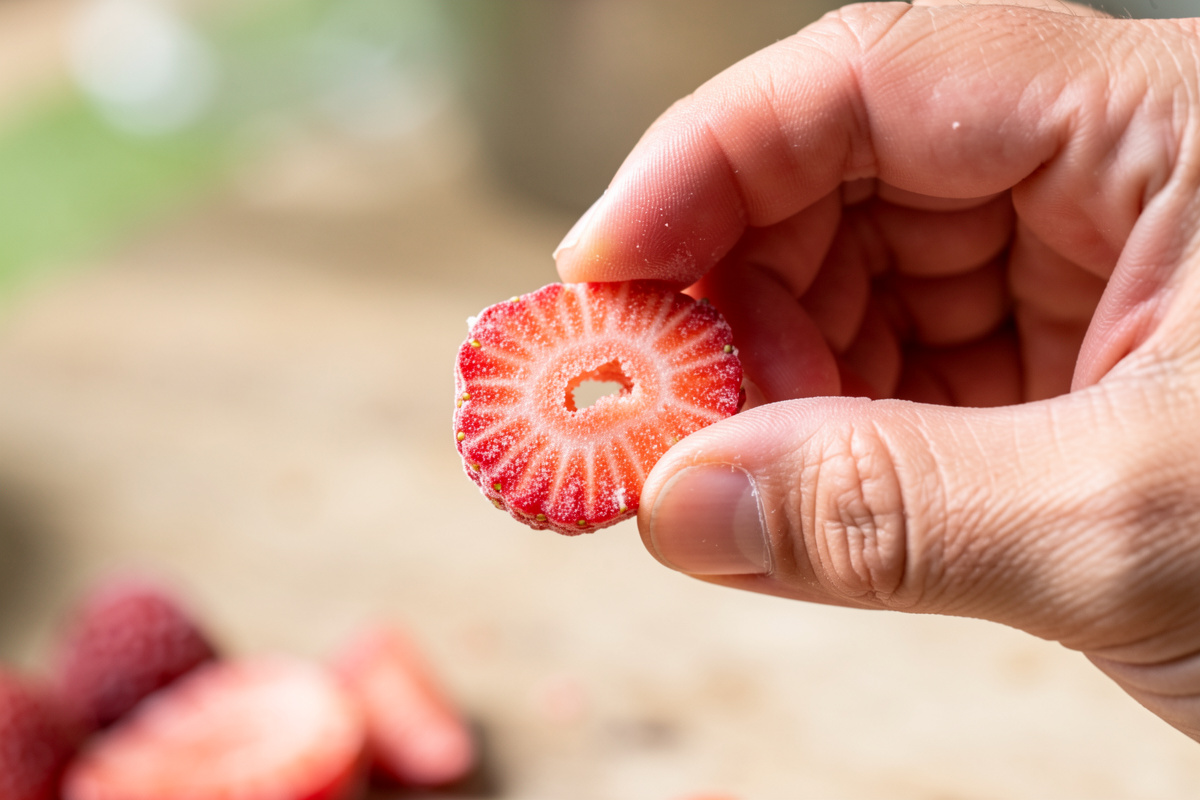

Food that comes out of a freeze dryer wet, cold, or bendy did not finish drying — and that is a process outcome, not usually a broken machine. In my batch log, the moisture almost always hides in the same three places: the center of a dense piece, the thickest part of the load, and the bottom tray. The fix is rarely a repair. It is more dry time, thinner loading, better pre-freezing, and above all verifying doneness by checking the food instead of trusting the timer.
This one matters more than the average troubleshooting question because under-dried food is a storage problem, not just a quality one. Residual moisture is exactly what shortens shelf life and invites spoilage, so I treat doneness as a check I will not skip and storage safety as a report-not-guarantee topic that defers to official guidance. I run a Harvest Right Medium-class unit and have pulled plenty of “done” batches that failed the snap test — they taught me the discipline below. This is a deep dive under my broader freeze dryer troubleshooting guide.
Why Food Comes Out Wet
Freeze drying removes water by sublimation under vacuum, working from the outside of each piece inward. The surfaces and the top tray finish first; the dense centers and the bottom tray finish last. When a batch ends before that slowest part is done, you get food that looks dry on the outside but is cold, soft, or moist in the middle. The timer ran out, not the moisture. This is why the most common “wet food” cause is simply a cycle that needed more dry time than it got.
Three things make this worse: loading too dense or too deep so the center is farther from the surface, skipping the pre-freeze so the machine started behind, and trusting the preset time instead of checking. None of these are machine faults. They are the same batch-planning levers behind long cycles, which is why this guide and my cycle taking too long guide are two sides of one coin.
The Dry-Check Discipline: Verify, Don’t Assume
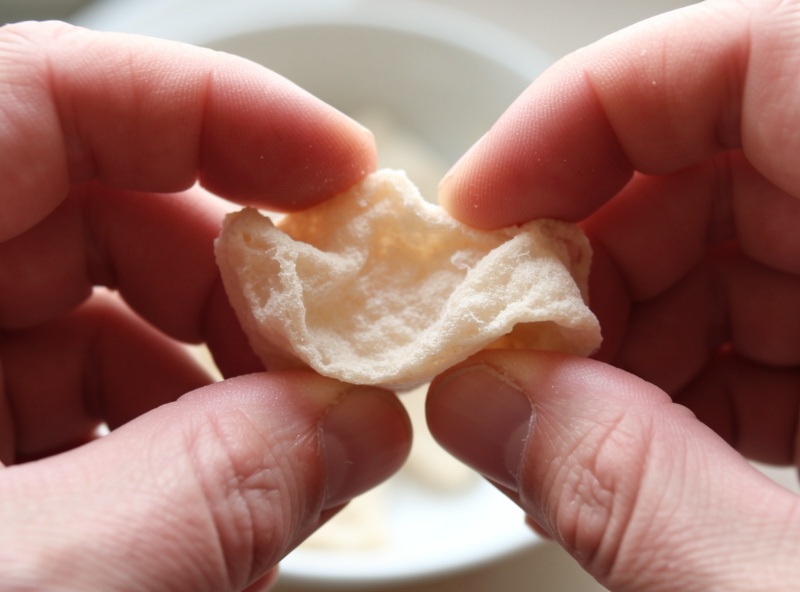
The single habit that ends wet-food problems is checking doneness instead of believing the timer. My check is simple and I do it every batch: pull a piece from the densest part of the load and from the bottom tray, let it come to room temperature for a moment, and snap it. Properly dried food snaps or crumbles cleanly and feels dry and room-temperature in the center. If it bends, feels cool, or is soft or spongy inside, it is not done — full stop.
I also weigh against the log. A finished batch has lost the water weight I expect for that food — water-heavy produce like berries leaves the chamber at roughly a tenth of its loaded weight — and a batch that is still heavy is still wet. Between the snap test and the weight check, you rarely get fooled. The full method, including the tells for different food types, is in my how to tell if freeze drying is done guide — this is the most important skill in the whole hobby.
| What You See | Likely Cause | The Fix |
|---|---|---|
| Cold or soft centers, surfaces dry | Cycle ended before centers finished | Add dry time, re-run the batch |
| Bottom tray wet, top trays fine | Uneven loading or stacking | Rotate trays, load more evenly |
| Whole batch under-dried | Overloaded, too deep, or no pre-freeze | Thin the load, pre-freeze, more time |
| Bends instead of snapping | Residual moisture throughout | Return to chamber for added dry time |
The Fix Is Almost Always More Dry Time
When a batch fails the check, the answer is usually to put it straight back in for added dry time. A freeze dryer lets you extend or re-run the dry stage, and because the food is already mostly there, the added time is often modest. Do not unpack, bag, or store a batch that failed the snap test — sealing wet food in mylar is how you get spoilage in storage. Re-run first, re-check, then package.
If you find yourself adding dry time on every batch, the real fix is upstream in how you load. My guidance on when and how to extend a cycle is in the extra dry time guide. Adding time is the immediate fix; loading better is the permanent one.
Stop It Happening: Load and Pre-Freeze
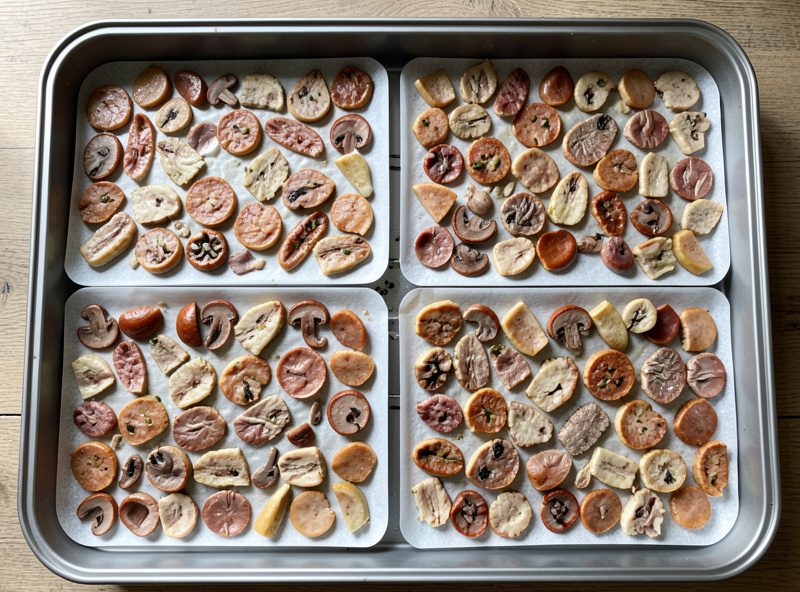
The permanent cure for wet food is in the loading. Spread food to an even depth so no piece has an unusually thick center, keep loads consistent so dry times are predictable, and do not mound trays into bricks. Even, sensible loading lets the whole batch finish close to the same time instead of leaving stragglers in the dense spots. My density rules are in the tray loading guide.
Pre-freezing helps here too. Food loaded already deeply frozen gives the dry stage a head start and dries more uniformly than food the machine had to freeze from room temperature. The why and how are in my pre-freezing guide. Even loading plus a solid pre-freeze eliminates most wet-food batches before they happen.
When Wet Food Points at the Machine
Occasionally wet food is a symptom of a real fault rather than a loading issue — and the link is vacuum. If the machine cannot reach or hold deep vacuum, sublimation slows or stalls no matter how long you run, and the food stays wet. The tell is wet food that persists even with sane loading, good pre-freezing, and generous dry time. That points back at the seal-and-oil chain, not your trays.
If thinning the load and adding time does not fix it, check the vacuum. The full sequence is in my not reaching vacuum guide, and a pump running on saturated oil is a common culprit — see the pump care guide. Wet food plus poor pull-down together means the machine, not the recipe.
A Word on Storage Safety
This is the part I will not soften. Under-dried food carries residual moisture that undermines storage and can lead to spoilage, so a batch that fails the doneness check should never go into long-term storage as-is. I report what is commonly observed and point to manufacturer and official guidance — the National Center for Home Food Preservation is the reference I trust for storage and drying — rather than guaranteeing any shelf life. The honest rule: if you are not confident it passed the snap-and-weight check, it is not ready to seal. When in doubt, more dry time is always the cheaper mistake than sealing moisture into a mylar bag.
Frequently Asked Questions
Why is my food still wet after freeze drying?
Almost always because the cycle ended before the slowest part finished. Dense centers and the bottom tray dry last, so a batch that hit its timer can still be moist inside. The usual causes are too-dense loading, a skipped pre-freeze, or trusting the timer instead of checking.
How do I know if freeze dried food is fully dry?
Pull a piece from the densest part and the bottom tray, let it reach room temperature, and snap it. Done food snaps or crumbles and feels dry and room-temperature inside. If it bends, feels cool, or is soft in the center, it needs more dry time. Weigh against your log too.
Can I just put wet freeze dried food back in the machine?
Yes, and you should. A freeze dryer lets you add dry time or re-run the dry stage, and since the food is mostly there, the added time is often modest. Re-run and re-check before you bag anything. Never seal a batch that failed the snap test.
Is it safe to store food that was still a little wet?
No. Residual moisture undermines storage and can lead to spoilage, so under-dried food should not go into long-term storage as-is. Verify doneness with the snap and weight checks first, and defer to manufacturer and official guidance on storage rather than guessing.
Why does only my bottom tray come out wet?
Uneven loading and tray position. The bottom tray and the densest spots finish last, so they are the first to come out under-dried if the cycle ends early. Load more evenly, rotate tray positions, and add dry time so the slowest tray finishes too.