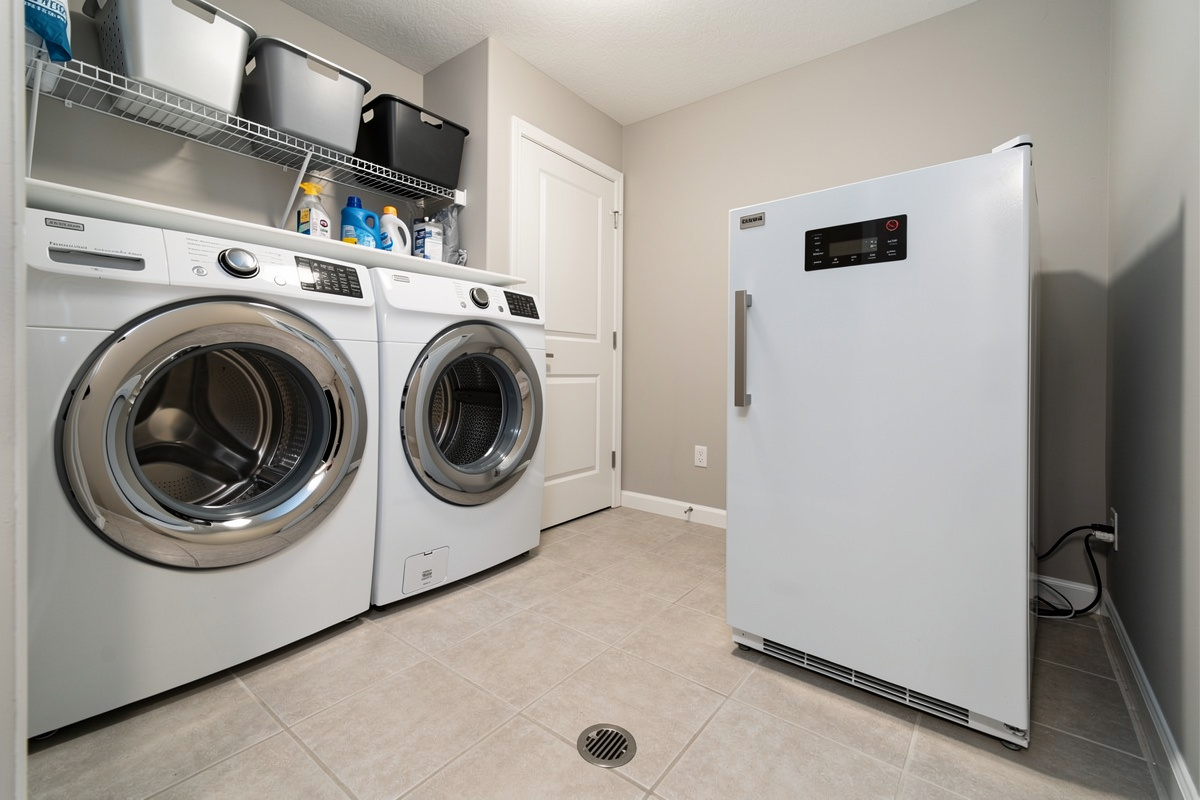

Where to put a freeze dryer is the question I should have spent more time on before mine arrived, and the question most new owners answer backwards — they find a spot that fits the footprint and discover the rest of the problems later. The footprint is the easy part. The hard parts are noise, heat, moisture exhaust, drainage, weight, and a stable electrical supply, and the right room is the one that handles all of them at once. I planned my install around those factors, settled on a utility room, and have run hundreds of batches there with no regrets. Here is the siting decision laid out the way I wish someone had laid it out for me.
I run a Harvest Right Medium-class machine on a standard oil pump. The siting logic below is what actually works for a machine of that class run as regular process equipment, not a once-a-year novelty.
The six things the room has to handle
Before you compare rooms, get clear on what you are actually solving for. A freeze dryer install is not about whether the box fits. It is about whether the room can absorb six different demands the machine makes every time it runs.
Noise. The vacuum pump drones continuously for hours, often overnight. This alone rules out any room open to bedrooms or main living space unless you enjoy a two-day mechanical hum. Heat. The machine exhausts warm air; a small enclosed space with no ventilation gets uncomfortably warm and makes the compressor work harder. Moisture. It pulls a lot of water out of food, and that moisture has to go somewhere — a sealed, unventilated room can get humid. Drainage. The defrost cycle produces water that needs to drain or be caught; proximity to a drain is a real convenience. Weight and floor. It is a heavy machine, and it occasionally drips, so you want a floor that can take both. Power. It wants a reliable outlet on a circuit that is not already loaded with other heavy draws.
Room by room, honestly
With those six demands in mind, here is how the common candidate rooms actually stack up in practice — including the ones I would talk you out of.
| Location | Strengths | Watch out for | My verdict |
|---|---|---|---|
| Utility / laundry room | Door for noise, hard floor, often a drain, ventilation | Make sure the circuit is not shared with other heavy appliances | My pick — solves the most problems at once |
| Unfinished basement | Cool ambient (cheaper, quieter), tolerant floor, isolated from living space | Humidity can build; ensure some air movement | Excellent if it is not damp |
| Garage (non-freezing) | Isolated, hard floor, plenty of space | Cold changes pump-oil behavior and cold-starts; secure the circuit | Good in mild climates; risky if it freezes |
| Pantry / dedicated closet | Out of the way, doored | Heat and moisture build fast without ventilation | Only with real airflow |
| Kitchen open to living area | Convenient to where you process food | The noise will drive you out; this is the classic regret | Avoid unless it can be closed off |
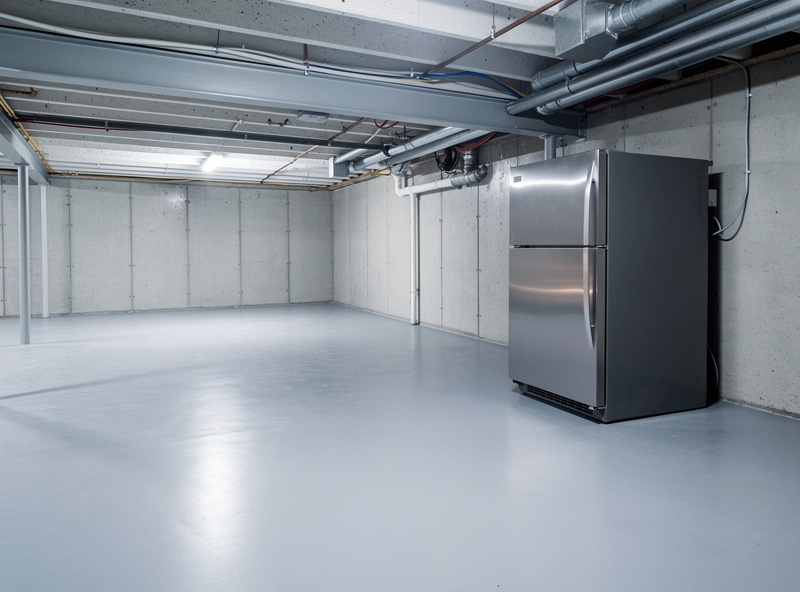
The pattern is obvious once you see it: the best rooms are the ones with a door, a tolerant floor, some air movement, and ideally a drain nearby. The worst choice is almost always the one that prioritizes convenience-to-the-cook over the machine’s six demands — which is why so many machines start in the kitchen and end up in the basement within a month.
Why a door beats everything
If I had to reduce the whole decision to one factor, it would be: can you close a door on it? The continuous pump drone is the number-one reason people resell these machines, and a closeable door turns that drone from intrusive to background. Everything else — heat, moisture, drainage — is solvable with a fan, a mat, or a hose. Noise in an open space is not solvable; you just live with it or you do not. So I rank rooms by their door first and everything else second.
Heat, moisture, and ventilation
The machine throws off warmth and moves moisture, so the room needs somewhere for both to go. In my utility room, normal air exchange handles it; in a tighter space you may want a small fan to keep air moving, especially in summer. A dehumidifier earns its place in a basement that already runs damp — not because the machine floods the room, but because you do not want to add its moisture load to an already-humid space and invite condensation on cold surfaces. None of this is dramatic, but a sealed closet with no airflow is the install that gets unpleasantly warm and humid by the second batch.
Drainage, weight, and the floor
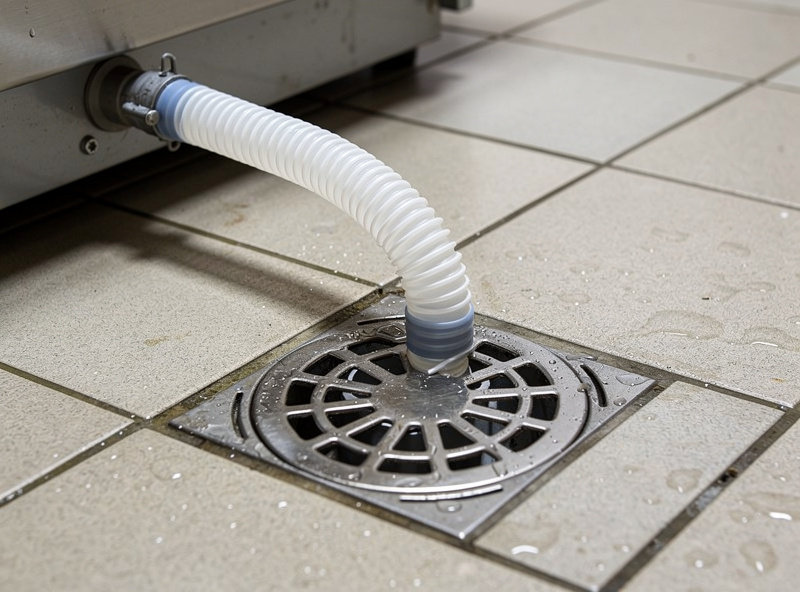
The defrost water has to go somewhere, and a spot near a floor drain or a utility sink saves you emptying a tray every cycle. Failing that, plan to catch and dump the water — not a big deal, just a step. For the floor: this is a heavy machine that the occasional drip will reach, so sealed concrete, tile, or vinyl beats carpet or unfinished wood every time. A level surface also matters for noise, because a wobble against a hard floor adds rattle to the drone. I keep mine on a solid, level spot and the difference in felt vibration is real.
Affiliate disclosure: The links below are Amazon affiliate links — as an Amazon Associate I earn from qualifying purchases at no extra cost to you. The machine is sold direct by the manufacturer, not Amazon; these are install accessories that solve the real siting problems.
- A floor protector mat — catches drips and protects the floor under a heavy machine.
- A dehumidifier — for a basement install that already runs damp.
- A quiet circulation fan — to keep air moving in a tighter, doored space.
The power question
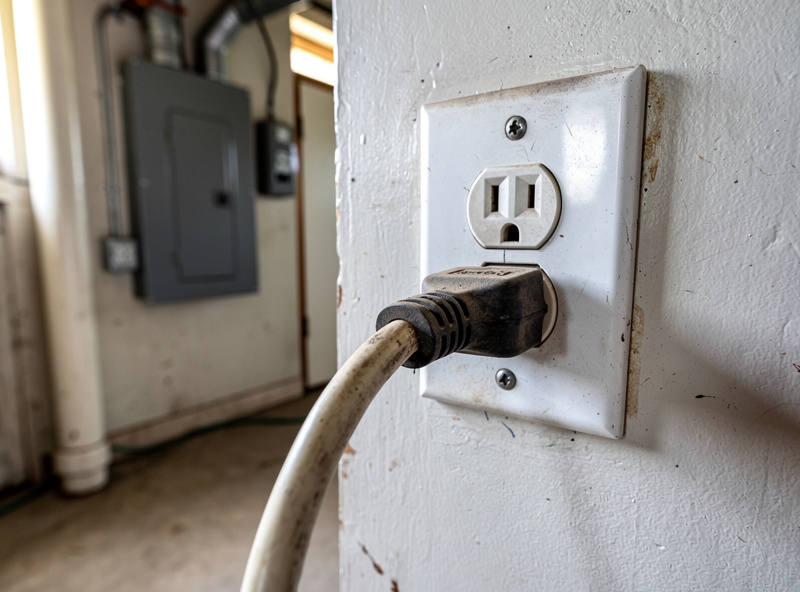
These machines run on a standard household outlet, which is genuinely convenient, but “fits the plug” is not the same as “share the circuit.” You want the machine on an outlet whose circuit is not already carrying other heavy draws, because a long continuous run alongside, say, a space heater or a dryer is asking for a tripped breaker mid-cycle — and a cycle interrupted partway is a real annoyance. I am not going to give you wiring instructions; for anything beyond plugging into an existing dedicated-feeling outlet, that is a question for an electrician. The honest rule of thumb is simple: give it an outlet it does not have to fight other appliances for.
What I would tell a prospective buyer
Pick the room before you buy, not after the pallet arrives. Walk your house with the six demands in hand — noise, heat, moisture, drainage, floor, power — and the right room usually announces itself. For most people that is a utility room, a non-damp basement, or a mild-climate garage. If your only option is open to where you live and sleep, treat that as the problem to solve first, because the machine will not get quieter and the regret is real and common.
Siting is one of the five ownership realities I cover in the full freeze dryer ownership guide. Two of the others bear directly on where it lives: my piece on how loud a freeze dryer really is explains why the door matters so much, and the measured power cost per batch piece shows why a cooler room is also a slightly cheaper one.
Related reading
- Is a freeze dryer worth it? The full ownership reality
- How loud is a freeze dryer? Noise and siting
- Freeze dryer electricity cost per batch, measured
Frequently asked questions
Where is the best place to put a freeze dryer?
A room you can close a door on, with a tolerant floor, some air movement, and ideally a drain nearby. For most owners that means a utility or laundry room, a non-damp basement, or a mild-climate garage. The kitchen open to a living area is the classic mistake because the continuous pump noise drives people out.
Can I keep a freeze dryer in the kitchen?
You can, but most owners regret it. The vacuum pump drones for hours, often overnight, and an open kitchen offers nowhere to put that noise. If the kitchen can be closed off behind a door it becomes workable; if it is open to the living area, plan a different room.
Can a freeze dryer go in the garage?
In a mild climate, yes, and the isolation is a real benefit. The caution is cold: a freezing garage changes how the pump oil behaves and complicates cold starts. Make sure the circuit can handle a long continuous run, and avoid the garage if it regularly drops below freezing.
Does a freeze dryer need special ventilation or drainage?
It exhausts warm, moist air and produces defrost water. A room with normal air exchange usually handles the heat and moisture; a tight closet may need a small fan. A spot near a floor drain or utility sink saves you emptying defrost water every cycle, though catching and dumping it manually is a minor step.
Does a freeze dryer need a dedicated electrical circuit?
It runs on a standard household outlet, but it should not share a circuit with other heavy draws, since a long continuous run alongside something like a dryer or space heater can trip a breaker mid-cycle. For anything beyond using an existing suitable outlet, consult an electrician.