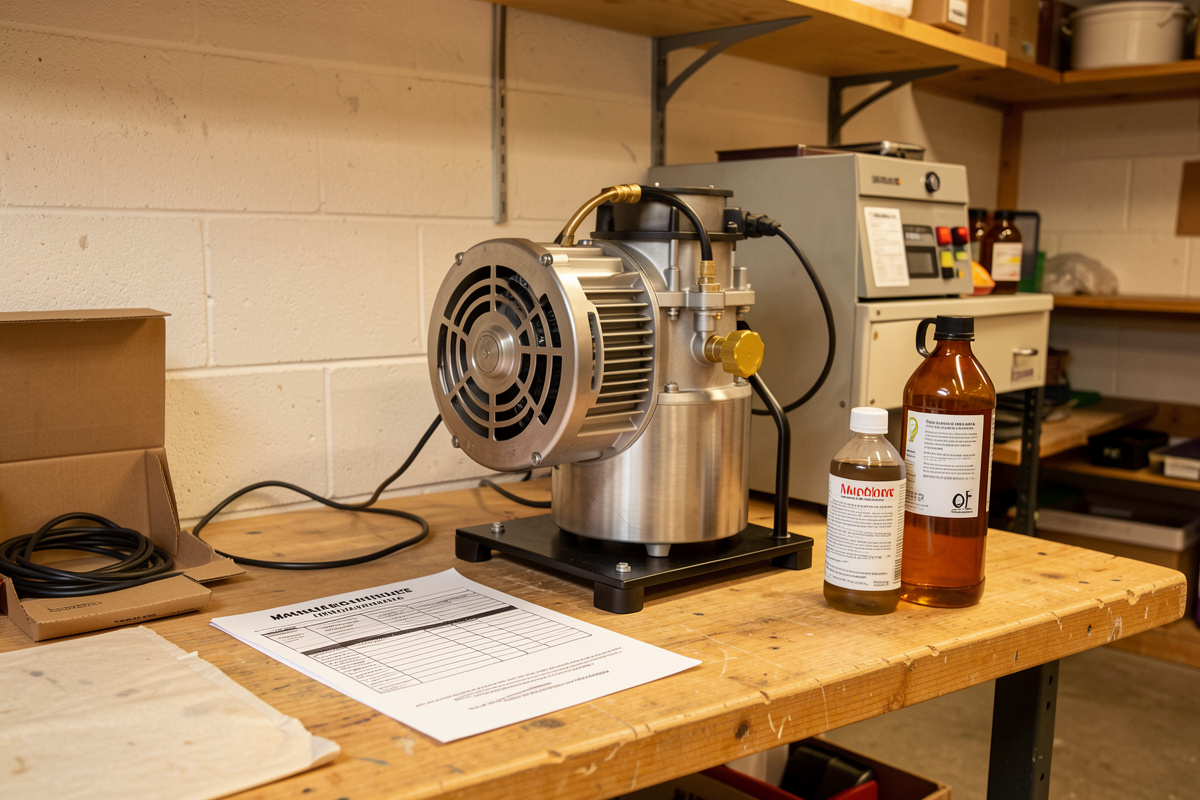

A working vacuum pump maintenance schedule for a home freeze dryer comes down to four rhythms: check the oil and listen to the pump every batch, change oil every two to four batches or roughly 20 to 30 run hours, do a fittings-and-gas-ballast check monthly, and run a deeper seal-and-vane inspection seasonally. Follow those four and the pump simply doesn’t develop the dramatic failures that fill the owner forums. Neglect them and a $400-plus pump dies young.
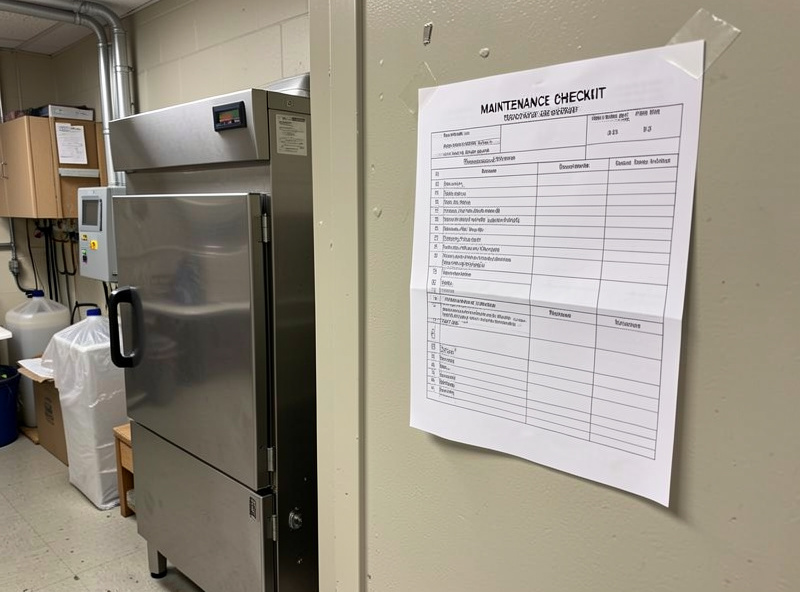
The vacuum pump care guide explains why the pump is the one component with a real service interval; this is the calendar that turns that into action. It’s the exact cadence I keep on a checklist taped next to my Harvest Right Medium, refined over years of batches. If you want the looser, more personal version of how I actually run it day to day, that lives in my freeze dryer oil pump maintenance writeup — this page is the structured schedule you can print.
The Schedule at a Glance
Here’s the whole thing in one table. Everything below expands on it, but if you print one thing and tape it to the wall, print this. The intervals flex with how wet your loads are — high-moisture batches age oil faster, so treat the run-hour numbers as a ceiling, not a target.
| Interval | Task | Why |
|---|---|---|
| Every batch | Inspect oil clarity in sight glass; listen for new sounds | Catches moisture loading and early trouble |
| Every 2–4 batches / 20–30 hrs | Change the oil (or filter and top up) | Restores deep vacuum, protects vanes |
| Monthly (in season) | Check fittings, hoses, gas ballast; wipe pump down | Finds slow leaks before they cost a batch |
| Seasonally / 100+ hrs | Deep inspection: seals, vane sound, blank-off vacuum test | Verifies pump health, schedules wear parts |
| Before long storage | Fresh oil, warm run, seal ports | Prevents idle corrosion |
Every Batch: The 30-Second Check
Before and after every run, two things take half a minute. First, look at the oil through the sight glass: it should be water-clear and at the fill line. Cloudy or milky oil means moisture has loaded up and your next batch will pull a weaker vacuum — flag it for a change. Second, listen. A healthy pump has a steady mechanical hum; a new rattle, knock, or rising whine is the earliest warning you’ll get. I log the oil’s appearance every batch, because the trend over several runs tells me more than any single look.
This per-batch habit is the cheapest insurance there is. Almost every pump disaster I’ve read about would have been a non-event if someone had glanced at the sight glass before hitting start. Thirty seconds now saves a dead batch later.
Every Few Batches: The Oil Change
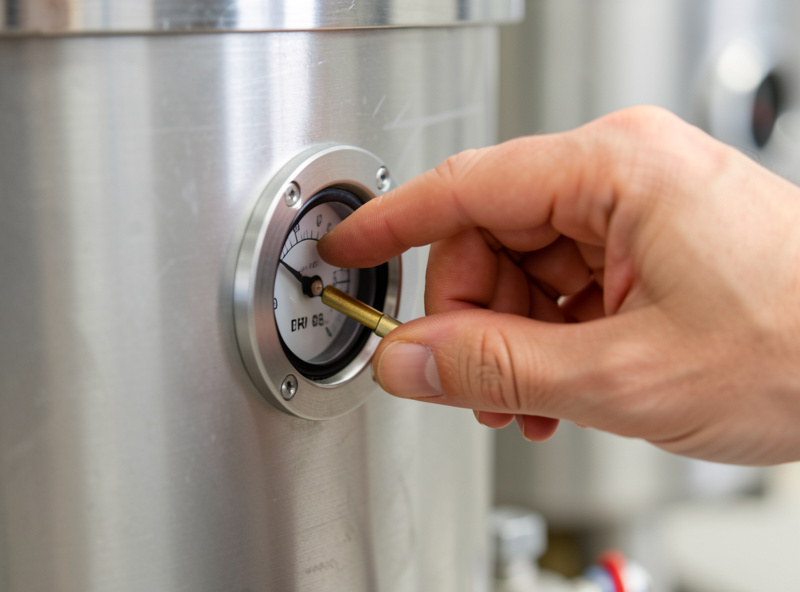
This is the heartbeat of the schedule. Every two to four batches or roughly 20 to 30 run hours, change the oil — sooner if it’s gone milky, later if it’s still clear and the pump pulls down strongly. Harvest Right publishes its own pump oil-change interval; I treat clarity in the sight glass as the real trigger and the hour count as a backstop, because the one time I let a clear-looking but tired charge ride two batches too long, my pull-down speed visibly slipped. Wet loads like soups, fruit, and liquids on trays will hit the short end of that range; dry candy loads can stretch it. The full procedure, including the warm-drain trick that makes it clean, is in changing your freeze dryer vacuum pump oil, and which oil to refill with is covered in the vacuum pump oil type guide. Between full changes, running cloudy oil through a filter buys extra batches without a complete swap.
Monthly: Catch the Slow Leaks
Once a month during your running season, give the pump a slightly closer look. Check that all fittings and hose connections are snug — a loose connection is the most common cause of a chamber that won’t reach vacuum, and it’s invisible until you go looking. Exercise the gas ballast valve if your pump has one. Wipe the pump and its surroundings down so any new oil weep shows up against clean metal. This is also when I confirm my oil stock is topped up so I’m never tempted to skip a change because the bottle’s nearly empty.
Seasonally: The Deep Check
Every season or so, or around the 100-hour mark, do a proper health check. The key test is the blank-off vacuum test: isolate the pump from the chamber, pull it down, and confirm it reaches a deep ultimate vacuum on fresh oil. A pump that can’t hit its numbers isolated is telling you the vanes or seals are tiring — that’s your cue to plan a service rather than wait for a failure mid-batch. Listen carefully for vane noise, inspect seals for weeping, and compare the pull-down speed against what you logged when the pump was new. The whole logic of reading these signs is in diagnosing vacuum pump problems.
Before Storage: Don’t Skip This One
The most-skipped item on any schedule is the pre-storage step, and it’s the one that causes spring heartbreak. Before any long downtime, change to fresh oil, run the pump warm to drive off moisture, and seal the ports against humidity. Idle dirty oil is acidic and corrodes the pump from the inside while it sits. The full routine — and how to wake the pump up correctly afterward — is in the vacuum pump storage guide. Rolling all of this together is what actually delivers a long service life, which is the whole point of extending vacuum pump life.
Frequently Asked Questions
How often should I service a freeze dryer vacuum pump?
Check oil clarity and listen for new sounds every batch, change oil every two to four batches or 20 to 30 run hours, check fittings and the gas ballast monthly in season, and do a deep seal-and-vane inspection with a blank-off vacuum test seasonally or around 100 hours. Always run fresh oil before long storage.
Does load type change the maintenance interval?
Yes, significantly. Wet, high-moisture loads like soups, fruit, and liquids on trays push moisture into the oil fast and hit the short end of the oil-change range. Dry candy loads barely touch the oil and stretch the interval. Treat the 20 to 30 run-hour figure as a ceiling and judge by oil clarity and vacuum performance.
What is a blank-off vacuum test and when do I run it?
A blank-off test isolates the pump from the chamber, then pulls it down to see how low it reaches on its own with fresh oil. A healthy pump hits a deep ultimate vacuum. Run it seasonally or around 100 hours. If the isolated pump can’t reach its numbers, the vanes or seals are tiring and need service.
What monthly checks does a vacuum pump need?
Once a month in season, confirm all fittings and hose connections are snug, since a loose connection is the top cause of a chamber that won’t reach vacuum. Exercise the gas ballast valve, wipe the pump down so any new oil weep shows against clean metal, and confirm your spare oil stock is topped up.
Can I skip oil changes if the pump still seems to work?
No. The pump can still run while pulling a progressively weaker vacuum, which quietly adds hours to every cycle and leaves batches under-dry. Oil degrades before the pump obviously struggles, so change on schedule and by oil appearance, not by waiting for a failure. Skipped changes are the leading cause of early pump death.
How do I keep track of the maintenance schedule?
Keep a printed checklist taped next to the machine and a simple batch log recording the date, batch count, and what the oil looked like each run. The trend across several batches reveals your pump’s real rhythm far better than any single inspection, and a visible checklist makes the boring tasks actually happen.
Does the gas ballast need maintenance?
The gas ballast valve itself needs little beyond being exercised monthly so it doesn’t seize, but using it correctly is part of good maintenance. Open it during heavy sublimation to keep moisture from condensing in the oil, then close it for final dry when you want the deepest vacuum. This habit measurably extends oil life.