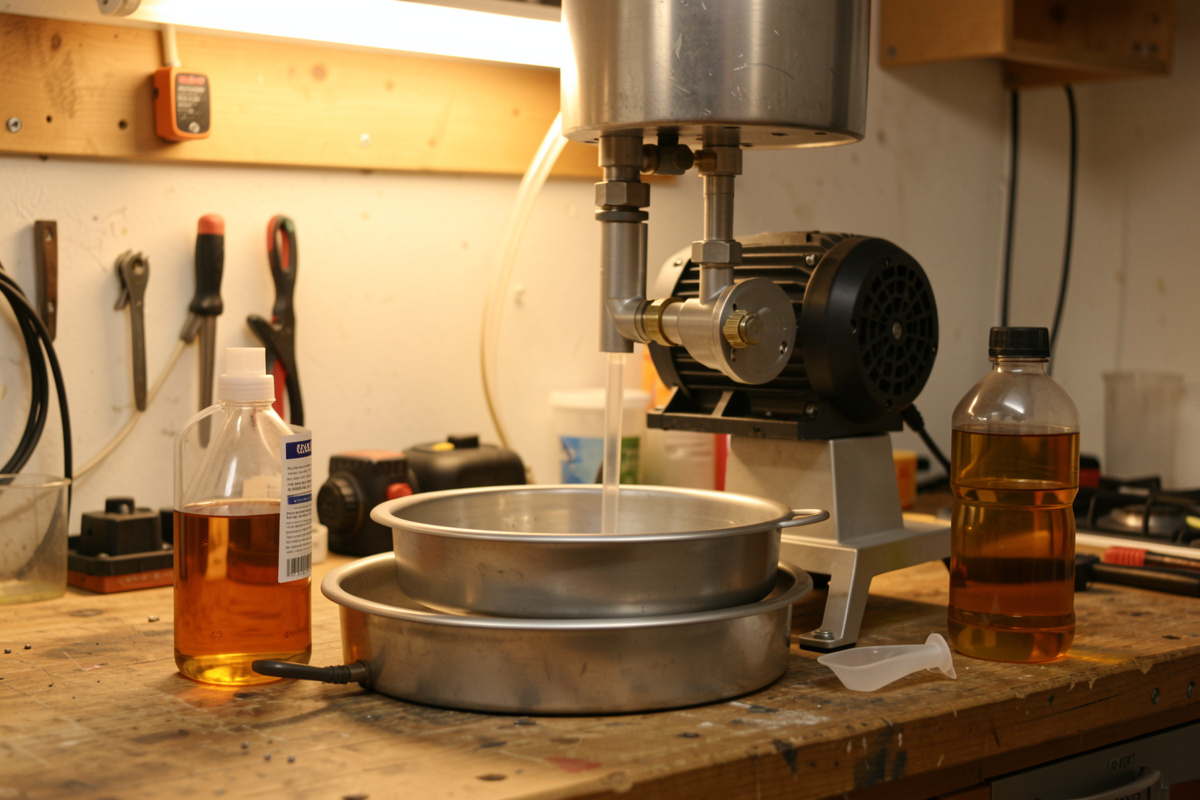

Changing your freeze dryer vacuum pump oil is a ten-minute job that protects a machine costing thousands, and it’s the single most important maintenance task an oil-pump owner does. The short version: warm the pump, drain the old oil completely while it’s still hot and thin, refill to the sight-glass line with fresh oil, run a brief purge, and log it. On my Harvest Right Medium I do it every two to four batches, sooner when the oil turns milky. Skip it and your vacuum slowly dies.
This is the spoke that the rest of the vacuum pump care guide keeps pointing back to, because oil care is pump care on a standard oil-sealed pump. I’ve done this dozens of times by now, and the routine below is exactly what’s in my batch log — including the small mistakes that cost me a clean drain early on.
When to Change the Oil (Not Just How Often)
Change the oil when it tells you to, not only when a calendar says so. Fresh vacuum pump oil is water-clear and thin like cooking oil. As it absorbs moisture from your loads it goes hazy, then cloudy-white, then the color of weak coffee. The moment it looks milky, its vapor pressure has risen and your ultimate vacuum is already suffering. My working rule: inspect the sight glass before every batch, and change whenever the oil is visibly cloudy or the machine is struggling to pull down to its usual microns.
As a baseline interval, every two to four batches or roughly 20 to 30 run hours works for mixed loads. But wet loads cheat that number badly — a batch of soup or liquids on trays can turn oil milky in a single run, while dry candy loads barely touch it. That’s why I judge by appearance and vacuum performance first and the hour count second. If you’re ever unsure whether tired oil is why a batch came out under-dry, change the oil before you blame the recipe or reach for extra dry time.
What You Need Before You Start
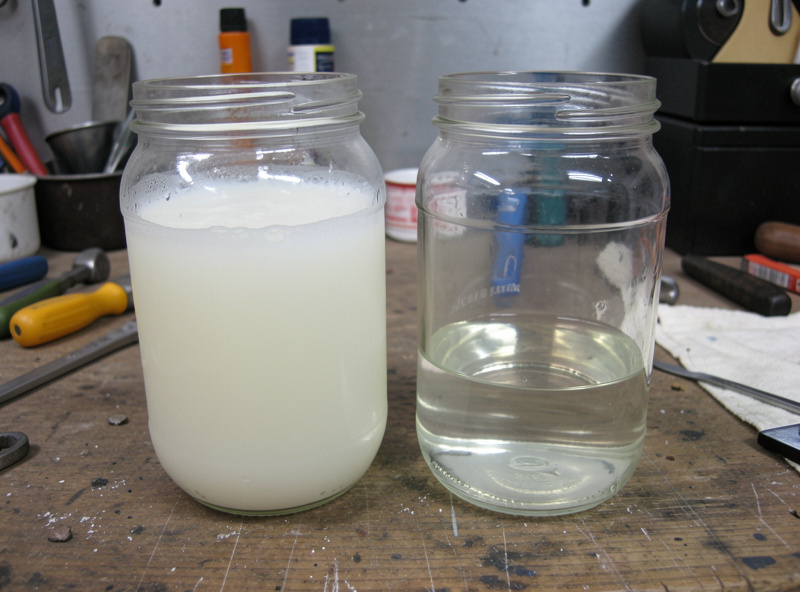
Keep the kit small and within arm’s reach of the machine, or you’ll put the job off. Here’s my actual setup: a bottle of fresh oil (always have a spare so you’re never tempted to skip), a low oil drain pan that slides under the pump, a funnel, nitrile gloves, paper towels, and a sealable container for the waste oil. That’s everything. Make sure you’re refilling with the right product, too — the vacuum pump oil type guide covers which oil actually belongs in a home freeze dryer pump, because the wrong viscosity sabotages your vacuum.
As an Amazon Associate I earn from qualifying purchases. Buy oil by the larger bottle if you run regularly; the per-batch cost drops and you’ll never find yourself rationing a near-empty bottle the night before a big harvest run.
The Step-by-Step Oil Change
Do this with the pump warm — that’s the one detail that separates a clean job from a slow, gummy one. Warm oil drains fast and carries the suspended moisture and gunk out with it; cold oil dribbles and leaves the worst residue behind.
1. Run the pump warm. If you just finished a batch, perfect. If not, let the pump run a few minutes so the oil thins out. Then power down and unplug for safety.
2. Position the drain pan. Slide your pan under the drain plug. Pumps hold more oil than people expect, and it comes out faster than you think — a too-small container is how you get a utility-room floor story.
3. Open the drain plug. Loosen it and let the oil flow fully. When the stream slows, tip or rock the pump slightly to clear the last milky dregs from the bottom — that’s where the heaviest moisture settles.
4. Let it drain completely. Patience here pays off. Every bit of old oil you leave behind contaminates the fresh fill. I give it a couple of minutes of full drainage before moving on.
5. Close the drain and refill. Re-seat the drain plug snugly. Pour fresh oil through the funnel into the fill port up to the middle of the sight glass — not over the top line. Overfilling makes the pump spit oil out the exhaust.
6. Purge briefly. Run the pump for a minute or two with the gas ballast open if it has one, to circulate the fresh oil and clear any trapped air. Re-check the sight-glass level and top up to the line if it dropped.
7. Log it. Date, batch count, what the old oil looked like. This is how you learn your own pump’s rhythm instead of guessing.
Stretch Each Fill With Filtration
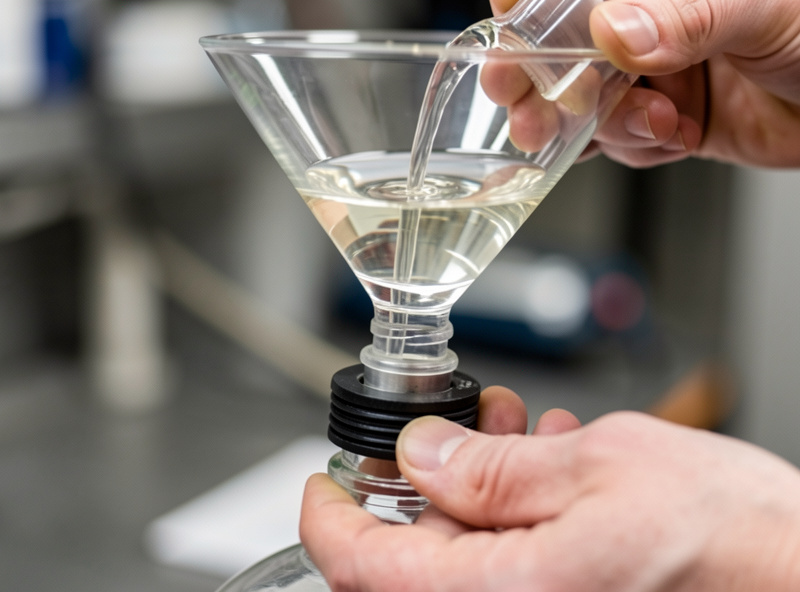
You don’t have to discard every drop of milky oil. A simple filtration setup pulls the suspended water and particulate out of used oil so you can reuse it for several more batches. It’s the cheapest pump-life upgrade there is. I filter the cloudy oil, let it settle, and run the clarified oil back through — only retiring oil when it won’t clear up or has clearly broken down. For a busy season this roughly doubles how far a bottle goes, and it keeps decent oil in the pump between full changes.
Filtration isn’t a substitute for fresh oil, though. Think of it as extending the interval, not eliminating the change. Heavily degraded oil that’s gone dark and won’t clarify is done — running it just makes the pump work harder and ages the vanes.
Disposing of the Old Oil Responsibly
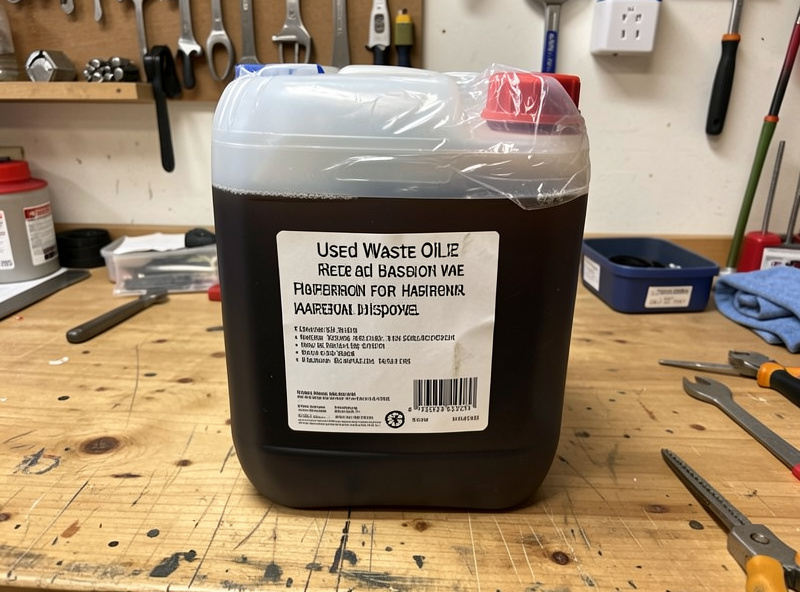
Used vacuum pump oil is contaminated waste oil — don’t pour it down a drain or into the garden. Seal it in a container (an old oil bottle works) and take it to a household hazardous-waste or used-oil collection point — the EPA’s used-oil guidance covers what qualifies — the same place that takes used motor oil. I keep a labeled jug for spent oil and drop it off when it’s full. It’s a small habit that keeps the whole operation clean and honest, which matters when the machine already lives in a shared utility space.
Fitting Oil Changes Into the Bigger Routine
An oil change is the most frequent task on the pump, but it’s one item on a longer list. Knowing when to do it alongside the monthly and seasonal checks is what keeps the pump healthy for years — I mapped the whole cadence in the vacuum pump maintenance schedule, and the broader honest version of my own routine lives in my freeze dryer oil pump maintenance writeup. If you’re still on the fence about the oil pump versus the dry option that skips all of this, the oil vs oil-free pump comparison lays out the trade honestly: the oil pump pulls a deeper vacuum and costs less, but this ten-minute job is the price of admission.
Frequently Asked Questions
How often should I change freeze dryer vacuum pump oil?
Every two to four batches or roughly 20 to 30 run hours for mixed loads, and immediately whenever the oil looks milky or your vacuum struggles to pull down. Wet loads like soups and liquids can cloud oil in a single batch, so inspect the sight glass before every run and judge by clarity, not just the hour counter.
Should the pump be warm or cold when I change the oil?
Warm. Run the pump a few minutes first so the oil thins out, then power down and drain. Warm oil flows fast and carries the suspended moisture and gunk out with it, while cold oil dribbles and leaves the heaviest contaminated residue sitting in the bottom of the pump.
Can I reuse cloudy vacuum pump oil after filtering it?
Yes, within reason. A simple filtration setup pulls water and particulate out of milky oil so you can reuse it for several more batches, which roughly doubles how far a bottle goes. But filtration extends the interval rather than replacing it. Oil that has gone dark and won’t clarify is finished and should be changed.
What happens if I overfill the vacuum pump with oil?
Overfilling past the top sight-glass line makes the pump spit oil out the exhaust during operation, creating a mess and lowering the oil level anyway. Fill only to the middle of the sight glass, run a brief purge, then top up to the line if it dropped. Less is safer than more here.
How do I dispose of used freeze dryer pump oil?
Treat it as contaminated waste oil. Never pour it down a drain or onto soil. Seal it in a container and take it to a household hazardous-waste or used-oil collection point, the same place that accepts used motor oil. Keeping a labeled jug for spent oil makes responsible disposal a simple routine.