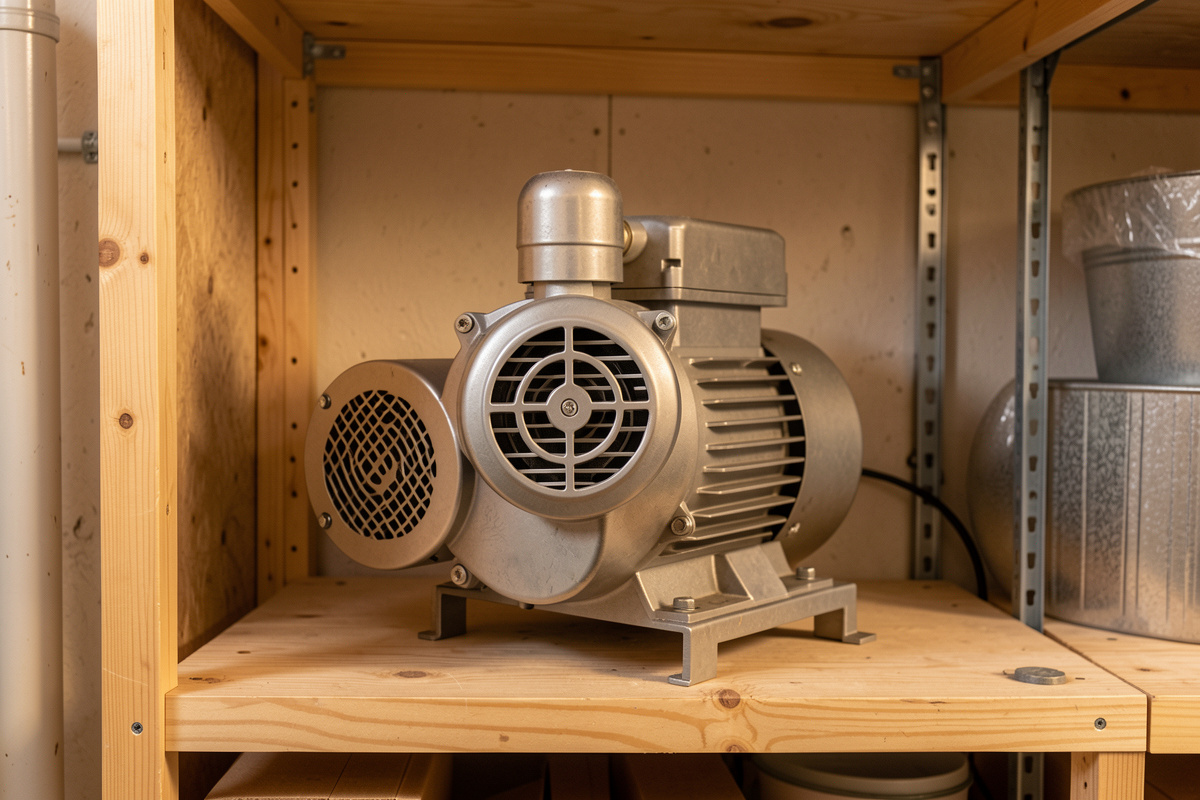

The single rule of freeze dryer vacuum pump storage is this: never store a pump on dirty oil. Before any extended downtime, change to fresh oil, run the pump warm to drive off absorbed moisture, and seal the ports against humidity. Idle oil that’s loaded with water turns acidic, and acidic oil sitting against the steel vanes and chamber is exactly how a pump that worked fine in autumn won’t pull a vacuum come spring. Five minutes of prep saves a corroded pump.
I run seasonally around a Swedish garden’s harvest, so my pump sits idle for months at a stretch — which means storage is a real maintenance step for me, not a footnote. This spoke of the vacuum pump care guide is the routine straight from my batch log: how to put the pump away, where to keep it, and how to wake it up correctly so the first batch of the next season isn’t a casualty.
Why Idle Pumps Corrode
It seems backward that a pump wears more sitting still than running, but it’s true for one reason: the oil. Every batch loads the oil with water absorbed from your food. That moisture makes the oil acidic over time. While the pump runs warm, the moisture is constantly being driven off and the oil circulates. The moment you stop and walk away for the off-season, that acidic, water-laden oil settles and sits in contact with the internal steel — the vanes, the rotor, the chamber walls. Over weeks and months it etches and pits those surfaces. Come the new season the pump may hum to life but never reach a deep vacuum, because the sealing surfaces are no longer smooth.
This is the failure mode nobody warns new owners about, because it doesn’t show up during the busy season when the pump is used constantly. It shows up after the first long break, which is why so many “my pump died over winter” stories exist. The fix is entirely preventable and costs only a bottle of oil.
Short-Term vs Long-Term Storage
How much prep you do scales with how long the pump will sit. For a short gap — a couple of weeks between batches — the pump can usually rest as-is, provided the oil is still reasonably clear. I’d just make sure it isn’t sitting on milky oil. If the last batch left the oil cloudy, change it even for a short break; clear oil is fine to leave.
For long-term storage — the months-long off-season — do the full routine below. The dividing line in my own practice is roughly a month: anything longer than that gets fresh oil, a warm run, and sealed ports before it goes quiet. The cost of over-preparing is one oil change you might not have strictly needed. The cost of under-preparing is a pitted pump. That trade is easy.
The Pre-Storage Routine
1. Run a final warm cycle. If the pump just finished a batch, it’s already warm. If not, run it a few minutes so the oil is hot and any dissolved moisture is being actively driven off. Opening the gas ballast during this run helps purge moisture.
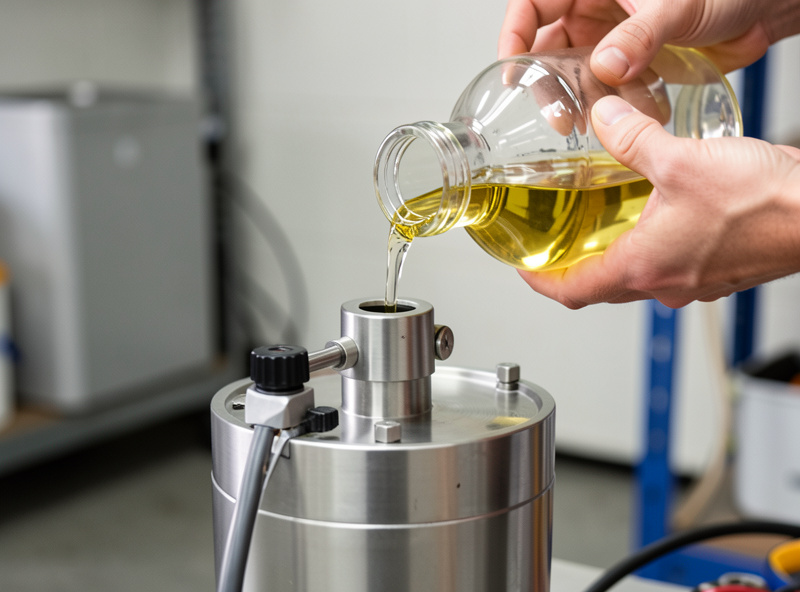
2. Drain the old oil while warm. Hot oil carries the contaminants out cleanly. Drain it fully, rocking the pump to clear the last dregs where moisture settles. The full technique is in changing your freeze dryer vacuum pump oil.
3. Refill with fresh oil. Put clean oil in to the sight-glass line. Fresh oil has no absorbed water and won’t go acidic sitting still. Use the right grade — the vacuum pump oil type guide covers what belongs in the pump.
4. Run briefly on the fresh oil. A short run circulates the clean oil over all the internal surfaces, leaving a protective film on the vanes and chamber rather than bare metal exposed to air.
5. Seal the ports. Cap or plug the intake and exhaust to keep humid air from cycling moisture through the pump while it sits. This is the step most people skip, and it matters in a damp utility room or garage.
Where to Store the Pump
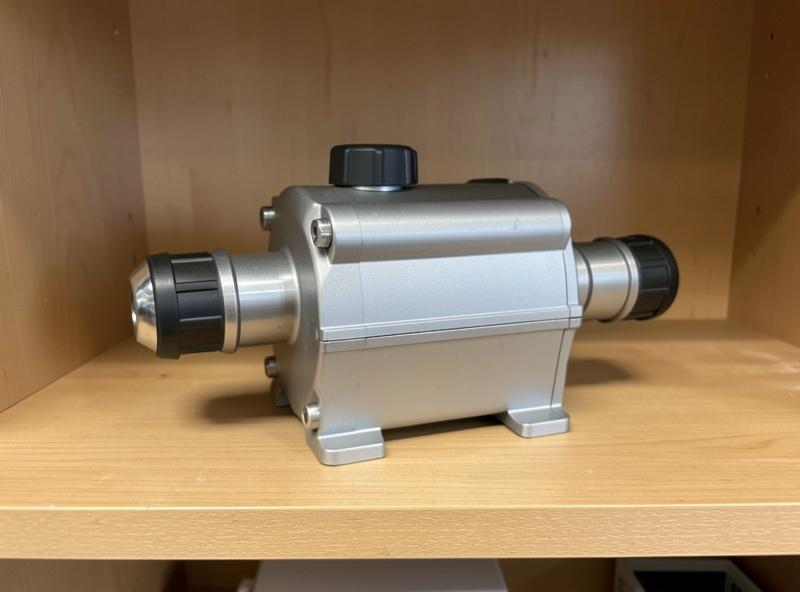
Location matters as much as oil. Keep the pump somewhere dry and reasonably stable in temperature. The enemy is condensation: a pump stored in an unheated shed that swings from cold nights to warmer days will pull moist air in and condense water inside as it breathes with temperature changes — which is precisely why sealing the ports helps. A dry indoor utility space, a closet, or a basement that doesn’t flood is ideal. Avoid leaving it on a cold concrete floor in a humid garage, and keep it off the ground if damp is a risk. I store mine indoors near the machine, ports sealed, so it’s ready and protected in one place.
Common Storage Mistakes to Avoid
Most storage damage comes from a short list of avoidable mistakes, and I’ve either made or nearly made all of them. The biggest is walking away on dirty oil — finishing a season’s last batch, seeing the cloudy oil, and thinking “I’ll deal with it in spring.” By spring the damage is done. The fix is to treat the last batch of the season as a trigger: the moment you know you’re done for a while, that’s when the fresh oil goes in, not later.
The second mistake is leaving the ports wide open in a damp space, letting the pump breathe moist air for months. The third is storing the pump somewhere with big temperature swings, which drives condensation. And the fourth, subtler one is forgetting you ever stored it — coming back next season and slapping a load in without the warm-up run and blank-off test, then blaming the machine when the first batch underperforms. Storage isn’t just putting the pump away; it’s the whole bracket of putting it away correctly and waking it up correctly. Skip either half and you’ve half-protected the pump.
One more I see in owner forums: people draining the oil and storing the pump bone dry, thinking empty is safest. It isn’t. Bare internal metal with no oil film is more exposed to humidity and surface corrosion than metal coated in fresh, clean oil. The right state for a stored pump is full of clean oil with a protective film on every internal surface — not empty, and never full of dirty oil.
A Note for Oil-Free Pump Owners
Everything above is written for the standard oil pump I run. If you own the premium oil-free (dry) pump, you skip the oil routine entirely, but storage still matters — operators report that dry pumps benefit from a clean, dry, temperature-stable spot and from following the manufacturer’s downtime guidance for the diaphragm or scroll mechanism. I flag this as reported rather than from my own batch log, because I run the oil pump. The principle is the same regardless of pump type: store it dry, store it stable, and re-commission it deliberately rather than trusting it cold.
Waking the Pump Up Next Season
Re-commissioning is simple if you stored it right. Unseal the ports, check the oil level and clarity (fresh oil that sat clean should still look clean), and run the pump for several minutes to warm it and confirm it sounds normal before you trust it with food. Then run a blank-off vacuum test — pull the isolated pump down and confirm it reaches its usual deep vacuum. If it does, you’re ready; if it doesn’t, change the oil and retest before assuming anything worse. This first-of-season check is the moment your storage prep pays off, and it folds neatly into the broader goal of extending vacuum pump life. If something does seem off, the full logic is in diagnosing vacuum pump problems.
Storing the pump correctly is one of those unglamorous habits that separates a machine that lasts a decade from one that needs a new pump every few years. It takes five minutes, costs a bottle of oil, and it’s the difference between a confident first batch in spring and a frustrating one. On a machine this expensive, that’s the cheapest insurance in the whole routine — and it sits right next to the vacuum pump maintenance schedule as the two things I never skip.
The Cost of Getting It Wrong
To put real stakes on this: the vacuum pump is among the most expensive single components on a home freeze dryer, and a corroded one usually means replacement rather than repair for most owners. Weigh that against a bottle of oil and five minutes of prep twice a year and the math isn’t close. I treat the pre-storage routine as non-negotiable for the same reason I keep a batch log at all — because the cheap, boring, consistent habit is what keeps the heaviest machine in the house running for years instead of seasons. Storage prep is the clearest example on the whole machine of a tiny effort that prevents an outsized failure.
Further Reading
If you found this useful, keep building the routine with the complete vacuum pump care guide, the maintenance schedule that puts storage in its yearly context, and how to extend vacuum pump life for the full longevity playbook. For the oil details that underpin all of it, see changing your pump oil and the oil type guide.