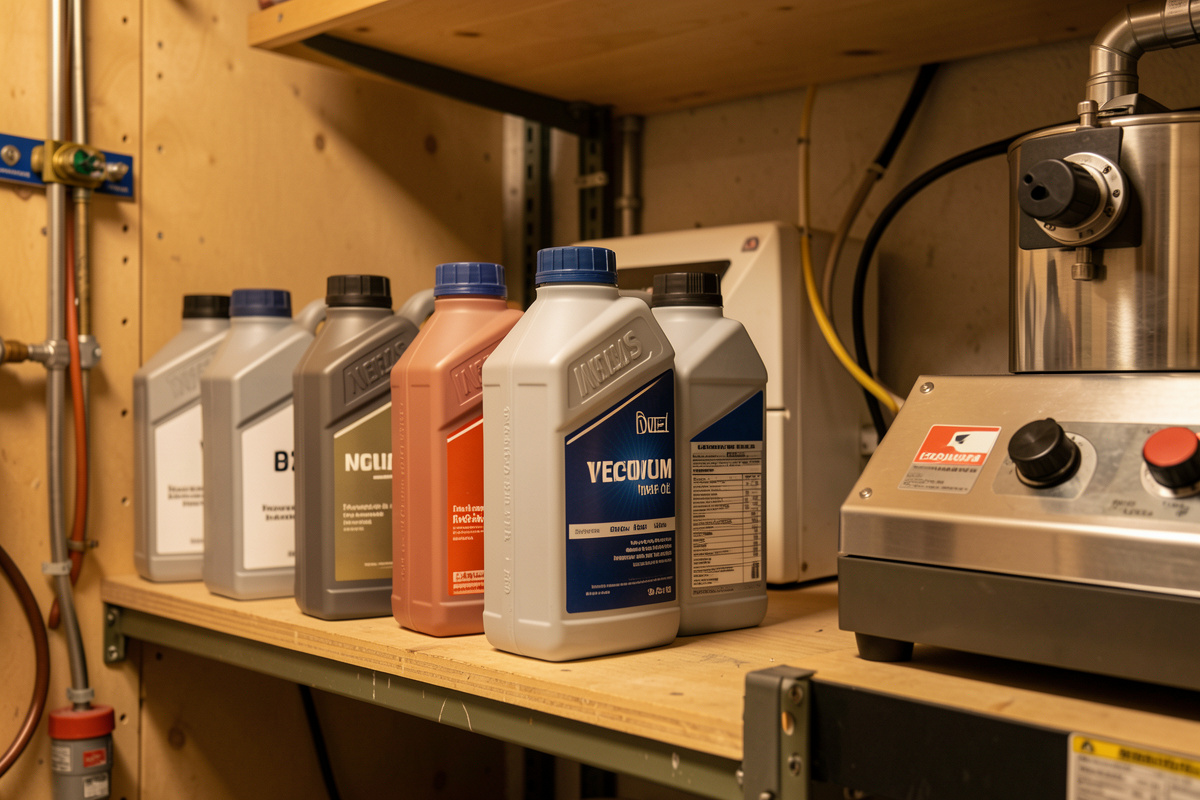

The right oil for a home freeze dryer vacuum pump is a high-quality rotary vane vacuum pump oil — a low-vapor-pressure mineral or synthetic oil, typically around ISO viscosity grade 68 to 100, with no detergents or additives. That’s it. You do not need the branded bottle with the freeze dryer logo, and you absolutely cannot substitute motor oil, hydraulic fluid, or cooking oil. Use the wrong oil and your pump will never pull a deep vacuum, no matter how often you change it.
This is one of the two oil questions the vacuum pump care guide sends people here to answer — the other being how to actually change it. I’ve run both branded and generic vacuum pump oil through my Harvest Right pump, and the honest verdict below is what my batch log shows about which matters and which is marketing.
Why Vacuum Pump Oil Is a Special Product
Vacuum pump oil isn’t just a lubricant — on a rotary vane pump it’s the sealing medium that lets the pump reach a deep vacuum in the first place. That job demands one property above all: low vapor pressure. The oil has to stay liquid and not evaporate under the very low pressure inside the pump, because any oil that flashes to vapor raises the pressure you’re trying to drop and wrecks your ultimate vacuum. Ordinary oils have far too high a vapor pressure to ever seal a vacuum pump properly.
It also has to resist the moisture it constantly absorbs from your loads, lubricate the vanes, and not foam or break down under heat. Purpose-made vacuum pump oil is refined and formulated for exactly this. That’s why the category exists as its own product on the shelf, separate from motor oil or general machine oil — and why “any oil will do” is the most expensive shortcut a new owner can take.
Mineral vs Synthetic Vacuum Pump Oil
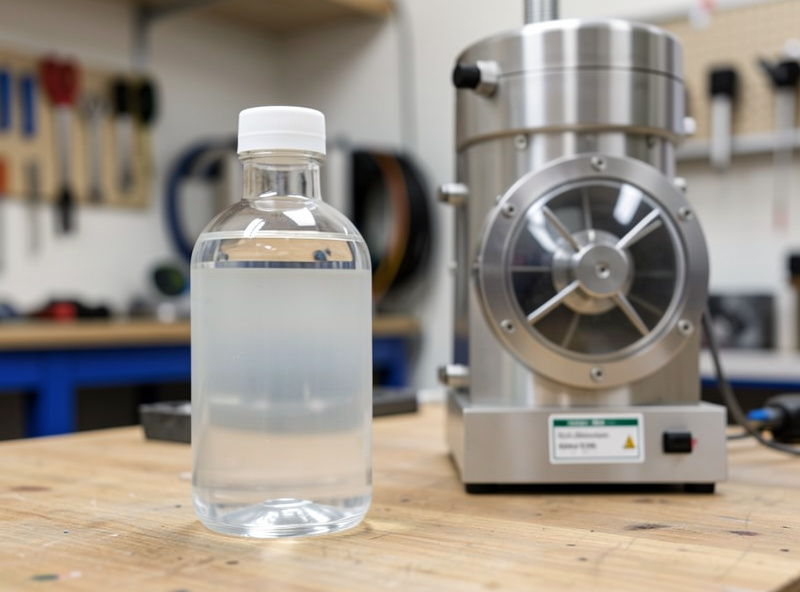
Two broad chemistries dominate. Standard mineral vacuum pump oil is refined petroleum, inexpensive, and completely adequate for a home freeze dryer — it’s what most pumps ship with and what I run by default. Synthetic vacuum pump oil costs more and offers a lower vapor pressure, better moisture resistance, and longer service life between changes. For a heavily-used pump or someone who hates frequent oil changes, synthetic can be worth it; for a typical seasonal home operator, good mineral oil changed on schedule does the job at a fraction of the cost.
My honest take from the log: the oil change interval matters more than the oil chemistry. Mineral oil changed when it goes cloudy outperforms premium synthetic that’s been left in too long. Spend your effort on the routine before you spend extra on the bottle. If you run a lot of wet, high-moisture loads and find yourself changing oil constantly, that’s the case where stepping up to synthetic actually pays — it tolerates absorbed water longer before its vacuum performance falls off.
| Oil Type | Vapor Pressure | Cost | Service Life | Best For |
|---|---|---|---|---|
| Mineral (standard) | Low — fully adequate | Lowest | Shorter; change on schedule | Typical seasonal home use |
| Synthetic | Lowest | Higher | Longer between changes | Heavy use, very wet loads |
| Branded freeze-dryer oil | Low (same spec, premium label) | Highest per litre | Same as its base type | Convenience buyers |
| Motor / hydraulic / cooking oil | Far too high — never seals | — | Damages the pump | Never use |
Viscosity: Match the Grade Your Pump Wants
Rotary vane vacuum pumps want a specific viscosity range — commonly around ISO grade 68, with many pumps happy anywhere from roughly 68 to 100. Too thin and the oil won’t seal or protect the vanes; too thick and the pump labors, especially on a cold start in an unheated utility room. Your pump’s manual — and Harvest Right‘s own support material — states the grade, and any reputable vacuum pump oil will list its ISO grade on the label. Match it and you’re fine. This is the one spec you genuinely shouldn’t guess on — it’s printed on both the manual and the bottle, so there’s no reason to.
Branded vs Generic: Where the Money Actually Goes
The manufacturer-branded oil with the freeze dryer logo is, in practical terms, standard vacuum pump oil of the correct grade in a marked-up bottle. It works perfectly — there’s nothing wrong with it — but a quality generic rotary vane vacuum pump oil of the same ISO grade performs identically in my pump for noticeably less per litre. As an Amazon Associate I earn from qualifying purchases. If buying the branded bottle makes you more likely to actually keep oil on hand and change it on time, that convenience has real value. If you’re comfortable matching the grade yourself, generic saves money over years of changes without any performance penalty I’ve ever measured on the vacuum gauge.
Oils to Never Put in Your Pump
This list has cost people their pumps. Never use motor oil — its detergents and additives foam, sludge, and its vapor pressure is far too high to seal a vacuum. Never use hydraulic fluid, compressor oil, transmission fluid, or any cooking or mineral oil from a pharmacy. They share one fatal flaw: they evaporate under vacuum and the pump can’t reach its target microns. If you’re ever stuck without the right oil, the correct move is to wait and run the batch later, not to pour in a substitute. A delayed batch is an inconvenience; the wrong oil is a repair.
Signs You’re Running the Wrong Oil
If someone before you (or a panicked you) put the wrong oil in, the pump tells on it fast. The clearest sign is a vacuum that simply won’t get deep no matter how fresh the oil is — the pump pulls down partway and stalls, because the oil is evaporating under vacuum instead of sealing. You may also see foaming in the sight glass, an oily haze or smell from the exhaust, and oil that thins or discolors abnormally quickly. A correctly-specced vacuum pump oil, by contrast, lets the pump reach its usual low microns within a minute or two and stays clear until moisture clouds it.
If you suspect the wrong oil, drain it completely while warm, refill with proper vacuum pump oil of the right grade, and run a short purge before judging performance. Don’t try to dilute bad oil with good — drain it all. One full change with the correct product usually restores a pump that was only suffering from the wrong fluid, no parts required.
How Oil Type Fits the Care Routine
Choosing oil is a once-and-done decision; using it well is ongoing. Once you’ve matched the grade, the only thing that matters is changing it on time and storing the pump correctly between seasons. The full cadence lives in the vacuum pump maintenance schedule, and if you run seasonally like I do, the vacuum pump storage guide covers why you should never leave any oil — mineral or synthetic — sitting dirty in an idle pump. Picking the right oil is step one; the routine around it is what actually extends pump life.
Frequently Asked Questions
What kind of oil goes in a freeze dryer vacuum pump?
A purpose-made rotary vane vacuum pump oil with low vapor pressure, typically around ISO viscosity grade 68 to 100, with no detergents or additives. Either mineral or synthetic works. Never substitute motor oil, hydraulic fluid, compressor oil, or cooking oil, because they evaporate under vacuum and stop the pump from sealing.
Is synthetic vacuum pump oil worth it over mineral?
For typical seasonal home use, good mineral oil changed on schedule is fully adequate and far cheaper. Synthetic offers lower vapor pressure and longer life between changes, which pays off if you run heavy, very wet loads and change oil constantly. The change interval matters more than the chemistry for most owners.
Can I use the generic vacuum pump oil instead of the branded bottle?
Yes. The manufacturer-branded oil is standard vacuum pump oil of the correct grade in a marked-up bottle. A quality generic rotary vane vacuum pump oil of the same ISO grade performs identically. Just match the viscosity grade your pump manual specifies and you lose no performance for the lower price.
What viscosity vacuum pump oil should I use?
Match the ISO grade your pump manual specifies, commonly around ISO 68, with many pumps tolerating roughly 68 to 100. Too thin won’t seal or protect the vanes; too thick makes the pump labor on a cold start. The grade is printed on both your manual and the oil bottle, so there is no need to guess.