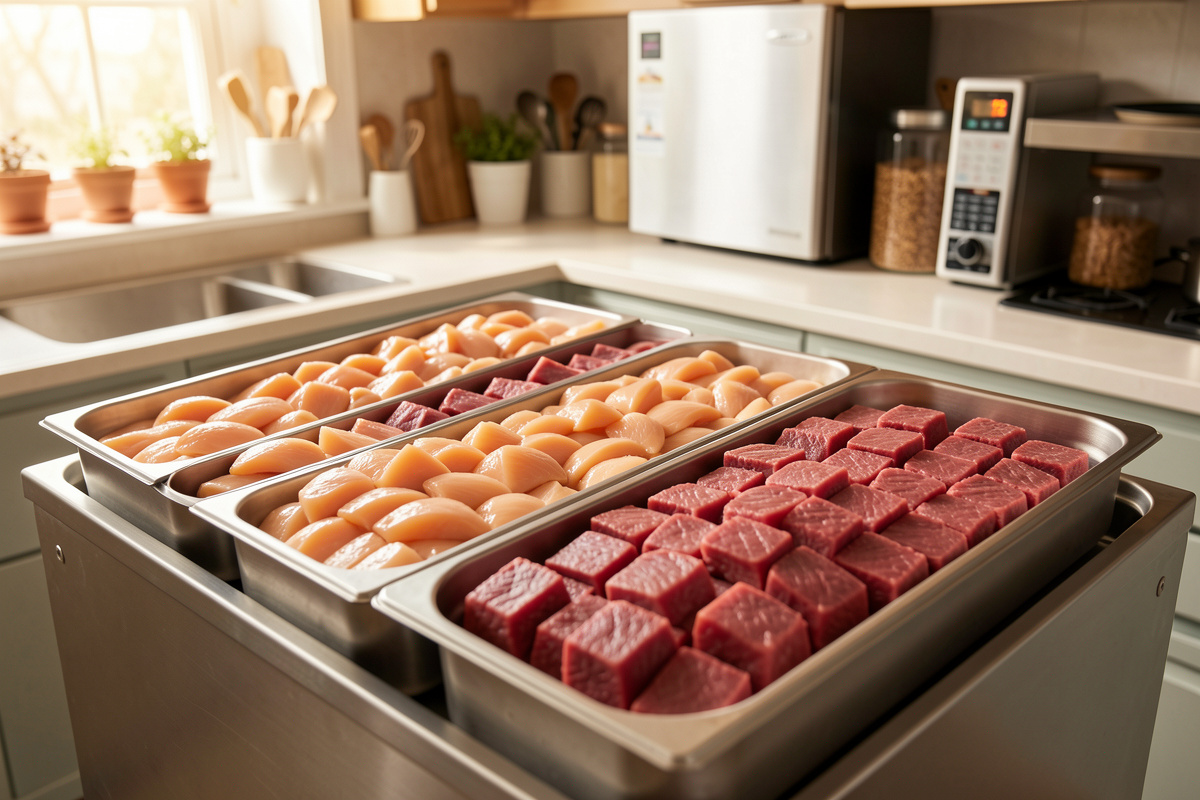

Freeze drying meat at home works, and it works better than freeze drying almost anything else — lean cooked meat rehydrates close to fresh and stores for years when it is sealed dry. The one rule that overrides every clever trick in this guide: freeze drying does not cook meat and does not kill bacteria, so anything that was raw going in still has to reach a safe internal temperature before it reaches a plate.
I have run more meat through my Medium-class Harvest Right than any other single food group, and my batch log says meat is the load type that rewards planning and punishes laziness more than berries or candy ever will. Fat is the enemy, pre-cooking is usually the answer, and the dry-check matters more here than anywhere because under-dried meat is the one freeze-dried food that can actually hurt you. This is the operator’s map of the whole subject — the food-safety frame first, then the per-meat detail in the spokes below.
Is It Safe to Freeze Dry Meat at Home?
Yes, with one non-negotiable condition: freeze-dried meat that started raw must be cooked to a safe internal temperature when you rehydrate it, exactly as if it had come from the freezer. Freeze drying removes water and pauses microbial activity through sublimation — it does not sterilize. Bacteria like Salmonella and E. coli survive the process dormant and wake up on rehydration.
This is the single most misunderstood point in the home freeze-drying world, and it is where the prepper-fantasy content gets dangerous. People treat a sealed mylar bag of freeze-dried raw chicken as “shelf-stable cooked food.” It is not. It is shelf-stable raw food with the water removed. The University of Georgia’s National Center for Home Food Preservation is blunt about this: freeze drying is a dehydration process, not a kill step, and meat handled this way must still be cooked. You can read their dedicated guidance on freeze drying meat, poultry, and seafood — it is the authority I point every reader to before they load a single tray.
The cleanest way to remove the risk entirely is to cook the meat before it goes in the dryer. A load that was fully cooked, cooled, freeze-dried, and sealed only needs hot water and a few minutes to come back — no second cook required, because the kill step already happened. That is why most of my meat batches go in cooked, and why the raw-versus-cooked decision is the first spoke in this cluster.
USDA Safe Internal Temperatures You Cannot Skip
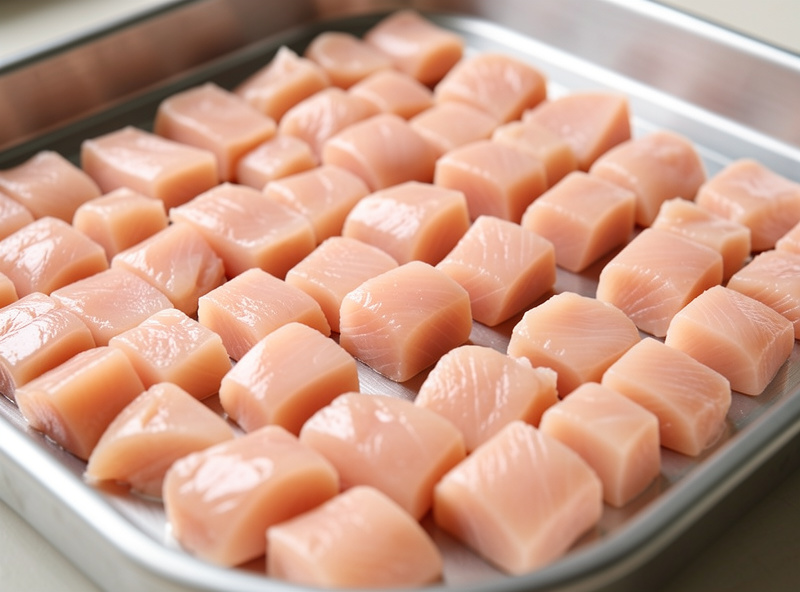
Whatever you freeze dry, the rehydrated-and-cooked meat has to hit the USDA FSIS safe minimum internal temperature for its type, verified with a thermometer — not by color, not by “it looks done.” These numbers are the spine of every meat article on this site and they never bend.
| Meat type | USDA safe minimum internal temp | Rest time |
|---|---|---|
| Poultry (chicken, turkey), whole or pieces | 165°F (74°C) | None required |
| Ground meats (beef, pork, lamb) | 160°F (71°C) | None required |
| Ground poultry | 165°F (74°C) | None required |
| Beef, pork, veal, lamb — steaks, roasts, chops | 145°F (63°C) | 3 minutes |
| Fish and shellfish | 145°F (63°C) | None required |
Color is not a safe doneness test for any of these, and freeze drying makes that worse: rehydrated meat can look one way and read cold in the center, and freeze-dried-then-rehydrated poultry in particular can hold a pinkish cast that has nothing to do with whether it reached 165°F. The thermometer is the only judge. I check the thickest piece, and for a pan of rehydrated raw ground meat I stir and recheck, because the heat is uneven coming back from dry.
If you pre-cook the meat to these temperatures before freeze drying, you have done the safety work up front and rehydration is just rehydration. If you freeze dry it raw, these are the temperatures the meat must reach after it comes out of the bag and into the pan. There is no version of home freeze drying where these numbers stop applying. I keep an instant-read thermometer in the same drawer as my impulse sealer for exactly this reason.
Why Fat Is the Real Limit on Freeze-Dried Meat
Fat does not freeze dry and it does not store well — it stays soft, it does not sublimate out as water does, and over months it goes rancid even in a sealed bag. This is why lean meats are the workhorses of home freeze drying and fatty cuts are a compromise at best. The leaner the meat, the longer and more honestly it stores.
My batch log is unambiguous on this. Cooked, drained, lean ground beef and trimmed chicken breast are my most reliable long-storage loads. Bacon, fatty roasts, and well-marbled steak freeze dry into something that looks finished but carries a clock on it — the residual fat is what limits the realistic shelf life, not the drying. When the marketing quotes “25 years,” it is quoting lean, low-fat foods stored in ideal conditions. Fatty meat does not get that number and nobody honest will promise it does.
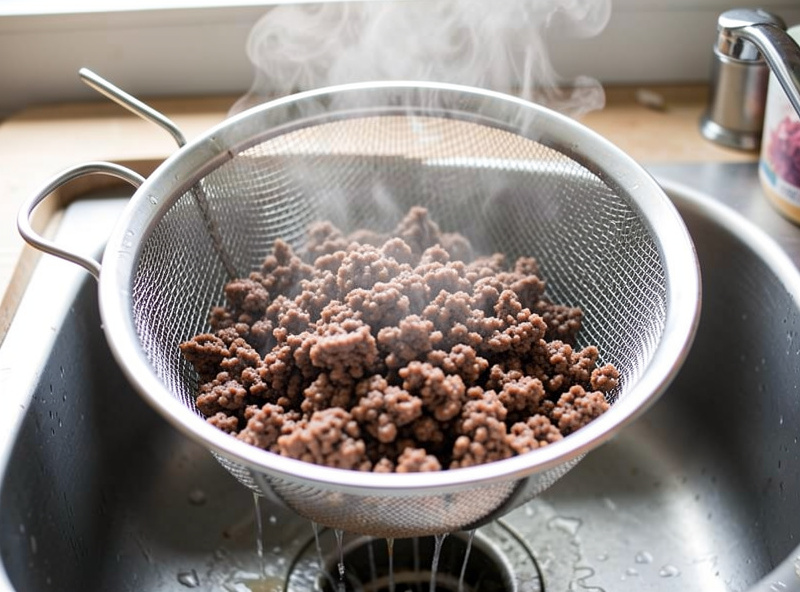
The practical operator move is to trim hard and drain harder. I cook ground meat, then rinse it in a colander with hot water to wash off rendered fat before the meat ever touches a tray. It feels wrong the first time. It is the single biggest thing you can do for storage life. The ground meat guide walks through that rinse step in detail.
Raw vs Cooked: The Decision That Shapes Every Batch
Cooked meat is the default I recommend for almost every home operator: the kill step is already done, rehydration is fast, and the texture comes back closer to a stew than to raw. Raw freeze drying has a place — it preserves the ability to cook from “fresh” later and suits some specific workflows — but it demands flawless cooking discipline at the other end and offers no safety margin.
The trade-offs run deeper than safety. Cooked meat rehydrates faster because the proteins have already denatured and the structure is open. Raw meat rehydrates slower and can come back with a slightly mealy texture if you rush it. Cooked meat is also more forgiving of imperfect drying, because you are reheating to a safe temperature regardless. I send roughly nine out of ten meat loads in cooked, and the exceptions are deliberate. The full breakdown lives in freeze drying raw vs cooked meat.
The Per-Meat Playbook
Every meat behaves differently on the tray, and lumping them together is how people end up with a gummy load and a wasted 30-hour cycle. Here is the short version of what my log says about each, with the full method in each spoke.
Chicken
Chicken is the best beginner meat: lean, cheap, and it rehydrates beautifully when cooked first. Diced cooked chicken breast is my single most-run meat load. White meat outperforms dark because dark meat carries more fat. The chicken guide covers dicing size, the cook-first method, and why poached beats fried for storage.
Beef
Beef splits into two stories: lean cooked beef (stew chunks, roast) freeze dries excellently, while fatty cuts and raw steak are a compromise. Cooked, trimmed beef is a staple in my long-term loads. The beef guide covers cut selection, the fat problem, and why I cook roasts before they ever see a tray.
Ground meat
Ground beef and ground turkey are arguably the most useful freeze-dried meats for real cooking — they drop straight into chili, tacos, and pasta sauce. The whole game is cooking, then rinsing the fat. The ground meat guide is built around that rinse.
Fish
Fish freeze dries well and fast because it is lean and thin, but it is also the most safety-sensitive load — seafood spoils quickly and parasite risk in raw fish is real. I freeze dry fish cooked, and only fish that was fresh and properly handled. The fish guide covers species, the smell problem, and why cooked is the only fish I run.
Pre-Freezing, Tray Loading, and Cycle Time for Meat
Meat loads benefit from a hard pre-freeze more than most foods: getting the trays down to deep-freezer temperatures before the cycle starts shortens the cycle and protects texture. I pre-freeze cooked meat on the trays in my chest freezer for at least a day before it goes in the machine. The reasoning is in pre-freezing before freeze drying.
Spread meat in a single layer — tray density matters because meat is dense and holds water tightly. Overload a tray and the cycle runs long while the center stays damp. My tray loading rules apply directly. Expect meat cycles to run on the longer end; cooked diced meat in my Medium unit typically runs longer than fruit, and a heavy or fatty load runs longer still. Real numbers and the factors that move them are in how long freeze drying takes.
How to Know Meat Is Actually Dry
Meat is the load where the dry-check is not optional: under-dried meat holds residual moisture that shortens storage and, in raw meat, keeps a living risk in the bag. A finished piece of freeze-dried meat snaps or crumbles cold — it does not bend, and the center is not cool or leathery to the touch. If a thick piece bends, it is not done.
I weigh a reference load before and after on bad batches and re-run anything that fails the snap test, exactly as I do for everything else — the method is in how to tell if freeze drying is done and the re-run logic is in when to re-run a batch. The mistake new owners make is trusting the cycle timer instead of the meat. The machine ends the cycle on a schedule; the meat is done when it is done.
My Standard Cooked-Meat Batch, Start to Finish
The way I actually run a meat load looks the same almost every time, because consistency is what makes the batch log useful — same trays, same weights, same checks. Here is the whole sequence for a typical chicken or ground-beef batch, the one I would hand a new owner.
I cook the meat fully first — poach or simmer for chicken, brown and then rinse for ground beef — and verify it hit the USDA temperature with the thermometer before it cools. I dice or break it small and even, because uniform pieces dry uniformly and a single fat chunk in a load is the piece that fails the snap test. The meat goes onto trays in a single layer, no piling, and into the chest freezer for a day-plus pre-freeze. Only then does it go into the machine, frozen solid, so the cycle starts on the front foot.
When the cycle ends I do not trust the timer — I pull a thick piece, let it sit ten seconds, and snap it. Cold snap, no leathery center: done. Then it goes straight into mylar with a sized oxygen absorber and gets sealed within minutes, labeled with the food, the load weight, and the date. The whole point of writing the weight down is that next time I can compare and know instantly whether a batch dried as well as the last one. That log is the difference between an owner and an operator.
Packaging Freeze-Dried Meat for Storage
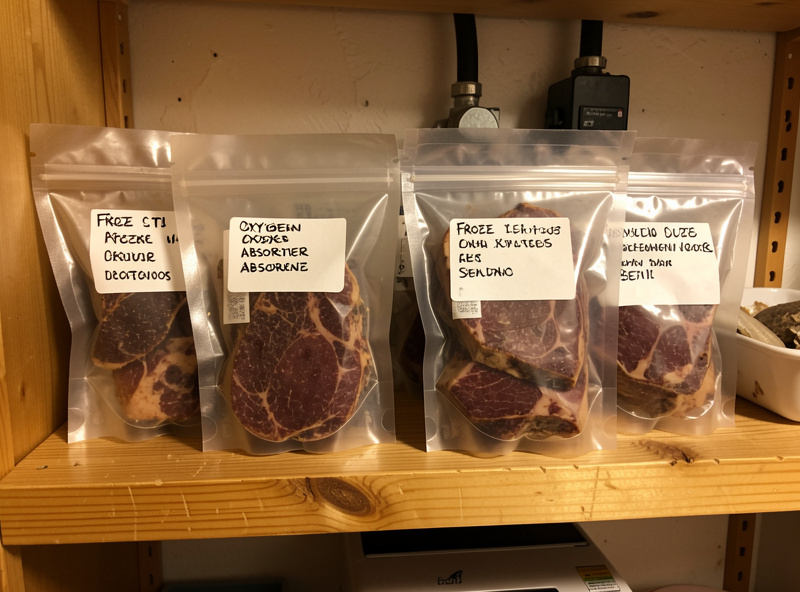
Freeze-dried meat goes into mylar with an oxygen absorber, sealed with an impulse sealer, the moment it passes the dry-check — meat is hygroscopic and pulls moisture out of room air fast once it is dry. Any delay between the dryer and the bag is reabsorbed water you will have to deal with later. I seal meat first when a mixed batch comes out.
Oxygen is the second enemy after moisture, especially for the fat in meat — oxygen drives the rancidity that limits fatty-meat storage. A correctly sized oxygen absorber matters here more than for low-fat foods. My broader storage method is in the complete storage guide, and the meat-specific shelf-life realities — including why nobody can give you a guaranteed number — are in freeze-dried meat storage and shelf life.
Rehydrating and the Final Cook
Rehydrating freeze-dried meat means adding hot water and time, then — for anything that started raw — finishing it to the USDA safe temperature. Cooked freeze-dried meat just needs to come back to a safe serving temperature; raw freeze-dried meat needs a genuine cook. This is the step where the safety rule from the top of this guide comes home to roost.
Lean cooked meat rehydrates in minutes in near-boiling water; dense raw pieces take longer and benefit from a simmer rather than a soak. I cover the water ratios, timing by meat type, and the “cook it like it is fresh” rule in rehydrating freeze-dried meat. The short version: treat rehydrated raw meat exactly as you would treat thawed raw meat from the freezer, because functionally that is what it is.
Is Freeze Drying Meat Worth It?
For long-term storage of lean meat you already have — a bulk-buy, a hunting season, a freezer you need to clear — freeze drying is genuinely worth it; for buying grocery meat specifically to freeze dry it, the economics are far weaker. Meat is the most expensive food you will put through the machine, and the running cost per batch is real.
My honest math lives in freeze dryer running costs and cost per serving. The summary: freeze-dried meat shines when the input was cheap or already paid for, and looks like an expensive hobby when you buy meat at retail to dry it. That honesty is the whole point of this site. If you want the broader “should I own one of these at all” argument, it is in is a freeze dryer worth it.
As an Amazon Associate I earn from qualifying purchases. The only gear I genuinely push for meat is the packaging line — a properly sized box of mylar bags and oxygen absorbers and a reliable impulse sealer — because meat is the load where a weak seal costs you the most.
The Meat Mistakes That Cost Me Loads
Most failed meat batches come down to a short list of mistakes I have made myself, and every one of them is avoidable once you know it exists. The expensive lesson is that meat is unforgiving of the shortcuts you can get away with on fruit.
The first is leaving the fat in. A fatty load looks finished, seals fine, and then turns over months — the rancid smell on opening is the whole batch telling you it was too rich to store. The second is piling trays too deep, because meat is dense and a thick layer leaves a damp core the cycle never fully reaches. The third is sealing too slow: dry meat sitting on the counter while you pack other trays is busy pulling moisture back out of the room air, and you bag it half-spoiled without knowing. The fourth, and the dangerous one, is treating raw freeze-dried meat as ready-to-eat — the bag is shelf-stable, the meat inside is not cooked, and that distinction is the one that can actually make someone sick.
None of these show up while the machine is running. They show up weeks or months later when you open the bag, which is exactly why the dry-check and the fat discipline are worth being fussy about up front.
Where Freeze Drying Meat Fits Your Whole Preservation Bench
Freeze drying is one bench among several, and meat is where that matters most: for short-term meat storage your freezer is cheaper and simpler, and for some meats curing is a better tradition than drying. I run a curing chamber alongside the freeze dryer, and I will tell you honestly when a cut belongs there instead — a guanciale or a coppa is a cured product, not a freeze-dried one.
Fermentation, curing, and freeze drying are the same hobby at three different water activities; I just keep adding benches to the preservation line. For meat specifically, freeze drying earns its place when you want years of dry, lightweight, rehydratable protein — for camping, for deep storage, for clearing a glut. For anything you will eat in weeks, the freezer wins. Compare the methods honestly in freeze drying vs canning and the broader freeze-dried meals guide.
Frequently Asked Questions
Do you have to cook freeze-dried meat before eating it?
If the meat was raw when you freeze dried it, yes. Freeze drying does not kill bacteria, so raw freeze-dried meat must be rehydrated and then cooked to the USDA safe internal temperature for its type. Meat that was fully cooked before freeze drying only needs to be brought back to a safe serving temperature.
Can you freeze dry raw meat at home?
Yes, raw meat can be freeze dried, but it stays raw. It must be cooked to a safe internal temperature after rehydration. Most home operators cook meat before freeze drying instead, so the kill step is done up front and rehydration is faster and safer.
How long does freeze-dried meat last?
Properly dried, sealed in mylar with an oxygen absorber, and stored cool and dark, lean freeze-dried meat is commonly reported to last for years. Fatty meats store far shorter because fat goes rancid. No honest source can guarantee a specific number; lean and low-fat is the rule for long storage.
Why does fat ruin freeze-dried meat?
Fat does not sublimate out the way water does, so it stays in the meat and goes rancid over time even in a sealed bag. This is why lean cuts and drained, rinsed ground meat store best, and why fatty cuts like bacon carry a much shorter realistic shelf life.
What is the best meat to freeze dry for beginners?
Cooked, diced chicken breast. It is lean, inexpensive, rehydrates close to fresh, and forgives small mistakes. Lean cooked ground beef that has been rinsed of fat is a close second because it drops straight into everyday meals.
How do you know freeze-dried meat is fully dry?
A finished piece snaps or crumbles when cold and shows no cool, leathery, or bendable center. If a thick piece bends, it is not done and must go back in. Under-dried meat stores poorly and, if it was raw, keeps a live risk in the bag.