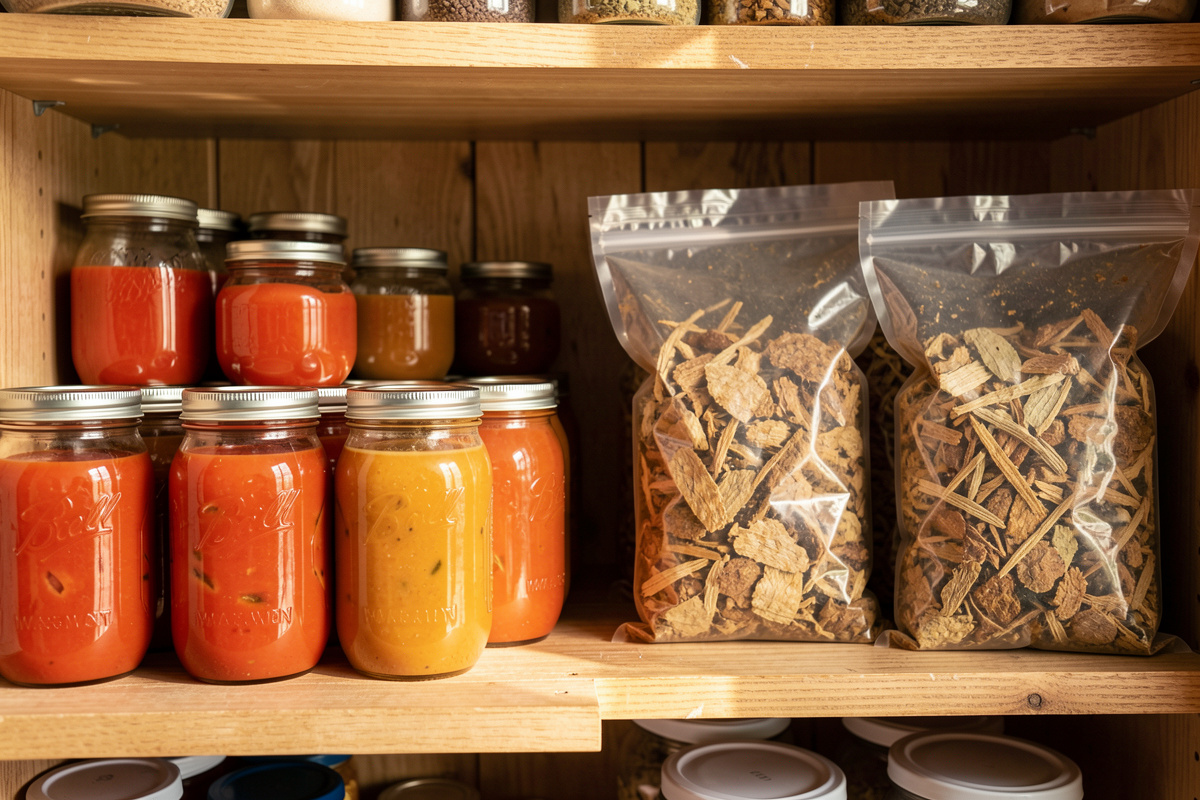

The honest freeze drying vs canning comparison comes down to this: canning gives you wet, ready-to-eat food in jars with no power draw, while freeze drying gives you dry, lightweight food that needs water added back. They preserve in completely different ways — canning uses heat and an airtight seal, freeze drying removes about 98-99% of the moisture by sublimation — and they suit opposite kinds of food. One isn’t better; they fill two different shelves in my pantry.
I run both. The canning shelf carries tomatoes, soups, pickles, and jams; the freeze dryer in my utility room handles anything I want light, long-lived, or rehydratable. Below is how I actually decide between them, where the hard safety lines are, and why I’d never tell anyone to throw out their canner because they bought a freeze dryer.
How Canning and Freeze Drying Preserve Food
Canning preserves by heating food enough to destroy spoilage organisms and then sealing it in an airtight jar so nothing can recontaminate it. The food stays wet — it’s cooked and stored in its own liquid or a brine. Freeze drying takes the opposite route: it freezes food solid, then pulls the ice straight to vapor under deep vacuum, leaving a dry, porous version of the original that you rehydrate later. Canning lowers risk through heat and seal; freeze drying lowers it by removing the water microbes need.
That structural difference explains the whole comparison. Canned food is heavy, breakable, and ready to eat. Freeze-dried food is feather-light, shelf-stacked flat in mylar, and needs water and sometimes heat before it’s a meal. Each is the natural home for a different category of food, which is why I sort by what the food is before I pick a method.
The Safety Line You Cannot Cross
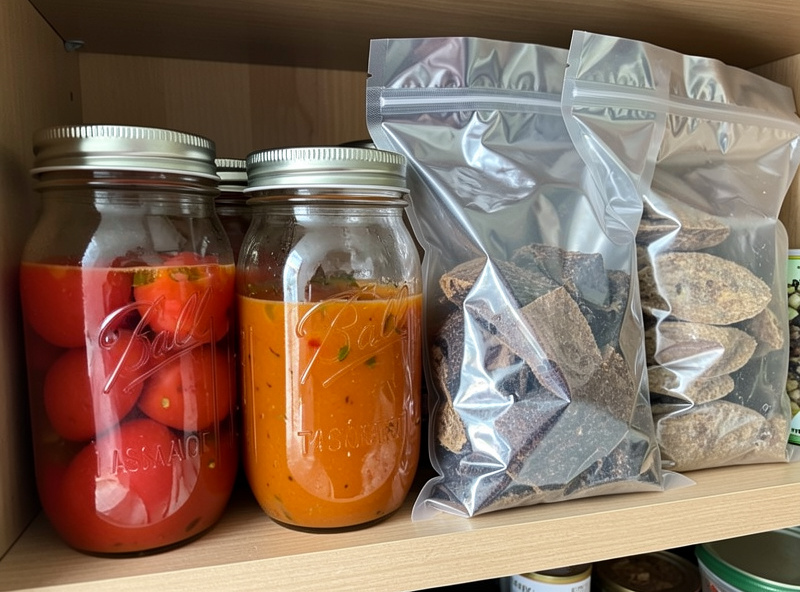
This is the part of the comparison I will not soften. Low-acid foods — most vegetables, meats, beans, anything not naturally acidic — require a tested pressure-canning process to be safe, because the bacterium behind botulism thrives in sealed, low-acid, low-oxygen jars. That is not a place for improvisation or a blog’s opinion. Follow USDA and National Center for Home Food Preservation guidance for canning, full stop, and use tested recipes and a calibrated pressure canner.
Freeze drying sidesteps the botulism risk that makes canning unforgiving, because it removes the water that microbes need rather than sealing them in moisture. But it has its own discipline: a load with residual moisture left in it can spoil, which is why my dry-check routine — the snap test, the weight check against the batch log, the re-run when in doubt — is non-negotiable before anything gets sealed. Neither method is “safe” on autopilot; each demands its own kind of care.
Shelf Life: Different Numbers, Different Rules
The USDA recommends eating home-canned food within about a year for best quality — it stays safe longer if the seal holds, but quality declines. Freeze-dried food sealed in mylar with oxygen absorbers carries the manufacturer “up to 25 years” claim, which is a best-case ceiling under ideal cool, dark, dry storage, not a guarantee anyone has independently verified out that far. The drier the food and the better sealed, the longer it keeps.
What ages both is the same list: heat, light, oxygen, and moisture. A canning jar with a failed seal spoils fast; a freeze-dried bag with moisture left in it fails too. I treat the published shelf-life numbers as ceilings, not promises — the reasoning behind that is in my realistic shelf life piece, and packaging detail lives in the storage guide.
Cost, Space, and Effort
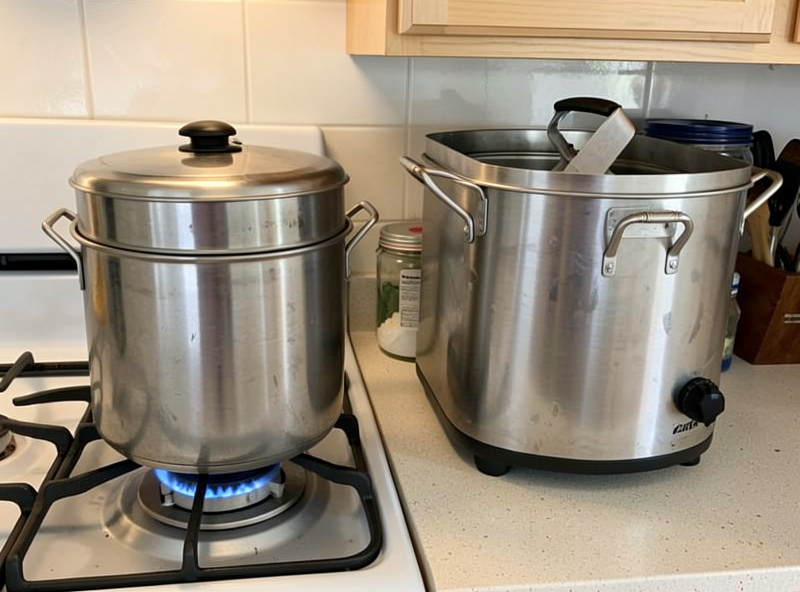
Canning has a low entry cost — a water-bath setup is cheap, and even a pressure canner is a fraction of a freeze dryer’s price. The ongoing costs are jars, lids, and the energy to cook a batch. Freeze drying is the expensive end: a four-figure machine, a 20-to-40-hour cycle, real power draw, and a pump that needs oil changes. Per jar versus per bag, canning is cheaper to start and freeze drying only pays off at volume.
Space and weight flip the other way. A year of canned food is a wall of heavy glass; the same calories freeze-dried weigh a fraction and stack flat. If storage space, portability, or earthquake-prone shelves are a concern, freeze drying wins on logistics even though it loses on price. I run the full money math in my cost per serving breakdown, and I’m blunt about the times the machine isn’t worth it in when freeze drying isn’t worth it.
Freeze Drying vs Canning at a Glance
| Factor | Freeze Drying | Canning |
|---|---|---|
| How it preserves | Removes ~98-99% moisture (sublimation) | Heat + airtight seal (stays wet) |
| Result | Dry, light, rehydrate to use | Wet, ready to eat |
| Shelf life | Up to 25 yrs (mfr-stated, sealed) | ~1 yr best quality (USDA) |
| Best foods | Fruit, veg, meals, dairy | Tomatoes, soups, pickles, jams |
| Main safety risk | Residual moisture spoilage | Botulism (low-acid; use tested process) |
| Upfront cost | $2,000+ machine | Low (canner + jars) |
| Weight & space | Light, stacks flat | Heavy glass, bulky |
| Power to store | None once sealed | None once sealed |
How I Choose Between Them
My rule is simple: if the food is meant to be eaten wet — soup, sauce, pickles, jam — it goes in jars. If I want it light, long-lived, or able to rehydrate close to fresh, it goes in the freeze dryer. Some foods genuinely suit both, and then I decide by storage space and how I’ll use it: jars for grab-and-eat, freeze-dried for the long-term, portable, no-power shelf. I never force one tool to do the other’s job.
The whole-bench view is the point. Fermentation, curing, canning, and freeze drying are the same hobby at different water activities — I just keep adding shelves to the preservation line. Knowing where each method genuinely wins is what keeps me from overspending on the loud machine for jobs the cheap canner already does well. If you’re weighing the dehydrator too, my freeze drying vs dehydrating comparison covers that side, and the full methods comparison ties it all together.
A Pantry Walk: What Goes Where in My House
Concrete examples beat theory, so here’s how my own pantry actually splits. Tomatoes are the clearest case: I can crushed tomatoes and sauce in jars because I want them wet and ready for a pot, but I also freeze dry tomato powder for shelf-stable flavor that weighs nothing. Soups and stews go in jars when I want a grab-and-heat meal and into the freeze dryer when I want a light, year-stable backup. Pickles and jams are jars-only — there’s no reason to dry something I want crunchy or spreadable.
On the freeze-dryer side of the room: berries, peas, corn, and sliced fruit from the garden harvest all go to mylar, because I want them light and rehydratable, not soft in a jar. Cooked rice, beans, and full meals freeze dry well for fast rehydration later. Dairy — cheese, yogurt drops, milk — only the freeze dryer handles, and canning can’t touch it at all. Seeing the foods sorted this way is what finally stopped me arguing about which method is “best”: each row of the pantry answers it differently.
Frequently Asked Questions
Is freeze drying safer than canning?
They carry different risks. Freeze drying avoids the botulism risk of low-acid canning because it removes water rather than sealing it in, but it can still spoil if moisture is left in the load. Canning is very safe when you follow tested USDA pressure-canning processes for low-acid foods.
Can you freeze dry the same foods you can?
Many overlap, but not all. Wet, ready-to-eat foods like soups, pickles, and jams suit canning better, while fruit, vegetables, full meals, and dairy often freeze dry well. Match the method to the food and how you want to use it rather than forcing one tool to do everything.
Does freeze-dried food last longer than canned food?
Generally yes when sealed properly. Manufacturers cite up to 25 years for freeze-dried food in mylar with oxygen absorbers, while the USDA recommends eating home-canned food within about a year for best quality. Both depend on a good seal and cool, dark storage.
Is canning cheaper than freeze drying?
Yes, to start. A canner and jars cost a fraction of a four-figure freeze dryer, which also has long power-hungry cycles and pump maintenance. Freeze drying only becomes cost-effective at volume, while canning is affordable for small batches right away.
Why is canned food heavier than freeze-dried?
Canned food keeps all its water and sits in glass jars, so it is heavy and bulky. Freeze drying removes nearly all the moisture, leaving food that weighs a fraction of the original and stacks flat in mylar bags, which is a major advantage for storage space and portability.