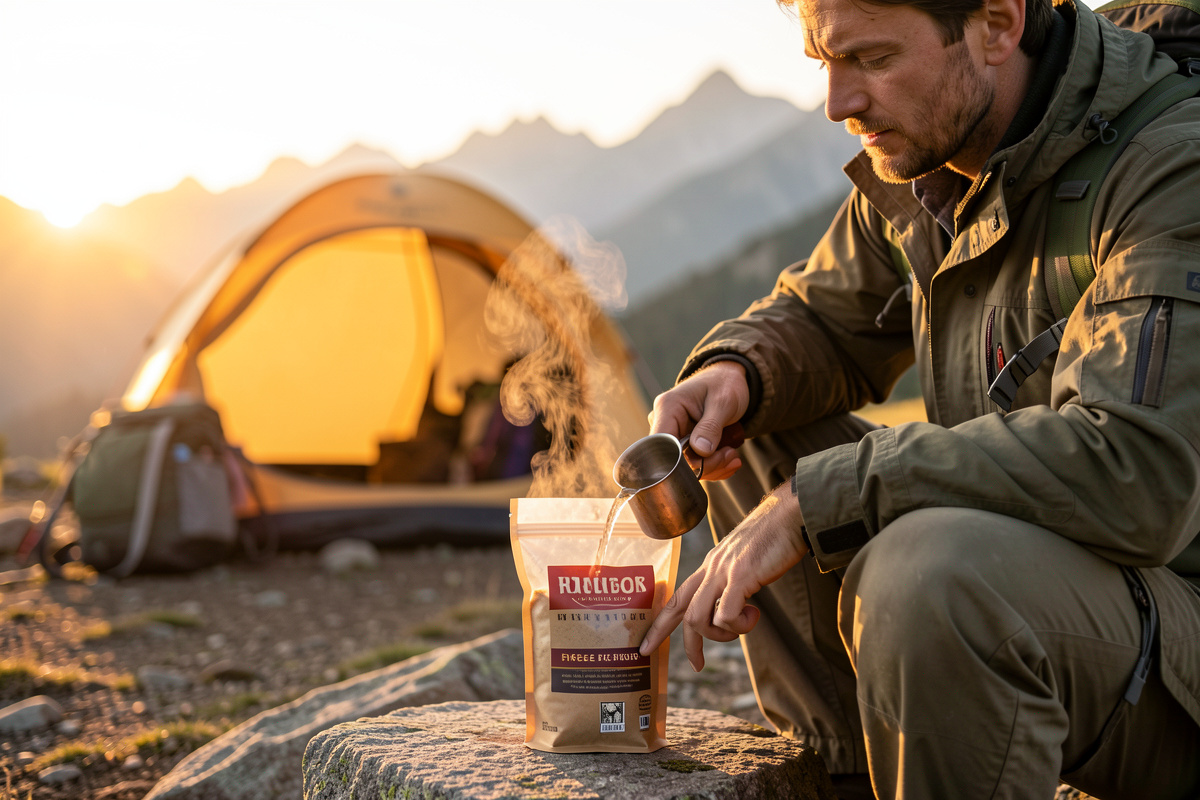

Freeze dried meal prep for camping is the part that happens in your kitchen weeks before the trip: cooking dishes a little leaner and softer than usual, drying them in thin even layers, and sealing them in single-meal portions. Done right, a week of dinners that weighed five kilos fresh leaves my trays at well under two, and every pouch needs nothing on the trail but hot water.
I run a Harvest Right Medium-class machine and I’ve logged enough camping loads to know that the trips that go well are decided at prep time, not at the campsite. This page is the workflow I actually use — recipe choices, tray loading, portioning, and packing — pulled from my batch log rather than from a marketing pamphlet. For the wider picture of how meals behave in the chamber, start at the freeze dried meals guide.
Cook for the Trail, Not for the Table
A meal headed for the freeze dryer and the backpack wants different cooking than the same meal on a plate tonight. I cook camping batches leaner, softer, and in smaller pieces, because every one of those choices makes the dish dry cleaner and rehydrate better in cold, tired field conditions.
Lean is the big one. Oil and fat do not freeze and do not sublimate, so a greasy chili dries slower, gums the trays, and goes rancid first in storage. I skim hard, or I build a deliberately lean version for the machine and carry a small bottle of oil to add calories back at camp. Soft is the second rule: I par-cook pasta and rice so they finish on rehydration instead of arriving mushy, and I simmer vegetables just to tender. Small is the third: centimeter dice everywhere, because a fat chunk of stew meat keeps a frozen core long after the rest of the tray is done and is the piece most likely to fail the snap test.
I learned the fat rule the hard way. Early on I dried a proper full-fat beef curry for a trip, sealed it proudly, and opened it four months later to a faint off smell at the surface where the oil had pooled. The starch was perfect; the fat had turned. Nothing in the chamber went wrong — the recipe was wrong for the chamber. Now anything destined for a pack gets the lean treatment, and the richer version stays in the fridge for the week I cook it.
Loading Trays for Even, Predictable Drying
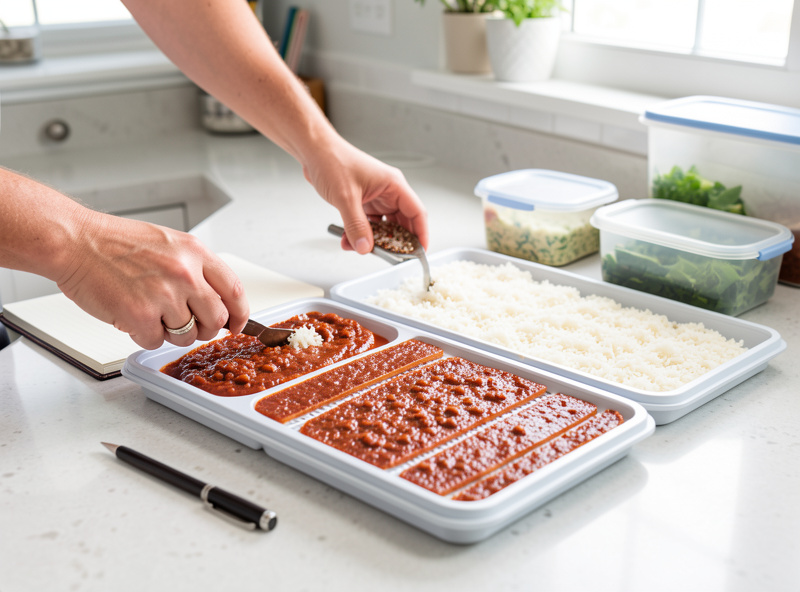
Camping meals dry best spread thin and even — roughly a centimeter deep, weighed so the cycle is repeatable. A tray piled deep in the middle leaves a wet core you won’t find until the meal spoils in the pack, so even loading is a food-safety habit, not just a tidiness one — for the underlying rules on safely drying and storing food I defer to USDA guidance.
I weigh every tray-set before it goes in and log the weight, because that number is what later tells me the load is actually dry. Pre-freezing the loaded trays in the chest freezer overnight lets the machine skip its own slow freeze and start pulling vacuum on solid food, which shortens the cycle and makes it consistent batch to batch. The density specifics are in freeze dryer tray loading, and if you’re new to the machine, the proven starter loads in the best first freeze dryer batch are a safer place to learn than a deep, oily stew.
Portion Before You Dry, Not After
The single habit that saves the most grief is deciding the portion size before the trays go in. Freeze dried meals come out light and fragile; trying to split a big dried slab into trail dinners afterward just crumbles the batch. I decide at prep time whether a dish is a solo dinner, a two-person camp meal, or a shared pot, and I dry it in those units.
That decision drives everything downstream: the bag size, the oxygen-absorber size, and the label. A single trail dinner goes into a quart-class pouch; a two-person meal into a larger one. Right-sizing the bag matters because less headspace means the oxygen absorber has less air to scrub and the pack carries less dead space. I keep a few sizes of mylar bags and oxygen absorbers on the shelf and match them to the portion rather than stuffing everything into one big bag. As an Amazon Associate I earn from qualifying purchases.
Sealing and Labeling for the Pack
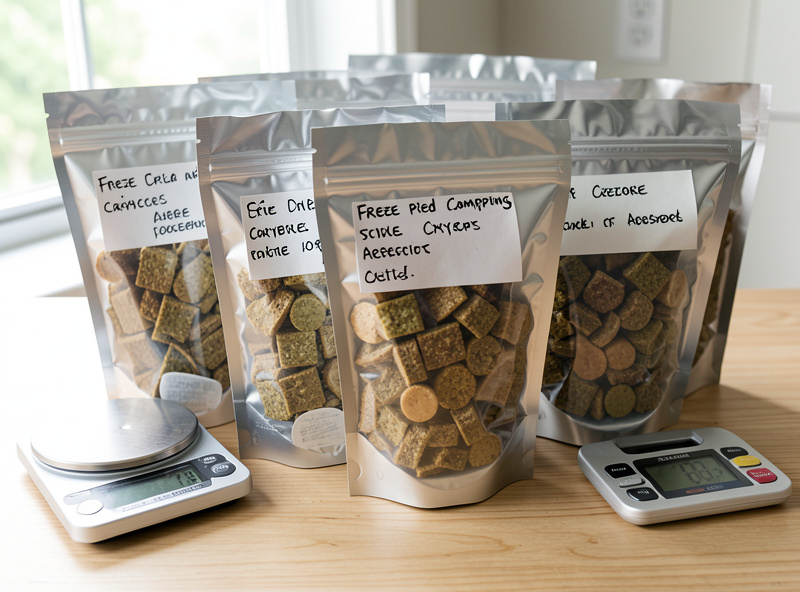
A camping meal is only as good as its seal, because a pinhole leak lets moisture back in and undoes the whole cycle. I weld every pouch closed with an impulse sealer for a clean, repeatable seam, drop in the right oxygen absorber, and label the food and the seal date before it ever joins the pile.
The label is not optional for trail food. An unlabeled silver pouch in a pack is a mystery dinner and a guessing game on cook time. I write the dish, the date, and the water-to-add amount right on the bag, so at camp I’m not doing math by headlamp. How much water each meal wants and how long it needs to sit is its own skill — I cover the field side of it in rehydrating freeze dried meals in the field. For longer-term storage of the meals you don’t pack this season, the full method is in how to store freeze dried food.
Building a Trail Menu That Carries Well
Once the technique is solid, the menu is where camping meal prep pays off. The dishes that pack best are the ones that are calorie-dense, rehydrate fast, and survive being crushed in a pack — and you control all three when you build them yourself.
Calorie density matters more than raw weight once you’re moving all day, because the lightest pack is no good if it doesn’t fuel you; the math on that is in calorie-dense freeze dried backpacking meals. If you want to go further and build trail meals from individual freeze dried components rather than whole dishes, the recipe approach is in making your own freeze dried backpacking food.
| Camp meal | Prep tweak for the machine | Pack format | Water at camp |
|---|---|---|---|
| Chili and rice | Skim fat, par-cook rice, dice small | Single mylar pouch | Roughly equal volume, hot |
| Pasta with tomato sauce | Under-cook pasta, lean sauce | Single mylar pouch | Slightly more than the meal volume |
| Breakfast scramble | Low cheese, small dice | Quart pouch | Less water, shorter soak |
| Beef stew | Centimeter dice, skim fat | Two-person pouch | Generous hot water, longer wait |
Frequently Asked Questions
How do you prep freeze dried meals for camping?
Cook the dish leaner and softer than normal, skim the fat, and cut everything into small pieces. Spread it thin and even on the trays, dry it fully, then seal single-meal portions in mylar with oxygen absorbers and label the dish, date and water to add.
How much do freeze dried camping meals weigh?
Freeze drying removes roughly 95% of the water, so meals drop by about two-thirds or more. A week of dinners that weighed around five kilos fresh can come out under two kilos, which is the weight you carry on your back.
Should you skim the fat before freeze drying a camp meal?
Yes. Oil and fat do not sublimate, so they slow the dry, gum the trays, and go rancid first in storage. Make a lean version for the machine and carry a small bottle of oil to add calories back at camp.
What size bags should you use for camping meals?
Match the bag to the portion. A single trail dinner fits a quart-class mylar pouch; a two-person meal needs a larger bag. Smaller headspace means the oxygen absorber has less air to scrub and the pack carries less dead space.
Can you portion freeze dried meals after drying?
It is far better to portion before drying. Dried meals come out light and fragile, and splitting a big slab afterward crumbles the batch. Decide solo, two-person or shared at prep time and dry it in those units.
Do homemade freeze dried camping meals need oxygen absorbers?
For anything you are storing more than a few weeks, yes. Seal in clean, dry mylar with an oxygen absorber sized to the bag, kept away from light and heat. Meals you will eat within a couple of weeks can live in a jar instead.