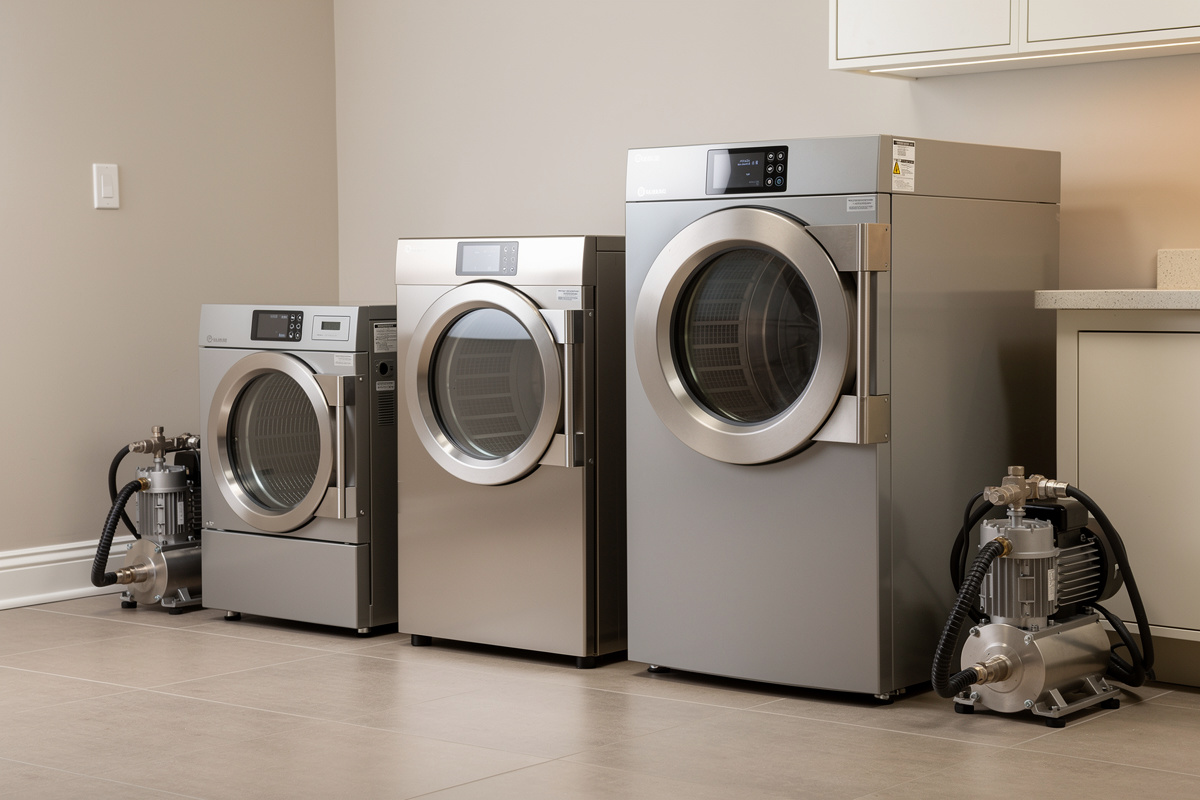

Buying a home freeze dryer is mostly one decision made well: the right size for what your kitchen and your garden actually produce, on a pump you understand, in a spot you’ve already measured. Everything else — accessories, financing, new versus used — flows from that. I’ve run a Medium-class machine in my utility room for years now, logging every batch like process data, and the question I get more than any other isn’t “how does it work” but “which one do I buy, and am I about to make an expensive mistake.” This guide is the honest version of that conversation, the one the affiliate-review sites skip because it doesn’t end with a single shiny “buy this” button.
I’ll be blunt where the category isn’t: the machine is loud, hungry, slower than the marketing implies, and it does not “pay for itself in months.” It can absolutely earn its keep if your garden gluts and your honesty holds — but that’s a calculation, not a slogan. So before you spend four figures, let’s walk the actual choices: capacity that matches your output, the pump decision, the used-market trap, the space you need, the day-one accessories that aren’t optional, and the financing math without the fantasy.
Start with output, not the spec sheet
The single most common buying mistake I see is sizing to a fantasy of how much you’ll preserve rather than what you actually produce. A freeze dryer doesn’t change your harvest; it changes what you do with it. If your garden gives you a few flats of berries and a herb glut each summer, a small machine run more often beats a large one sitting half-empty — empty tray space is just slower cycles and wasted power.
So the first thing I’d do, before looking at a single model, is honestly estimate your annual preservation volume: garden harvests, sale-rack meat you’d batch, leftovers you’d actually process rather than throw out, and the candy experiments everyone tries once. Write it down by season. That number — not the prepper fantasy of a five-year pantry built in a weekend — is what sizes your machine.
I’d push that honesty one step further: separate what you want to preserve from what you’ll actually get around to. Everyone’s first plan is ambitious. The freeze dryer that earns its keep is the one that matches your realistic, slightly-lazy-week throughput, not your best-intentions spreadsheet. My own batch log is full of seasons where the garden produced more than I had trays for and seasons where life got busy and the machine sat idle for weeks — both are normal, and a sensibly sized unit handles both without making you feel like you wasted money. Buy for the average week, not the heroic one.
Capacity by size: what the trays really hold
Manufacturers publish tray counts and rated batch weights, and those numbers are correct as far as they go — but rated capacity and useful capacity diverge fast once you account for tray density, pre-freezing, and the fact that liquids and dense loads behave differently from a tray of sliced strawberries. Here’s how I’d actually think about the size tiers, framed around throughput rather than the brochure’s best-case headline.
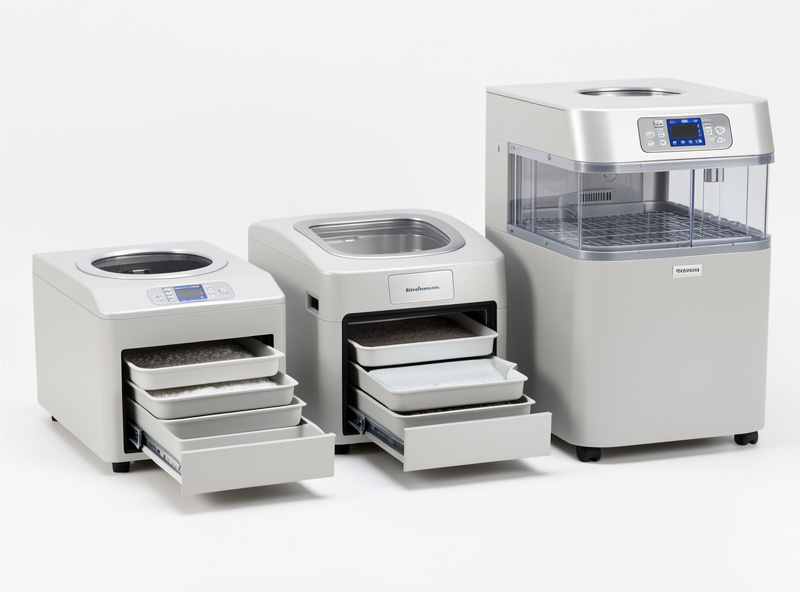
| Size class | Typical tray count | Real-world batch fit | Best for | Trade-off to weigh |
|---|---|---|---|---|
| Small / compact | 3–4 trays | A herb glut, a few flats of berries, single-meal batches | Apartments, couples, low seasonal volume, first-machine learners | Frequent cycles to process a big harvest; can bottleneck at glut season |
| Medium (the network reference unit) | 4–5 trays | Family meal-prep loads, a real garden season, mixed batches | Most households; the size I run and the one I steer most people toward | Heavier, louder, needs a planned install spot — not a countertop appliance |
| Large | 6+ trays | High-volume preservers, small homestead output, group buys | Serious annual volume, big gardens, multiple households sharing | Power draw, footprint, and pump size all scale up; easy to under-fill |
The honest takeaway from my own bench: a Medium-class unit is the sweet spot for the largest share of buyers because it absorbs a real garden season without leaving you running half-empty small batches all autumn, yet it still fits a planned utility-room install. I cover the small-versus-medium decision in depth in its own spoke, because it’s the choice most people agonize over and most get backwards.
Reading a spec sheet without getting fooled
Once you’ve got your output number, the spec sheets start to make sense — but only if you read them the way an operator does rather than the way the marketing wants you to. Rated batch weight is a best-case figure for an ideal load; real loads of mixed density, liquids, or anything that needs careful tray spacing will come in under it. Cycle-time claims are similarly optimistic, because cycle length depends enormously on what you’re drying, how well you pre-froze it, and how densely you packed the trays — not on a single headline number.
The specs I actually weigh when comparing models are the ones that affect ownership, not the brochure hero stats: footprint and weight (because it dictates where the machine can live), the pump type and its maintenance demands, the electrical requirements against the circuit I’d plug it into, and the real-world tray area rather than the rated weight. I’d rather a machine that’s honest about a four-tray load than one that quotes a five-tray number you’ll never hit cleanly. When two models look close on paper, the tiebreaker for me is almost always parts availability and the maintenance story — the things you live with for years, not the spec you read once.
A word on cycle and energy figures generally, because the category is full of confident single numbers that don’t survive contact with a real kitchen: I won’t hand you a fabricated “costs exactly X per batch” stat, because the honest answer is a method and a range. Energy use scales with run time, ambient temperature, and load; cycle time scales with food type and pre-freeze. The way to know your numbers is to measure your own machine with a plug-in meter and log it — which is exactly what I do, and exactly why my running-cost answers are ranges by food type rather than a single magic figure.
The pump decision (oil vs oil-free)
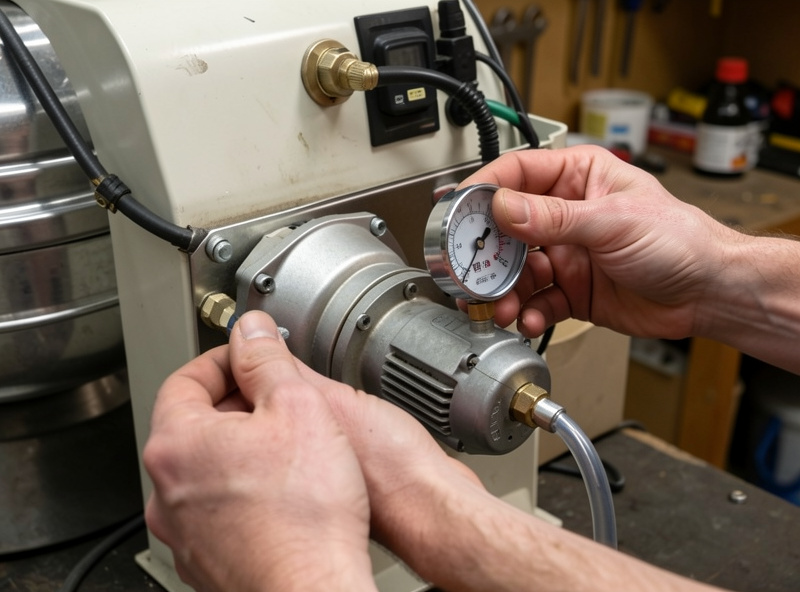
Every home freeze dryer needs a vacuum pump to pull the chamber down so sublimation can happen, and you’ll choose between a standard oil-lubricated pump and a premium oil-free option. I run the standard oil pump and have logged its oil-change routine honestly for years, so I’ll speak to that with full authority: the oil pump is cheaper up front, reliable, and the maintenance is real but manageable once it’s a habit — change the oil on schedule, filter it if you want to stretch it, and listen to the pump because it tells you when it’s unhappy.
The oil-free pump I do not own, so I won’t pretend to. What operators consistently report is less routine maintenance and no oil-change mess, traded against a higher purchase price and a different long-term reliability picture that’s harder to pin down. I treat the oil-free option as a reported comparison, not a lived verdict — and I’d rather flag that honestly than fake bench time I don’t have. The full decision tree lives in its own spoke.
New, used, or financed?
There’s a real used market for these machines, and a real way to get burned in it. A used freeze dryer can be a genuine bargain or a several-hundred-dollar repair waiting to happen, and the difference comes down to a checklist most first-time buyers don’t know to run: pump condition and hours, chamber and gasket integrity, whether it holds vacuum, and the cost and availability of the parts you’ll inevitably replace. I’ve written a full used-buying checklist as a spoke for exactly this reason.
On financing: manufacturers offer payment plans, and they can make sense — but only if you’ve done the honest math first. A monthly payment doesn’t change the total cost, and “it pays for itself” is the most over-promised line in this category. I walk through the real financing arithmetic, including the running costs people forget to add, in the financing spoke. Spoiler: the machine earns its keep through garden glut and honesty, not through a marketing ROI table.
Space, power, and the install you plan before you buy
This is the step most buyers skip and then regret. A freeze dryer is the heaviest, loudest machine in my preservation line — the industrial cousin of my curing chamber — and it needs a spot chosen before it arrives, not after. You’re planning for footprint and clearance, a circuit that can carry it, drainage or a drain pan for defrost water, and tolerance for noise and the heat the pump throws off. I planned my utility-room install around exactly those constraints, and the space-requirements spoke covers the pre-purchase measuring so the machine doesn’t end up homeless in your kitchen.
The accessories that aren’t optional
The machine is the headline, but it doesn’t work alone. There’s a short list of accessories you genuinely need on day one — pump oil if you’re running the oil pump, mylar bags and oxygen absorbers for storage, and a way to seal them — and a longer list of nice-to-haves the marketing bundles to inflate the cart. I separate the real day-one kit from the upsells in the accessories spoke, with honest notes on what I actually reach for versus what’s gathered dust on my packaging shelf.
One note that belongs here and on every page of this site: storage practice is not a safety guarantee. Mylar plus oxygen absorbers is the commonly reported best practice for long-term storage, and the shelf-life numbers you see quoted come from manufacturers, not from me. I’ll tell you how I package and rotate my own batches, but for anything safety-critical — especially low-acid foods, canning-adjacent questions, or anything you’re unsure about — I point you to USDA guidance and the manufacturer, full stop. Rehydrated-food verdicts on this site are about taste and texture, never a safety clearance.
The mistakes I’d warn a friend away from
After years of running my own machine and talking buyers through theirs, the same expensive mistakes come up. Oversizing is the big one — buying large because the pantry-prepper content made volume feel like the goal, then running half-empty batches that waste time and power. Undersizing happens too, usually when someone buys the compact unit to save money and then fights it every glut season; if you genuinely produce a lot, the small machine becomes the bottleneck.
The second cluster of mistakes is skipping the install planning: ordering the machine before measuring the spot, discovering it’s louder and hotter than expected, and ending up with it stranded somewhere it disrupts the household. The third is treating accessories as optional and then being unable to actually store a finished batch on day one because the mylar and sealer never made it into the cart. And the fourth, the one that costs the most emotionally, is buying on the “pays for itself” promise and feeling cheated when the math turns out to depend entirely on your own output. None of these are the machine’s fault — they’re buying-process failures, and every one is avoidable with the sequence this guide lays out.
How I’d actually buy one today
If I were starting over with what I know now: I’d estimate my real seasonal output honestly, size to a Medium-class unit unless my volume was genuinely small or genuinely large, start on the standard oil pump because I understand its maintenance and it’s the cheaper informed entry, measure and plan my install spot before ordering, buy the day-one accessories with the machine, and run the financing math as a total cost — never as a “pays for itself” promise. That sequence is the whole cluster in one paragraph; the spokes below are each step done properly.
Budgeting the whole machine, not just the sticker
The purchase price is the part everyone fixates on and the part that’s easiest to plan for, because it’s a single number on a checkout page. The cost that actually surprises people is everything around it. There’s the pump oil if you’re on the oil pump, an ongoing consumable that’s cheap individually but real over years. There’s the mylar and oxygen absorbers, which are a recurring cost scaled to how much you preserve — the more the machine earns its keep, the more you spend on storage, which is a good problem but a real one. There’s electricity, which I measure rather than guess, and which varies with how much you run and how cold your install space is.
None of these are reasons not to buy — they’re reasons to budget honestly so the machine doesn’t feel like a betrayal six months in. When I help someone build their number, we add a realistic first-year consumables figure to the sticker and the financing, then compare that total against what the machine will genuinely save or enable. If the honest total still makes sense for your output, buy with confidence. If it only makes sense under the seller’s ROI fantasy, that’s the signal to wait, size differently, or preserve another way.
First machine versus forever machine
A question worth asking before you spend: are you buying your first freeze dryer or your forever one? They’re not always the same purchase. Some buyers are genuinely better served starting smaller and cheaper to learn the workflow — the pre-freezing discipline, the tray-loading technique, the dry-check habit — before committing to a large unit. Others know their output and their commitment cold and should buy the right-sized machine once rather than upgrading later at a loss.
My honest steer: if you’re unsure whether the hobby will stick, the used market and the smaller sizes are a lower-stakes way in, and a freeze dryer holds resale value reasonably well if it’s been maintained. If you already preserve seriously across other benches — if you’re the kind of person who logs batches and rotates stock — you probably know your output and should buy the Medium-class unit you’ll actually grow into. Either way, the decision is yours to make from your numbers, not from the urgency the marketing manufactures.
Where freeze drying sits on the preservation bench
One last bit of buyer’s honesty, because it can save you four figures: a freeze dryer isn’t always the right tool. Fermentation, curing, and freeze drying are the same hobby at three different water activities — I just keep adding benches to the preservation line. If most of what you want to keep is better cured, fermented, or simply frozen, a freeze dryer is an expensive answer to a question a cheaper bench already solves. Buy the machine because freeze drying specifically is what your output needs — long shelf-stable storage, lightweight meals, the candy experiments — not because it’s the most impressive appliance in the room.
Frequently Asked Questions
What size home freeze dryer should I buy?
Is an oil or oil-free vacuum pump better?
Is it safe to buy a used freeze dryer?
Does a freeze dryer really pay for itself?
How much space and power does a freeze dryer need?
What accessories do I actually need on day one?
Related Guides
This buying guide is the front door; each step has its own deep-dive. Once your machine arrives, the ownership-reality cluster covers living with it day to day.
- Is a Freeze Dryer Worth It? An Owner’s Honest Reality Check
- Where to Put a Freeze Dryer in Your House
- Freeze Dryer Running Costs: The Real Cost to Own One
- Freeze Dryer Oil Pump Maintenance: My Honest Schedule
Guides in This Buying Cluster
The buying-decision cluster, in the order a first-time buyer usually wants them:
- Harvest Right Small vs Medium: Real Capacity Compared
- Oil vs Oil-Free Freeze Dryer Pump: An Honest Decision
- Used Freeze Dryer Checklist: What to Inspect Before You Buy
- Freeze Dryer Space Requirements: Measure Before You Buy
- Freeze Dryer Accessories You Actually Need on Day One
- Freeze Dryer Financing: The Honest Total-Cost Math
- The First Freeze Dryer Batches Guide: What to Run and How to Get It Right