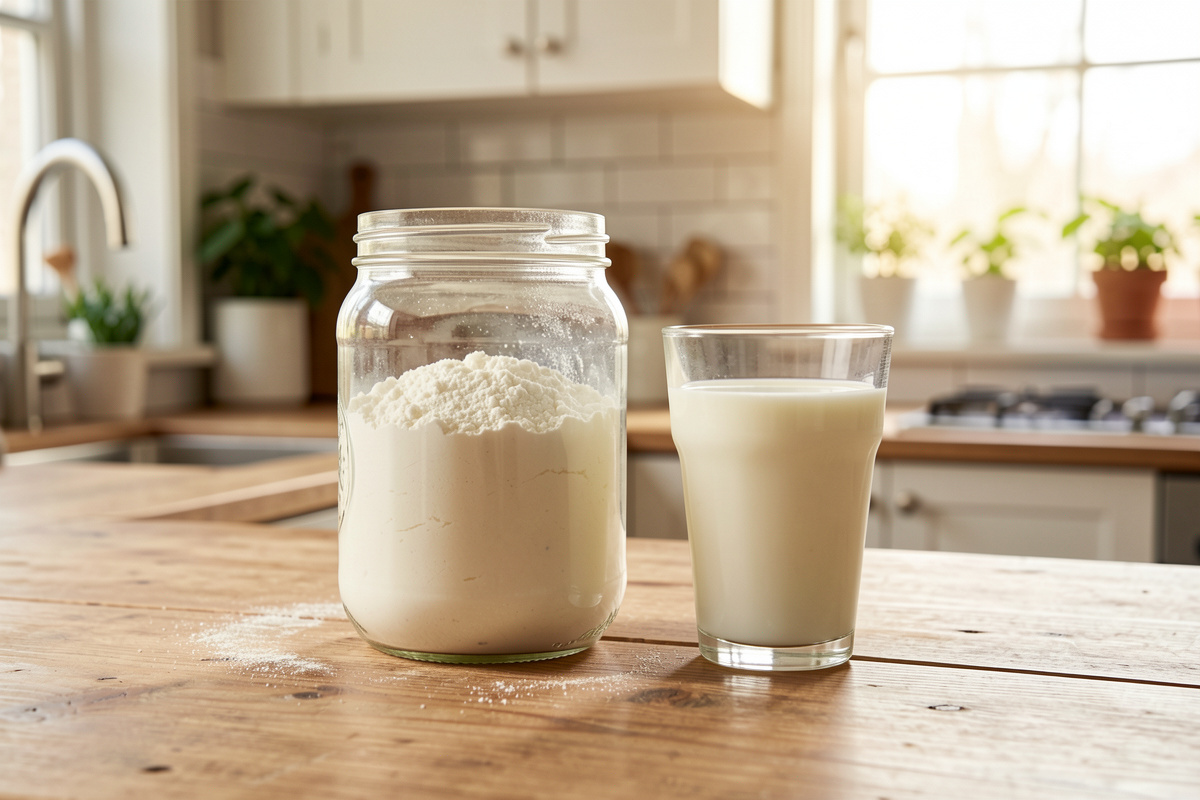

Freeze drying milk at home turns it into a sweet, shelf-stable powder that whisks back into a usable glass with about a cup of water per cup of milk you started with. In my batch log a Medium-class machine runs milk in roughly 28 to 36 hours, and the single biggest variable in your result is fat: skim stores for years, whole milk does not. Use pasteurized milk only — the machine removes water, it does not pasteurize.
I have run more milk than almost anything else on this bench, because powdered milk is genuinely useful in a way freeze-dried butter never is. This is the operator method: how to prep the trays so you do not coat the chamber in frozen froth, what the cycle actually costs in time, and the honest difference between the milk types when it comes to storage. The broader category context lives in my dairy, eggs and baked goods guide.
Start With the Safety Line: Pasteurized Only
Freeze drying is not a kill step. It drops water activity low enough to stall the bacteria and molds that need moisture, but it does nothing to pathogens already in the milk. That is why I only ever load pasteurized milk, and why USDA and FDA treat commercial dried milk as pasteurized product — the heat step happened before the drying. Raw milk freeze-dried is raw milk with the water removed, carrying every risk it started with.
The storage numbers you see quoted — years, even decades — are commonly reported figures for fully dried, low-fat powder kept sealed in the right conditions, not a guarantee I can make about your batch. I report what operators find and what manufacturers state, and I judge a rehydrated glass on taste and smell, never as a safety clearance. Off smell, off taste, it goes down the drain.
Prep: Pre-Freeze Flat or Clean Frozen Milk Off Your Door
Milk is a liquid, and liquids are a technique problem before they are a drying problem. Pour milk straight into a room-temperature tray, start the cycle, and the freeze stage will let it slosh and foam — I have spent an hour scraping frozen froth off the acrylic door learning that lesson. The fix is to pre-freeze the trays flat and solid in the chest freezer first, then transfer them rigid into the chamber.
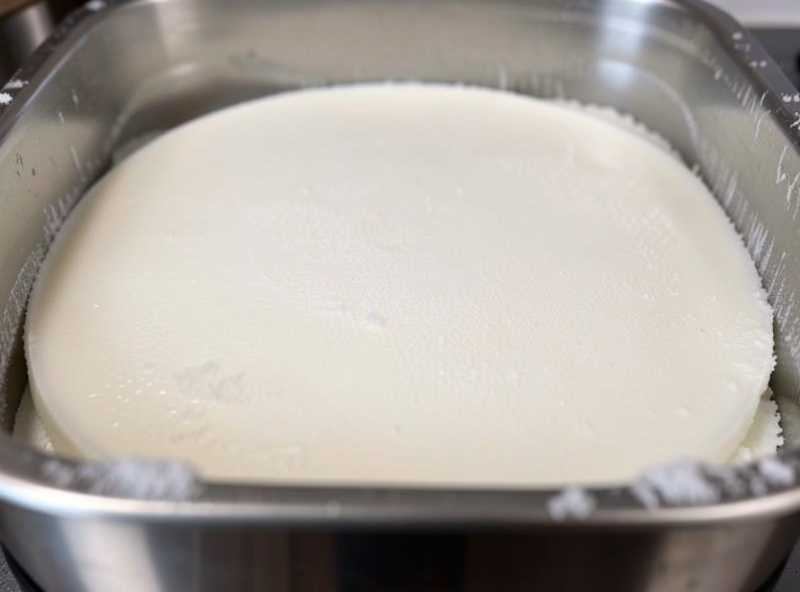
Depth is the other rule. I fill no deeper than a third of the tray, because a thick layer freezes a skin on top while the underside stays liquid and fails the center check. Shallow and even beats deep and fast every time. This is the same discipline I use for any pourable load — the full version is in my liquids on trays method and the general pre-freeze step. I write the load weight on a sticky note before the trays go in; that number, against the final weight, is how I know the dry actually finished.
The Cycle: What Milk Actually Costs in Time
In my log, milk runs 28 to 36 hours on the Medium, longer than berries and shorter than a fatty cheese. The variation comes down to load weight, how cold the pre-freeze was, and ambient temperature in the utility room. Milk holds a lot of free water, so the sublimation phase is long — this is not a quick load, and it is worth checking your cycle-time expectations and running costs before you commit a tray.
The doneness check matters more with milk than with sturdier foods, because a milk powder that looks dry on top can hide a cold, slightly tacky center. I use the snap-and-crumble check and the weight target from the log: the powder should be completely free-flowing and break to dust with no cool spots. If it does not, it goes back in for extra dry time rather than into a bag. My full doneness routine is in how to tell if freeze drying is done.
Whole vs Skim: The Fat Decision That Sets Your Storage
This is the choice that matters most, and the marketing rarely spells it out. Sublimation removes ice, not fat. Whatever fat is in your milk stays in the powder and oxidizes on its own clock, no oxygen absorber can stop it, so the higher the fat, the shorter the realistic storage. Skim and low-fat milk are the long-storage members of the family; whole milk tastes better rehydrated but rotates much faster.
| Milk Type | Fat Level | Storage Outlook | Best Use | Difficulty |
|---|---|---|---|---|
| Skim / nonfat | Very low | Longest (low rancidity risk) | Long-term pantry powder | Easy |
| 1% / 2% | Low-moderate | Good, rotate yearly | Everyday drinking, baking | Easy |
| Whole milk | Moderate | Shorter; rotate faster | Best flavor rehydrated | Moderate |
| Buttermilk | Low-moderate | Good | Baking powder, pancakes | Easy |
| Heavy cream | Very high | Shortest; mostly fat | Novelty; limited success | Hard |
My own habit: skim powder for the long-term pantry where it sits untouched for the season, whole milk in smaller batches that I will actually use within a year. Cream I have tried and would not bother with again — it is mostly fat, so there is little water to sublimate and the result is greasy, exactly the problem you hit with freeze-dried butter.
Rehydrating: Whisk, Do Not Soak
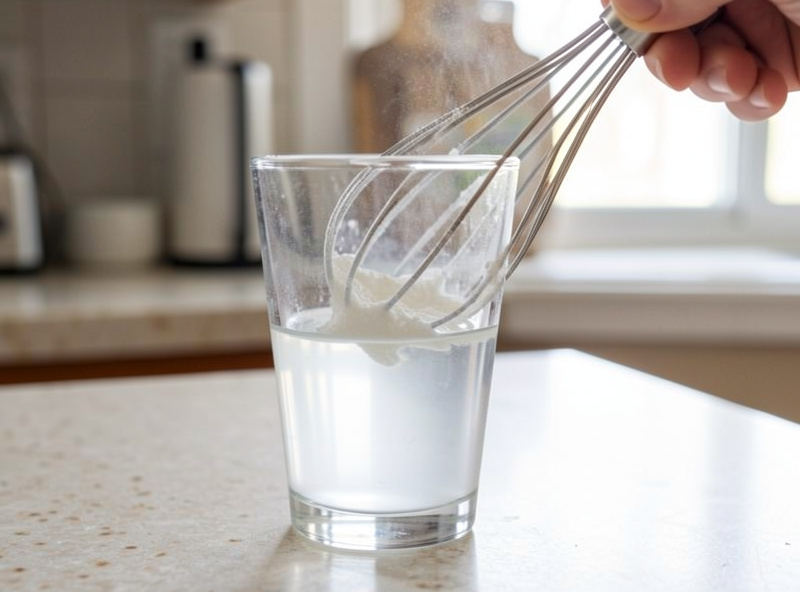
Milk powder rehydrates fast but wants whisking, not a passive soak. My ratio is roughly the original volume — about one cup of water per cup of milk I started with — added gradually while whisking to break up clumps, then a few minutes resting in the fridge to fully hydrate and lose the powdery edge. Cold water and patience beat hot water and rushing; hot water can leave a scalded note. The dairy-specific timing and ratios for every product in this group are in my freeze-dried dairy rehydration guide.
For baking, you often skip rehydration entirely — add the powder to the dry ingredients and the water to the wet, which is one of the quietly great uses of home-powdered milk. It also makes a fine addition to coffee, smoothies, and camping meals where carrying liquid milk is impossible.
What Home-Powdered Milk Is Actually Good For
The honest case for freeze drying your own milk is not doomsday math — it is control and convenience. I powder milk I already have when a jug is creeping toward its date rather than tossing it, which is preservation in the truest sense. The powder then earns its keep in three places: the long-term pantry, where skim powder sits as a backup that does not need the fridge; the baking shelf, where it goes straight into bread and pancake batter; and the camping kit, where carrying liquid milk is a non-starter.
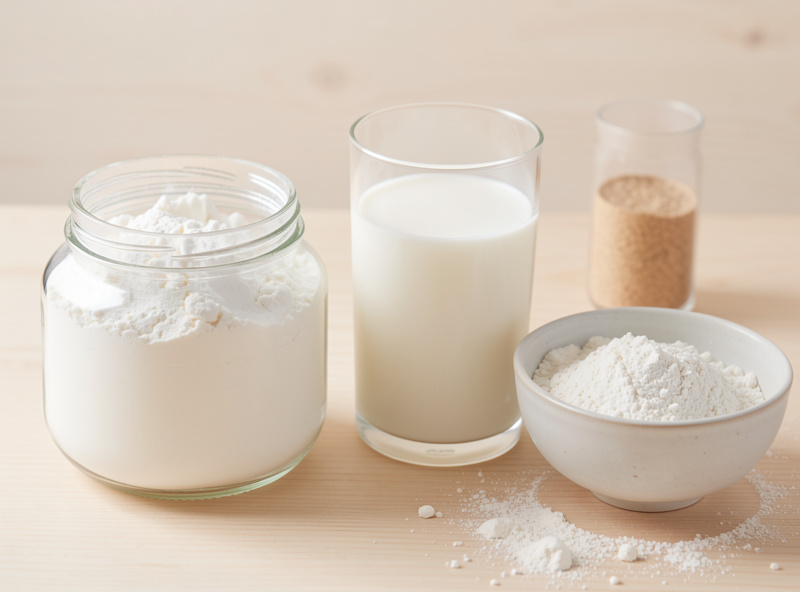
Where it does not earn its keep is as a pure cost play. Buying milk at full retail specifically to run a 30-hour cycle rarely beats commercial powdered milk on price once you count the power. The win is knowing exactly what is in it, having no tiny packets to manage, and turning a surplus you already paid for into something that keeps. That is the framing I bring from costing out every bench in my preservation line — judge the load, not a fantasy payback for the whole machine. If milk turns out to be the wrong tool, my comparison of preservation methods will point you somewhere better.
Storage: Match the Packaging to the Fat
Fully dried milk powder goes into mylar with an oxygen absorber, sealed and dated. Size the absorber to the bag with the oxygen absorber sizing chart, and label every bag — milk and egg powders look alike at a glance and you do not want to guess in six months. For powder I am actively using in the kitchen, I keep a working jar with an absorber per my jar storage approach and leave the mylar sealed.
The rotation rule is the fat rule again: skim powder sits for the long haul, whole milk powder goes near the front and gets used first. Moisture is the enemy of any powder — if it cakes hard or smells off, the seal failed or it was not fully dry, and it goes in the bin.
Frequently Asked Questions
How much water do you add to freeze-dried milk?
Roughly the original volume — about one cup of water per cup of milk you started with. Add it gradually while whisking to break clumps, then rest the milk a few minutes in the fridge to fully hydrate. Adjust to taste; less water makes a richer glass.
Is freeze-dried milk safe to store long term?
Operators commonly report multi-year storage for fully dried skim and low-fat milk powder sealed in mylar with an oxygen absorber. Whole milk stores far shorter because its fat oxidizes regardless of the absorber. These are reported figures, not guarantees, and you must start with pasteurized milk.
Can you freeze-dry whole milk or only skim?
You can freeze-dry both. Skim stores longest because it is low in fat; whole milk tastes better rehydrated but rotates much faster since the fat oxidizes. Run whole milk in smaller batches you will use within a year, and skim for the long-term pantry.
How long does it take to freeze-dry milk?
In my batch log a Medium-class machine runs milk in about 28 to 36 hours. Milk holds a lot of free water, so the sublimation phase is long. Load weight, pre-freeze temperature, and room temperature all shift the time.
Why did my freeze-dried milk turn out powdery in the center but wet underneath?
That is a too-deep tray. A thick milk layer freezes a dry skin on top while the underside stays moist and fails the center check. Fill no deeper than a third of the tray, pre-freeze it flat and solid, and re-run any load that is tacky in the middle.
Can you use freeze-dried milk powder in baking?
Yes, and it is one of the best uses. Add the powder to the dry ingredients and the water to the wet, skipping rehydration entirely. It also works in coffee, smoothies, and camping meals where carrying liquid milk is not practical.