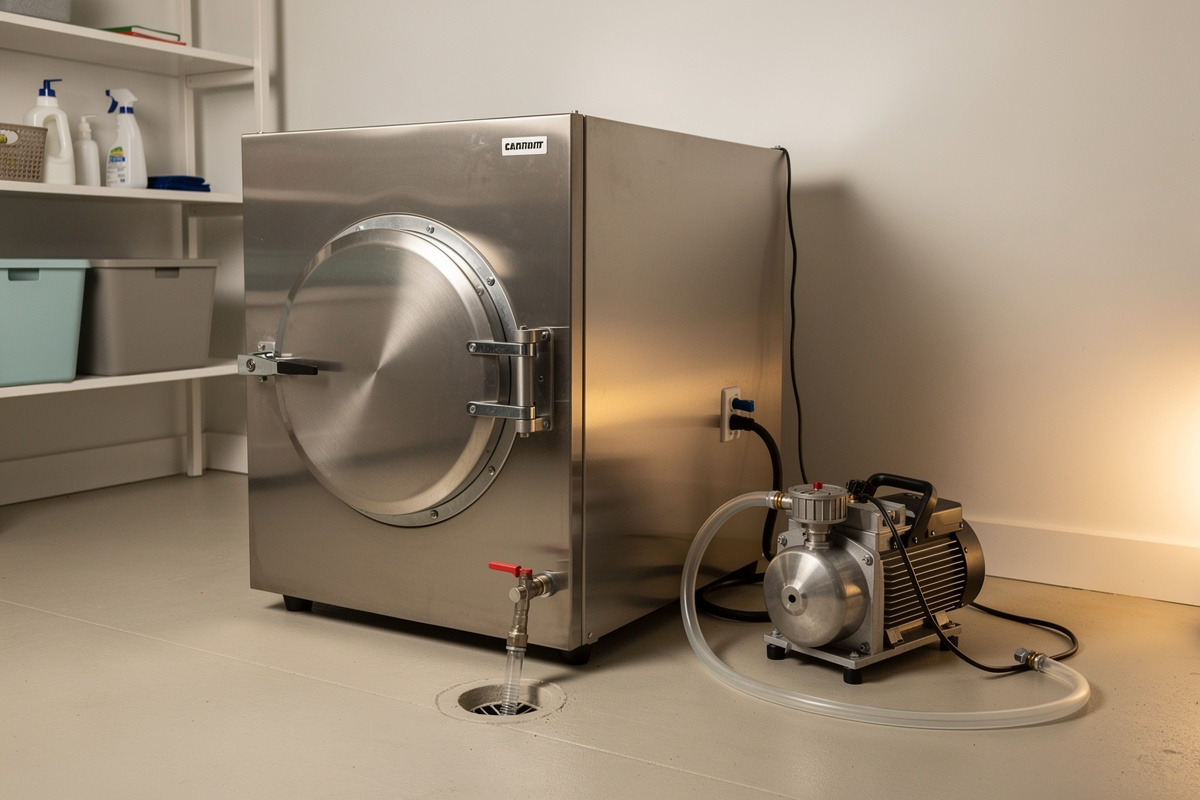

Is a freeze dryer worth it? That is the question that lands in my inbox more than any other, and the honest answer is the one the affiliate-review crowd will never give you: it depends entirely on what your kitchen, your garden, and your patience actually produce. I have run a Harvest Right Medium-class machine in my utility room for years now, logging every load like process data, and I can tell you the machine is louder, hungrier, and slower than the marketing implies. None of that means it was a bad buy. It means the decision is more interesting than “25-year shelf life, pays for itself in months.” This guide is the pre-purchase reality I wish someone had handed me before I cleared a corner of the utility room and started learning what a vacuum pull-down actually sounds like at 2 a.m.
I treat the freeze dryer the way I treat the rest of my preservation bench — fermentation crocks, a curing chamber, a dehydrator that has earned its keep. Each one is the right tool at a different water activity, and the freeze dryer is simply the heaviest, most expensive, and most demanding of them. So before you spend the price of a used car on one, let me walk you through the five ownership realities that decide whether the answer is “absolutely” or “not yet”: the noise, the power draw, where it lives in your house, the pump you will be maintaining, and the cycle times that govern your whole week.
The honest “is it worth it” math (no fantasy ROI)
The marketing math goes like this: a machine costs a few thousand dollars, freeze-dried food is expensive to buy, therefore the machine pays for itself in X months. The trouble is that every variable in that equation is doing heavy lifting it cannot support. The “freeze-dried food is expensive” number assumes you would otherwise be buying commercial freeze-dried pouches at retail — which almost nobody does in the volume a home machine produces. The “pays for itself” number quietly ignores electricity, oil changes, mylar, oxygen absorbers, and the value of your own time loading and unloading trays.
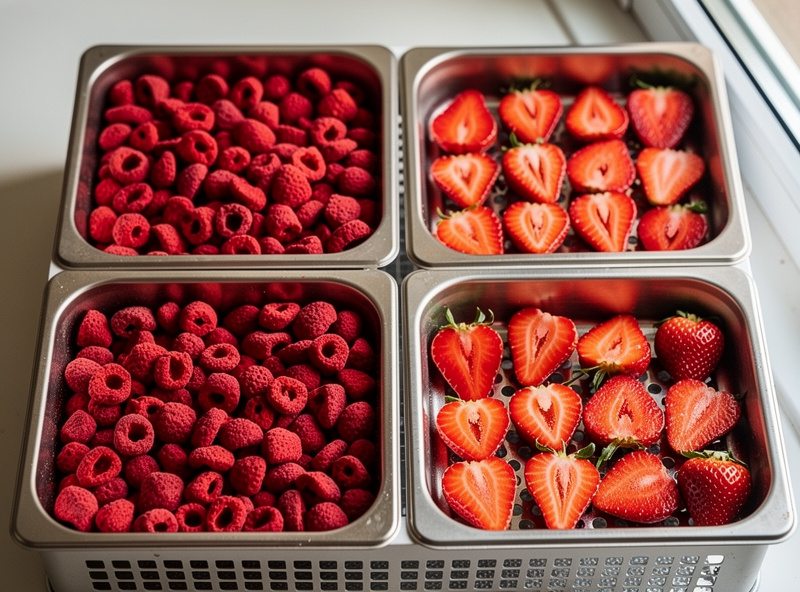
Here is how I actually think about it. The machine earns its place when you have a recurring source of food that would otherwise be wasted or that you would otherwise pay a premium to preserve another way. For me that is the garden glut — the berries and herbs that arrive all at once in a short Swedish growing season and that freeze drying captures better than any other method I run. If you have that upstream supply, the economics tilt fast. If your plan is to buy groceries specifically to freeze-dry them, you are usually spending money to make the food cost more, not less. That is the conversation the affiliate reviews skip, and it is the single most important one.
The second half of the math is the part nobody quantifies honestly: your time. A batch is not a “press start” appliance. It is pre-freezing, loading trays at a sensible density, a cycle that runs the better part of a day or longer, a dry-check, and a packaging session with mylar and oxygen absorbers. None of those steps is hard, but they add up, and they recur. If you enjoy the process the way I enjoy logging a curing chamber, that time is a feature. If you want a set-and-forget appliance, the freeze dryer will frustrate you no matter how good the food turns out.
There is also a depreciation reality worth naming. A meaningful number of these machines end up on the secondhand market within a year or two, and the listings tell the story: “used twice,” “too loud for our space,” “didn’t have time.” Every one of those is a person who did the marketing math instead of the ownership math. I am not saying that to scare you off — I am saying it because a used machine from one of those sellers can be a genuinely good buy if you go in with the realities this guide lays out. The people offloading them rarely abused the machine; they just discovered the commitment after the purchase instead of before it. Be the buyer who knew first. If you are seriously considering a used machine, run through the used freeze dryer checklist before committing — it covers the pump hours, the seals, and the inspection points that separate a solid used unit from someone else’s problem.
One more honest variable: the food has to be food you will actually eat. I have watched people freeze-dry things out of sheer novelty — full meals they never rehydrate, candy they make once and forget — and then count those batches as “value created.” A freezer full of perfectly preserved food you never touch is not a return on investment; it is an expensive hobby with extra steps. The machine is worth it when it preserves food you genuinely want to eat later, in a form you will actually reach for. My batch log is ruthless about this now: if a food type does not get eaten, it does not get run again, regardless of how well it dried.
Noise: the reality nobody puts in the product photos
The first thing that surprises new owners is the sound. A home freeze dryer is not quiet. The vacuum pump runs for the entire cycle, and a standard oil pump has a steady mechanical drone that you will hear through a closed door. On top of that the machine’s own compressor and fans cycle on and off. In my batch log the loudest stretch is always the vacuum pull-down at the start of the dry phase, and the pump never really stops while the cycle runs — which can be the better part of a day or two.
This is exactly why I planned my install around the noise rather than discovering it afterward. A utility room with a closeable door, away from bedrooms and the main living space, is the single best decision I made. People who put the machine in a kitchen open to a living area tend to regret it by the second overnight cycle. I cover the full noise reality, decibel expectations, and the pump-versus-machine sound breakdown in the dedicated noise article, because it deserves more than a sentence — it is a genuine quality-of-life factor and one of the top reasons machines end up listed for sale secondhand. The decibel expectations, pump-versus-machine sound breakdown, and placement strategies are in the freeze dryer noise level guide.
The sound also changes character across the cycle, which catches people off guard. During the initial freeze, the machine is relatively quiet — it is mostly the compressor working, similar to a chest freezer. Then the pump kicks in for the vacuum pull-down and the dry phase, and that is the drone that carries through walls. As the cycle progresses and the load gives up its moisture, the pitch shifts subtly; an experienced ear can hear roughly where a batch is just from the pump note. I would never tell you that is precise enough to skip the dry-check, but it is one of those operator details you only learn from running the same machine through hundreds of loads. The point for a prospective buyer is simple: budget for a space where a steady mechanical drone running for a full day or two is genuinely fine, not merely tolerable.
Power draw: what a batch actually costs to run
Freeze dryers are advertised as plugging into a standard household outlet, and that is true — but “runs on a normal outlet” and “cheap to run” are two different claims. The machine pulls meaningful power for a long time. The compressor and heaters do real work, and the pump runs continuously, so the energy adds up over a multi-hour-to-multi-day cycle in a way a quick countertop appliance never does.
I measure mine rather than guess, because the per-batch cost depends on your cycle length, your food type, your ambient temperature, and your local electricity rate — all of which vary enormously. A batch in a cold garage in winter behaves differently from one in a warm utility room in summer. Rather than repeat a number someone read off a forum, I keep a metered log and translate it into a per-batch figure you can adapt to your own rate. The full measured breakdown lives in the power-cost article, where I show the method so you can run your own numbers instead of trusting mine blindly. The full metered breakdown by food type and cycle length — with the per-kWh multiplication method — is in the freeze dryer power cost guide.
The key insight for budgeting is that ambient temperature is the lever you can actually pull. The machine spends a lot of energy fighting heat — both removing it from the chamber and dealing with the warm room around it. A cooler ambient (within reason) means the compressor works less and the cycle can run more efficiently, which is part of why some owners site their machines in basements or cool utility rooms rather than warm kitchens. There is a limit, though: a genuinely freezing garage introduces its own problems, including how the pump oil behaves in the cold and how the machine handles a cold start. So “cooler is cheaper” is true up to a point and then stops being true, which is exactly the kind of nuance a flat “it costs X per batch” claim flattens away.
I also want to be clear about what I am not claiming. I am not going to hand you a single dollar figure and call it the answer, because your electricity rate alone can vary by a factor of three or four depending on where you live, and your cycle length varies with what you run. What I can give you is a measured kilowatt-hour range from my own metered batches, broken down by food type and cycle length, that you multiply by your own rate. That is the difference between a number you can trust and a number you read on a forum that may have been a guess wearing a confident tone.
Where it lives: siting the heaviest machine on the bench
People underestimate the install. This is a heavy machine that needs clearance for airflow, a way to deal with the warm air and moisture it exhausts, somewhere to route the drain, and a floor that can take the weight and the occasional drip. It is not a thing you tuck under a counter and forget. The exact clearances, ventilation needs, and floor-space budget for each machine size are in the freeze dryer space requirements guide. The combination of noise, heat, drainage, and the sheer footprint is why “where do I put it” is one of the first practical questions worth answering before you buy, not after the pallet arrives.
My utility-room install solved most of the problems at once: a closeable door for the noise, a floor that does not care about a stray drip, ventilation for the heat, and proximity to a drain. Basements, garages, and dedicated utility spaces all work with caveats — a freezing garage changes how the machine behaves, and a finished basement raises the moisture question. The siting article walks through each location honestly, including the ones I would talk you out of.
The pump: the maintenance commitment you are signing up for
If you buy the standard oil-pump version — as I did — you are committing to an oil-change routine for the life of the machine. This is not optional and it is not difficult, but it is the recurring chore that separates owners from operators. Dirty oil pulls a worse vacuum, a worse vacuum means slower or incomplete cycles, and incomplete cycles are how food fails the dry-check. I log my oil changes against batch count, because “change it on a schedule” is less useful than “change it based on how the pump is actually behaving.”
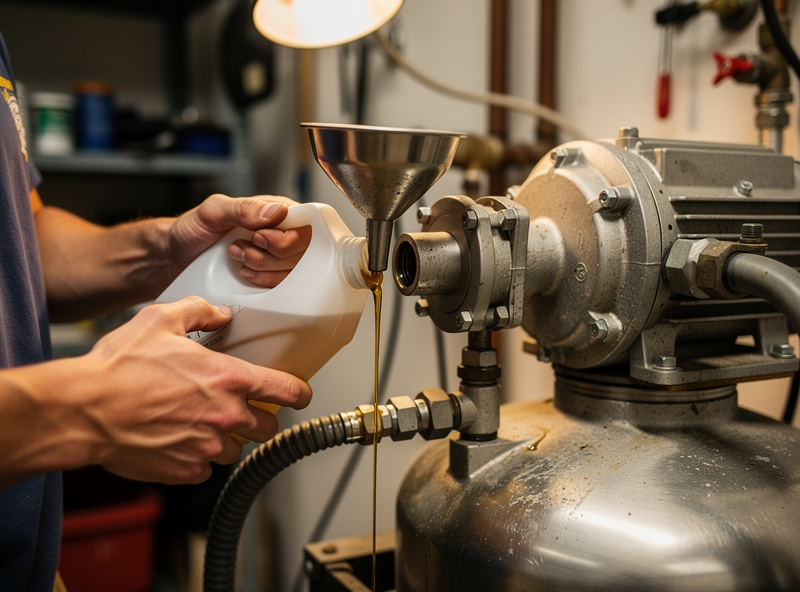
There is also an oil-free premium pump option. I do not own one, so I will not pretend to firsthand long-term verdicts on it — what I can tell you is what operators consistently report: less maintenance, higher upfront cost, and a different reliability profile that owners debate at length. I flag that as reported, not lived, every time. The oil-pump maintenance article is where I lay out my actual logged routine: what I use, how often, the filtration question, and the noises that tell you the pump is unhappy before a cycle fails.
Cycle times: why “20 hours” is marketing, not a promise
The single biggest expectation gap is cycle time. Marketing loves a tidy round number. My batch log says otherwise. Cycle time depends on food type, load weight, tray density, how thoroughly you pre-froze, moisture content, and ambient conditions. High-moisture foods take longer. A packed tray of liquid takes far longer than a light load of pre-frozen berries. And the cycle is not “done” when the timer says so — it is done when the food passes a dry-check, which sometimes means adding dry time the machine did not schedule.
This is where the batch log earns its keep. Instead of trusting the displayed estimate, I plan my week around realistic ranges by food type, and I always build in the possibility of a re-run for the center trays. The cycle-times article turns years of logged loads into the concrete ranges the category answers with a shrug — the honest “how long does this actually take” you cannot get from a spec sheet.
The reason marketing numbers run optimistic is that they describe an ideal load: thin, well pre-frozen, low-moisture, evenly spread, in a machine running in ideal ambient conditions. Real loads are messier. The center trays often lag the outer ones. A tray of something dense or liquid-heavy holds onto its moisture far longer than a tray of light, pre-frozen berries. And the final-dry tail — the slow grind from “mostly dry” to “actually shelf-stable” — is where the hours quietly accumulate. A machine that hits its displayed estimate is running an easy load; the moment you push tray density or moisture content, the clock stretches, and that is not a fault, it is physics.
The practical consequence is scheduling. If you treat the machine as a one-batch-a-day tool and plan around the realistic upper end of the range for what you are running, you will rarely be disappointed. If you plan around the marketing number and stack your week assuming two quick batches a day, you will be perpetually behind and tempted to pull loads early — which is how under-dried food ends up in storage, and under-dried food is the one outcome the whole exercise is meant to prevent.
Freeze drying versus your other options
Because I run the whole preservation bench, I can place freeze drying honestly against the alternatives instead of pretending it wins every time. It does not. Here is the comparison I give people who are deciding whether the machine is even the right tool for what they want to preserve.
| Method | Upfront cost | Effort per batch | Best for | Honest limitation |
|---|---|---|---|---|
| Freeze drying | High (machine + consumables) | High (pre-freeze, load, cycle, dry-check, package) | Long storage of fruit, complete meals, candy, herbs | Loud, power-hungry, slow; high-fat foods store poorly |
| Dehydrating | Low | Low to moderate | Fruit leather, jerky, herbs, snacks eaten soon | Higher residual moisture; shorter reported storage; texture differs |
| Freezing | Low (if you own a freezer) | Very low | Almost anything, short-to-medium term | Ongoing power; texture loss; freezer-dependent |
| Canning | Low to moderate | Moderate to high | High-acid fruit, pickles, sauces | Low-acid safety is a USDA-guidance matter — follow official sources, full stop |
| Curing / fermenting | Low to moderate | Moderate (time, not labor) | Charcuterie, kraut, flavor transformation | Different goal entirely — transforms food rather than just preserving it |
The takeaway: freeze drying is unmatched for long-term storage of fruit, complete meals, and the candy experiments everyone asks about, and it rehydrates closer to fresh than anything else I run. But for food you will eat within weeks, a dehydrator or the freezer is cheaper and easier. And for anything canning-adjacent, I defer to USDA guidance rather than improvising — that is a food-safety line I do not cross.
Consumables: the recurring costs the sticker price hides
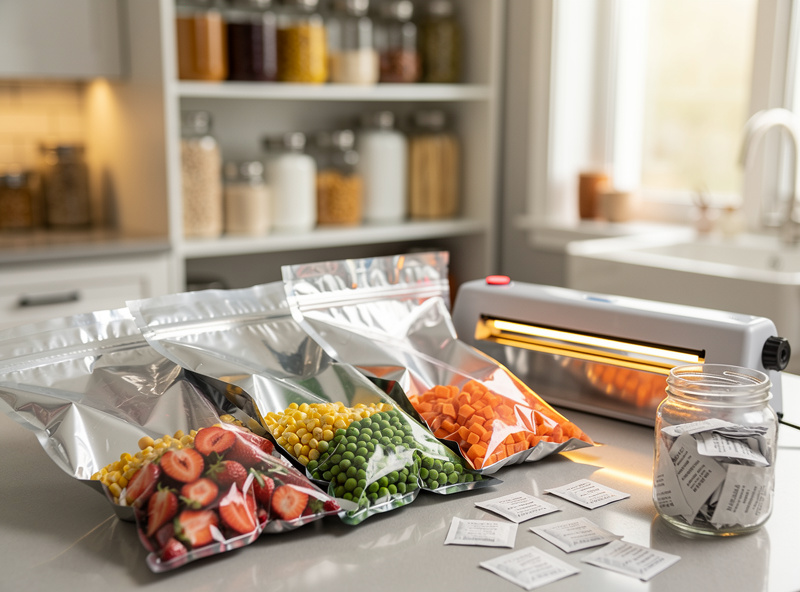
The machine is the big number, but it is not the last number. Owning a freeze dryer means a steady, modest spend on consumables, and budgeting for them upfront keeps the “is it worth it” math honest. The main recurring items are pump oil for the standard pump, mylar bags and oxygen absorbers for long-term storage, an impulse sealer to close the bags properly, and jars for shorter-cycle items. None of these are expensive individually, but they recur, and they are genuinely worth buying good versions of — a weak seal or an undersized oxygen absorber undoes the whole point of the cycle.
Affiliate disclosure: The consumable links below are Amazon affiliate links — as an Amazon Associate I earn from qualifying purchases, at no extra cost to you. The machine itself is sold direct by the manufacturer, not Amazon, so you will not find a machine link here. These are the recurring supplies I actually keep on the shelf.
- Vacuum pump oil — the recurring item for a standard oil pump; buy more than you think you need.
- Mylar bags and oxygen absorbers — the storage line; size the absorbers to the bag volume.
- Impulse sealer — a clean, repeatable seal is the difference between storage and disappointment.
Notice what is not on that list: a shelf-life guarantee. Reported storage figures for properly packaged freeze-dried food are long, but I treat those as commonly reported and manufacturer-stated, never as my personal promise. Storage practice follows official guidance; the machine does its job, and your packaging discipline does the rest.
The dry-check: the discipline the category lacks
If there is one operator habit that separates a good freeze dryer owner from a frustrated one, it is the dry-check. The cycle ending is not the same as the food being done. Before anything goes into a mylar bag, I verify doneness — and I verify it against the batch log, not against a feeling. The checks are simple and consistent: the snap-or-crumble test, where a properly dried piece breaks cleanly rather than bending; a visual look for any cold or moist spot, especially in the dense center of a piece; and, for foods I have run many times, a weight-loss check against what the log says that food should lose when fully dry.
When something fails the check, it goes back in for more dry time. This is normal, not a failure of the machine. High-moisture foods, thick pieces, and packed center trays are the usual culprits. The reason this matters so much is that residual moisture is the enemy of long storage — under-dried food is where storage problems begin, and no oxygen absorber or thick mylar bag fixes food that went into the bag still holding moisture. I would rather re-run a load and lose a few hours than seal a batch I am not sure about. That single habit is why I have very few storage disappointments in my log, and it is the honest content the affiliate genre never bothers with because it does not sell a machine.
Candy, meals, and the loads everyone asks about
Two questions arrive constantly: can it do the candy thing, and can it do full meals? Yes to both, with honest caveats. Freeze-dried candy is genuinely fun — certain candies puff dramatically and the texture is a real novelty — but the cleanup truth is the part nobody mentions: sugar-heavy loads can gum the trays and demand a thorough wash, and some candies behave far better than others. It is a great occasional batch, not a reason to buy the machine on its own.
Full meals are where the machine quietly shines for anyone who meal-preps or hikes. Complete cooked meals portioned onto trays, properly pre-frozen, dry down to lightweight, long-storing pouches that rehydrate close to fresh. The weight savings for backpacking are real and the convenience is genuine. The honest caveat there is fat: high-fat foods do not store as well freeze-dried, because fat does not freeze-dry the way water-rich food does and it can go off over time. So I keep fatty components out of the long-storage meals and accept that some dishes are simply better preserved another way. That is the kind of food-by-food judgment the batch log makes possible.
The food-safety line I will not cross
This site is honest about a lot of things, and food safety is where I am most careful of all. I will tell you what works in my kitchen, what my batch log shows, and what is commonly reported by other operators. I will not guarantee a shelf life as fact, I will not give you canning-adjacent or low-acid safety guidance, and I will not overrule official sources. For anything touching safety rather than quality, I point to USDA guidance and the manufacturer’s documentation and stop there. Rehydrated-food verdicts on this site are about taste and texture — whether it came back close to fresh — never a clearance that something is safe to eat after some period. That distinction is not legal throat-clearing; it is the difference between an honest preservation site and one that gets people hurt. Quality is my lane. Safety belongs to the official sources, and I will always send you to them.
So — is a freeze dryer worth it for you?
Run yourself through the five realities. Can you live with the noise, or do you have a room with a door to put it behind? Are you comfortable with the power draw over long cycles? Do you have a place to site a heavy, warm, occasionally-dripping machine? Are you willing to keep up an oil-change routine? And do you have an upstream supply — a garden, a bulk buy, a meal-prep habit — that actually justifies the throughput? If most of those are “yes,” the machine is one of the most satisfying tools on my preservation bench. If several are “no,” the honest answer is “not yet,” and a dehydrator plus a chest freezer will serve you better for a fraction of the cost.
That is the pre-purchase truth, and it is the whole reason this site exists. The category is drowning in “buy now, it pays for itself” copy. I would rather you buy with your eyes open, run it like the process equipment it is, and get years of good batches out of it — or decide it is not for you before the pallet arrives. Either way, you will have made the decision the affiliate reviews never let you make.
Frequently asked questions
Is a freeze dryer actually worth the money?
It is worth it if you have an upstream supply of food worth preserving — a garden glut, a meal-prep habit, a bulk source — and you can live with the noise, power draw, install footprint, and ongoing pump maintenance. If your plan is to buy groceries specifically to freeze-dry them, you are usually making food cost more, not less. The honest answer depends on your situation, not on the marketing.
How loud is a home freeze dryer?
Loud enough to hear through a closed door. The vacuum pump runs continuously through the cycle with a steady mechanical drone, on top of the compressor and fans. Plan to put it in a room with a door, away from bedrooms and living spaces. It is one of the top reasons machines end up resold.
Does a freeze dryer use a lot of electricity?
It draws meaningful power for a long time, since the pump runs continuously across a multi-hour to multi-day cycle. The actual per-batch cost depends on cycle length, food type, ambient temperature, and your local electricity rate, so the honest approach is to measure your own with a plug-in meter rather than trust a flat figure.
How long does a freeze drying cycle take?
Longer than the marketing number for most real loads. Cycle time depends on food type, load weight, tray density, pre-freezing, and moisture content. High-moisture and densely packed loads run longest, and the cycle is not done until the food passes a dry-check, which sometimes means adding dry time the machine did not schedule.
What maintenance does a freeze dryer need?
The main recurring task on a standard oil-pump machine is changing the pump oil, which I do based on how the pump is behaving rather than a fixed calendar. Dirty oil pulls a worse vacuum and leads to slower or incomplete cycles. The oil-free premium pump reduces this; operators report less maintenance at a higher upfront cost.
How long does freeze-dried food last in storage?
Reported storage figures for properly packaged freeze-dried food in mylar with oxygen absorbers are long, but those are commonly reported and manufacturer-stated values, not guarantees. Proper drying verified by a dry-check and a good seal matter most. For food-safety questions, follow USDA and manufacturer guidance.
Related Guides in This Cluster
The full freeze-dryer-ownership cluster, in the order most readers follow:
- How Loud Is a Freeze Dryer? The Noise Reality
- Freeze Dryer Electricity Cost Per Batch: Measured
- Where to Put a Freeze Dryer in Your House
- Freeze Dryer Oil Pump Maintenance: My Honest Schedule
- How Long Does Freeze Drying Take? Real Cycle Times
- Freeze Dryer Running Costs: The Real Cost to Own One
- Best Home Freeze Dryer: How to Choose the Right One
- Harvest Right Small vs Medium: Real Capacity Compared