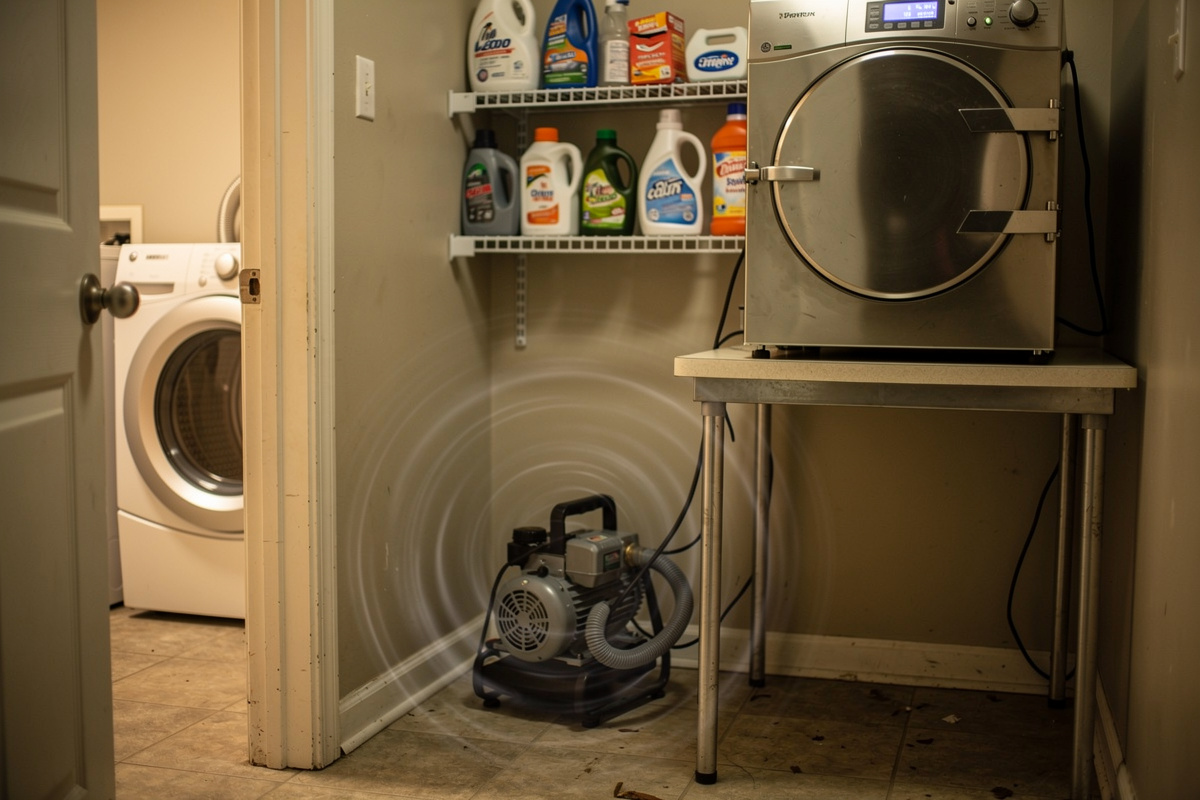

How loud is a freeze dryer? Loud enough that I planned an entire room around the answer before I ever ran a batch. This is the question I wish more prospective owners asked out loud, because noise is the single most common reason a perfectly good machine ends up listed for resale within a year. The product photos show a tidy stainless box on a clean counter; what they cannot show you is the steady mechanical drone of a vacuum pump running continuously through a cycle that can last the better part of a day or two. I have lived with that sound through hundreds of logged batches, so let me tell you exactly what it is, where it comes from, and how to set up so it never becomes the reason you regret the purchase.
I run a Harvest Right Medium-class machine on a standard oil pump in a utility room I deliberately chose for its closeable door. Everything below comes from that install and my batch log, not from a spec sheet — because the spec sheet does not warn you about the 2 a.m. drone, and a friend who put their machine in an open-plan kitchen learned that lesson the hard way.
Where the noise actually comes from
A freeze dryer makes noise from two distinct systems, and understanding the difference is what lets you predict and manage it. The first is the machine itself: a refrigeration compressor and cooling fans, broadly similar in character to a chest freezer or a small AC unit. That sound cycles on and off and is the quieter of the two. Most people would tolerate it in a living space without much complaint.
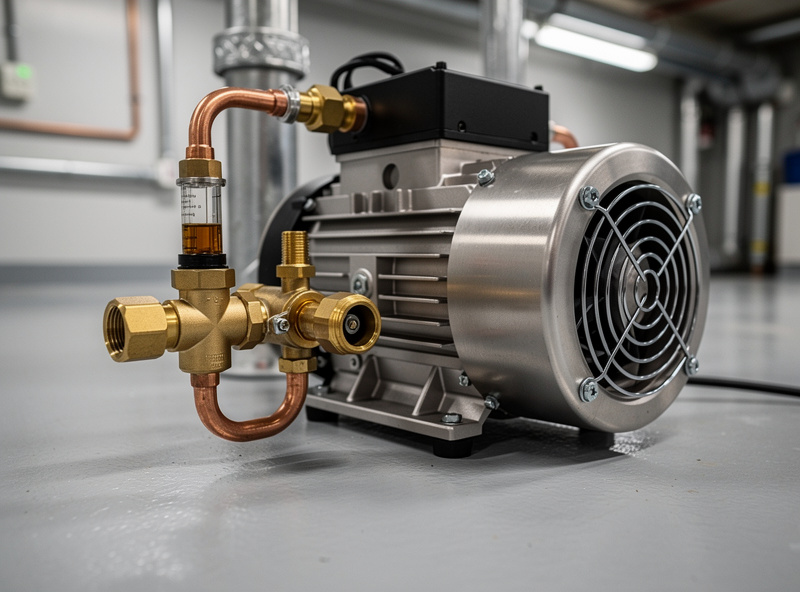
The second source is the vacuum pump, and this is the one that drives people out of the room. A standard oil pump runs continuously for the entire dry phase of the cycle — not in bursts, not on a duty cycle, but steadily for many hours at a stretch. It produces a low, persistent mechanical drone with a slightly oily, rhythmic quality to it. It is not a loud bang or a whine; it is the relentlessness that wears on you. A sound you would barely notice for ten minutes becomes genuinely intrusive when it runs through dinner, through an evening of television, and straight on through the night.
The oil-free premium pump is the wildcard here. I do not own one, so I will not pretend to a firsthand verdict — what operators consistently report is a different noise profile, generally described as less of the oily mechanical drone, though still far from silent. I flag that as reported rather than lived, because the honest thing to say is that I have only run the standard pump for years and that is what my noise observations describe.
What the noise sounds like across a cycle
One detail that surprises new owners is that the sound changes character as a batch progresses. During the initial freeze, before the vacuum even starts, the machine is at its quietest — just the compressor doing its work. Then comes the vacuum pull-down, which in my log is consistently the most noticeable stretch: the pump engages and pulls the chamber down hard. After that, the pump settles into its long steady drone for the dry phase, and that drone is the soundtrack to the rest of the batch.
As the load gives up its moisture toward the end, the pump note shifts subtly. I would never claim it is precise enough to skip a proper dry-check — the snap test against my batch log is the only thing I trust for doneness — but after enough batches you genuinely can hear roughly where a load is from the next room. That is an operator detail, not a buying factor, but it tells you how constant and characterful the sound is: constant enough that you learn its moods.
Putting numbers on it (honestly)
I want to be careful here, because precise decibel claims are exactly the kind of thing that gets reviewers caught stating something they cannot back up across every machine and every room. What I can tell you honestly is the relative experience, and how my machine compares to household sounds I can verify by living with them. Rather than invent a single number, here is the comparison that actually helps a buyer decide.
| Sound source | Subjective level | Runs for how long | Why it matters for siting |
|---|---|---|---|
| Freeze dryer pump (standard oil) | Persistent low drone, clearly audible through a closed door | Hours, continuously, per batch | The dominant factor — duration is the problem, not peak loudness |
| Freeze dryer compressor/fans | Like a chest freezer or small fridge | Cycles on and off | Tolerable in most spaces on its own |
| Dishwasher | Noticeable but brief | About an hour | People tolerate it because it ends |
| Window AC unit | Steady hum | Hours | Closest everyday comparison to the overall machine |
| Chest freezer | Low intermittent hum | Cycles | Roughly the compressor-only portion of the machine |
The honest summary: at any single instant the freeze dryer is not dramatically louder than a window AC unit. The problem is that it runs that sound for hours on end, often overnight, and the pump drone has a quality that the human ear keeps noticing. Duration and persistence, not peak volume, are what make it a quality-of-life decision.
How I keep it from being a problem
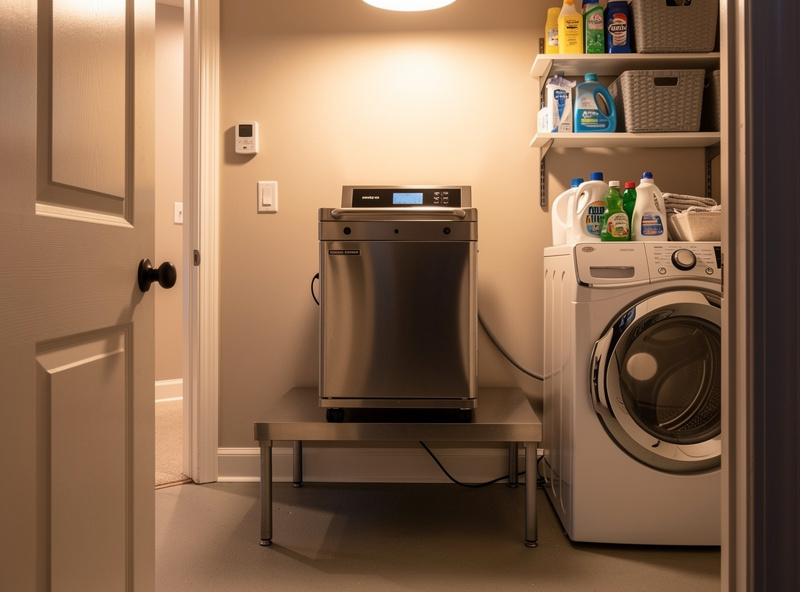
The fix is almost entirely about placement, and it is the single best decision I made as an owner. Put the machine in a room with a door you can close, away from bedrooms and the main living area. A utility room, an unfinished basement, a garage that does not freeze, a dedicated pantry, a laundry room — any of these turns the drone from “intrusive” into “I forget it is running.” Through a closed interior door, my pump becomes background; in the open it would be the loudest thing in the house for two days.
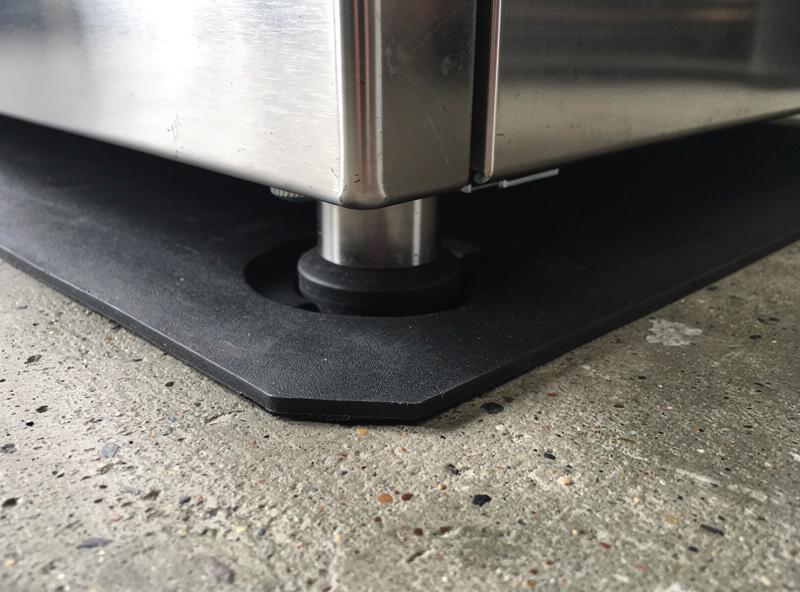
Beyond placement, a few things genuinely help. A solid surface and a level floor stop the machine adding a buzz or rattle to the drone — a wobble against a hard floor amplifies everything. Some owners put the machine on an anti-vibration mat to keep the pump from coupling its vibration into the floor and traveling through the structure; in my experience that helps more with the felt buzz than the airborne drone, but it is a cheap thing to try. And keeping the pump well maintained matters more than people expect: a pump with clean oil and a healthy vacuum runs with a smoother, more consistent note than one that is overdue for service and laboring.
Affiliate disclosure: The links below are Amazon affiliate links — as an Amazon Associate I earn from qualifying purchases at no extra cost to you. The machine is sold direct by the manufacturer, not Amazon; these are accessories that genuinely help with the noise and vibration.
- Anti-vibration pads — to keep the pump from coupling its buzz into a hard floor.
- A simple sound-level meter — if you want to actually measure your own room rather than trust anyone’s claimed numbers, including mine.
What I would tell a prospective buyer
Do not let the noise talk you out of the machine — let it talk you into planning the install. If you have a room with a door, you are fine, and the food is worth it. If your only realistic spot is open to where you live and sleep, treat that as a genuine obstacle to solve before you buy, not a surprise to discover after. The people who resell their machines almost never do it because the food was bad. They do it because they put a continuous-drone industrial pump in their kitchen and could not live with it. Plan around the sound and you will be one of the owners who keeps the machine for years.
Noise is just one of the five ownership realities worth understanding before you spend the money. For the full picture — power cost, install, pump maintenance, and the real cycle times — start with my honest freeze dryer ownership guide, which ties all of them together into the “is it actually worth it” decision.
Related reading
Frequently asked questions
How loud is a freeze dryer really?
At any single moment it is roughly comparable to a window AC unit, dominated by a continuous low drone from the vacuum pump. The issue is not peak loudness but duration: the pump runs steadily for many hours per cycle, often overnight, which is what makes it feel intrusive in a living space.
What part of a freeze dryer makes the most noise?
The vacuum pump. A standard oil pump runs continuously through the entire dry phase with a persistent mechanical drone. The machine’s own compressor and fans are quieter and cycle on and off, more like a chest freezer.
Is the oil-free pump quieter than the oil pump?
Operators commonly report a different, generally less oily-mechanical noise profile from the oil-free premium pump, though it is still not silent. I run the standard oil pump and flag the oil-free comparison as reported rather than something I have lived with firsthand.
Where should I put a freeze dryer so the noise is bearable?
In a room with a door you can close, away from bedrooms and main living areas: a utility room, unfinished basement, non-freezing garage, pantry, or laundry room. Through a closed interior door the pump drone fades to background noise.
Can I reduce freeze dryer noise and vibration?
Yes, partly. A level, solid floor stops added rattle, an anti-vibration mat reduces the buzz transmitted into the structure, and a well-maintained pump with clean oil runs with a smoother, more consistent note than one overdue for service.
Will I hear the freeze dryer through a closed door?
You will likely still hear the pump drone faintly through a standard interior door, but it drops from intrusive to easily ignorable. The combination of a closed door plus distance from sleeping areas is what makes living with the machine comfortable.