

Freeze drying yogurt is the easiest, most forgiving load in the entire dairy category, and the one I hand to every new owner first. Spread thin and pre-frozen, it runs about 24 to 30 hours on my Medium-class machine and comes out as tart, crisp shards my kids eat straight off the tray. It rehydrates into a usable yogurt for cooking, and unlike milk or eggs, there is almost nothing to get wrong.
I started running yogurt because it was the safe first liquid load — low fat, structurally cooperative, and genuinely delicious dried. Years of batches later it is still the load I reach for when I want a guaranteed win after a finicky cheese run. This is the method: how thin to spread it, what the cycle costs, the live-culture question everyone asks, and how to store the result. The wider category sits in my dairy, eggs and baked goods guide.
Why Yogurt Is the Friendliest Dairy Load
Two things make yogurt easy. First, it is already a semi-solid, so it does not slosh and foam the way milk does — it stays where you spread it. Second, most yogurt is relatively low in fat, especially plain low-fat and nonfat, which sidesteps the rancidity clock that haunts cheese and butter. Low fat means good storage; cooperative texture means a clean dry.
The one safety note still applies: freeze drying is not a kill step. It lowers water activity to stall microbial growth, but it does not pasteurize. Use commercial pasteurized yogurt, and treat any storage figures as commonly reported rather than guaranteed. I judge a finished batch on taste and texture — that is a quality call, never a safety clearance.
Spread Thin: The Only Technique That Matters
Yogurt rewards a thin, even spread more than any other variable. I spread it about a quarter to a third of an inch deep across the tray with a spatula — thin enough to dry evenly and crisp up, not so thin it is hard to lift off. For yogurt drops, the kid-friendly version, I pipe small dollops with a zip bag and snip the corner, leaving space between them. Either way, the trays go into the chest freezer to pre-freeze solid before they ever see the chamber.
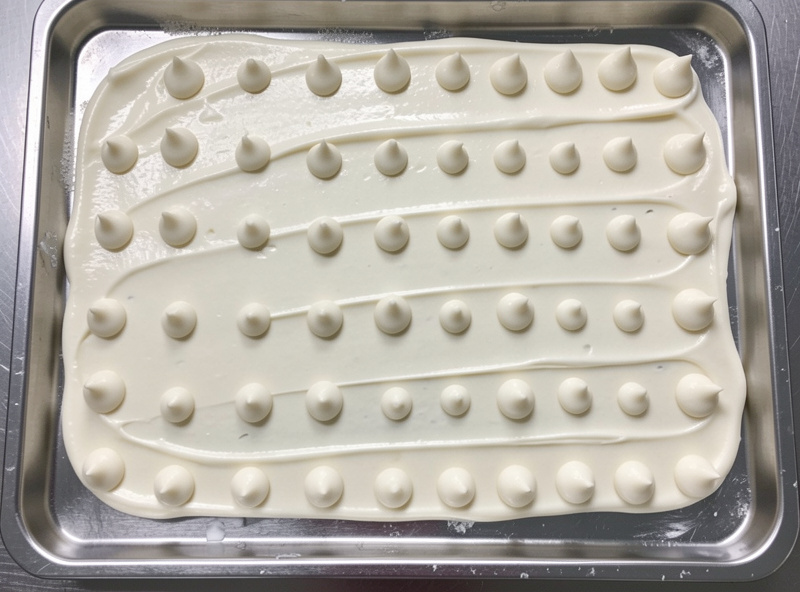
Pre-freezing is non-negotiable even though yogurt does not slosh, because a flat-frozen tray dries faster and more evenly. I follow the same logic as my liquids on trays method and log the load weight on a sticky note before it goes in — that number against the final weight tells me the dry actually finished. Sweetened yogurt and Greek yogurt both work; Greek is thicker and dries denser, plain low-fat dries lightest and crispest.
The Cycle and the Dry Check
Yogurt runs short for a dairy load — 24 to 30 hours in my log, faster than milk because there is less free water and it is spread thin. The result should be completely crisp, snapping and crumbling with no cool, leathery spots. A piece that bends instead of snapping is not done, and it goes back in for extra dry time rather than into a bag. My full doneness routine is in how to tell if freeze drying is done; with yogurt the snap test is unusually reliable because the thin sheet has nowhere to hide moisture.
Because the cycle is short and the result is so good eaten dry, yogurt is one of the few dairy loads where the running cost per finished snack actually feels reasonable. It is the load I point skeptical new owners toward when they want proof the machine earns its keep.
The Live-Culture Question
Everyone asks whether the probiotics survive, and here I stay carefully on the reported side of the line. Operators report that some live cultures survive freeze drying, and the fact that many commercial probiotic supplements are themselves freeze-dried makes survival plausible. But I cannot verify culture counts in a home batch without lab testing, so I describe it as commonly reported, not as a health claim. If live cultures are your goal, eat the yogurt fresh or rehydrate the dried product gently in cool — not hot — liquid, since heat is hard on cultures.

What I will say plainly is that freeze-dried yogurt is an excellent snack and a useful cooking ingredient regardless of the culture debate. The tart crisp shards travel well in a camping kit, and the powder stirs into smoothies and baking.
Plain, Sweetened, and the Variations Worth Running
The base yogurt you choose changes the result more than any machine setting. Plain low-fat and nonfat dry lightest and crispest and store longest — they are my default for the pantry. Greek yogurt is thicker, so it dries denser and chewier and takes a touch longer; it makes a more substantial snack but a less airy shard. Whole-milk and full-fat yogurts taste richest but carry the fat penalty, so I treat them as shorter-rotation novelty batches rather than long-term storage.
Mix-ins are where yogurt earns its reputation as the fun load. A swirl of fruit puree before spreading gives you fruited yogurt bark that dries into a tart-sweet crisp; a little honey or maple in the base sweetens the shards without gumming the trays the way candy syrups do. I keep mix-ins modest, because too much sugar slows the dry and leaves a tacky center — the same lesson the candy loads taught me. Granola and nuts I add after drying, not before, so they stay crunchy and do not introduce their own fat into a long-storage batch.
One variation I skip: anything with chunks of fresh fruit baked in before the dry. The fruit and the yogurt dry at different rates and you end up with done yogurt around still-wet fruit. If I want fruit in the mix, I freeze-dry the berries separately and combine them at the end — the whole-bench habit of running each thing on its own terms.
Storage and Rehydration
Fully dried yogurt goes into mylar with an oxygen absorber, sealed and dated, or into a working jar per my jar storage approach for the batches I am snacking through. Because plain yogurt is low fat, it is one of the longer-storage members of this category when fully dry — operators commonly report multi-year storage under the right sealed conditions. The crisp shards are hygroscopic, though, so they pull moisture from the air fast once the bag is open; reseal promptly.
To rehydrate, stir the powder or crushed shards into cool water or milk a little at a time and let it rest five minutes to fully hydrate — the same whisk-and-rest discipline I use across the category in my dairy rehydration guide. Most of the time, though, my yogurt never gets rehydrated at all. It gets eaten dry, which is the whole point.
The Few Ways Yogurt Goes Wrong
Yogurt is forgiving, but it is not foolproof. The most common miss is spreading it too thick to save a tray — a deep layer dries crisp on top and leaves a leathery, slightly tacky underside that fails the snap test. The fix is always thinner and more patient, never hotter. The second is over-sweetening: a heavy hand with honey or fruit syrup behaves like a candy load, slowing the dry and leaving a center that never fully sets. Keep added sugars modest and let the yogurt’s own tartness carry the flavor.
The last one is a storage failure rather than a drying failure: sealing crisp yogurt that picked up humidity while you were loading bags. The shards are hygroscopic, so I work fast, seal immediately, and do not leave a finished tray sitting out “to cool.” None of these are safety failures — they are quality misses — but logging them is what turned yogurt from a lucky first batch into the reliable win it is now.
Frequently Asked Questions
Is freeze-dried yogurt good to eat dry?
Yes. Spread thin and fully dried, yogurt becomes tart, crisp shards that are excellent eaten straight, with no rehydration needed. Yogurt drops piped as small dollops are a popular kid-friendly snack and travel well in a camping kit.
How long does it take to freeze-dry yogurt?
In my batch log a Medium-class machine runs yogurt in about 24 to 30 hours, faster than milk because yogurt holds less free water and is spread thin. Greek yogurt is denser and may run slightly longer than plain low-fat.
Do probiotics survive freeze drying yogurt?
Operators report that some cultures survive, and many commercial probiotic supplements are freeze-dried, so survival is plausible. I describe it as commonly reported rather than a health claim, since culture counts cannot be verified in a home batch without lab testing.
How thick should you spread yogurt to freeze-dry it?
About a quarter to a third of an inch, spread evenly with a spatula, or piped into small drops with space between them. Thin and even dries fastest and crisps best. Pre-freeze the trays solid in a chest freezer before loading.
How do you store freeze-dried yogurt?
Seal fully dried yogurt in mylar with an oxygen absorber, dated, or keep a working jar with an absorber for batches you are snacking through. Plain low-fat yogurt stores well because it is low in fat, but the crisp shards pull moisture from the air, so reseal promptly.
Keep Reading
If yogurt was your first win, the rest of the dairy bench is the natural next step. Work up to freeze drying milk for the pantry, learn the careful rules for freeze drying eggs, and bookmark the dairy rehydration guide for the days you cook with what you have stored. The category hub ties it all together.