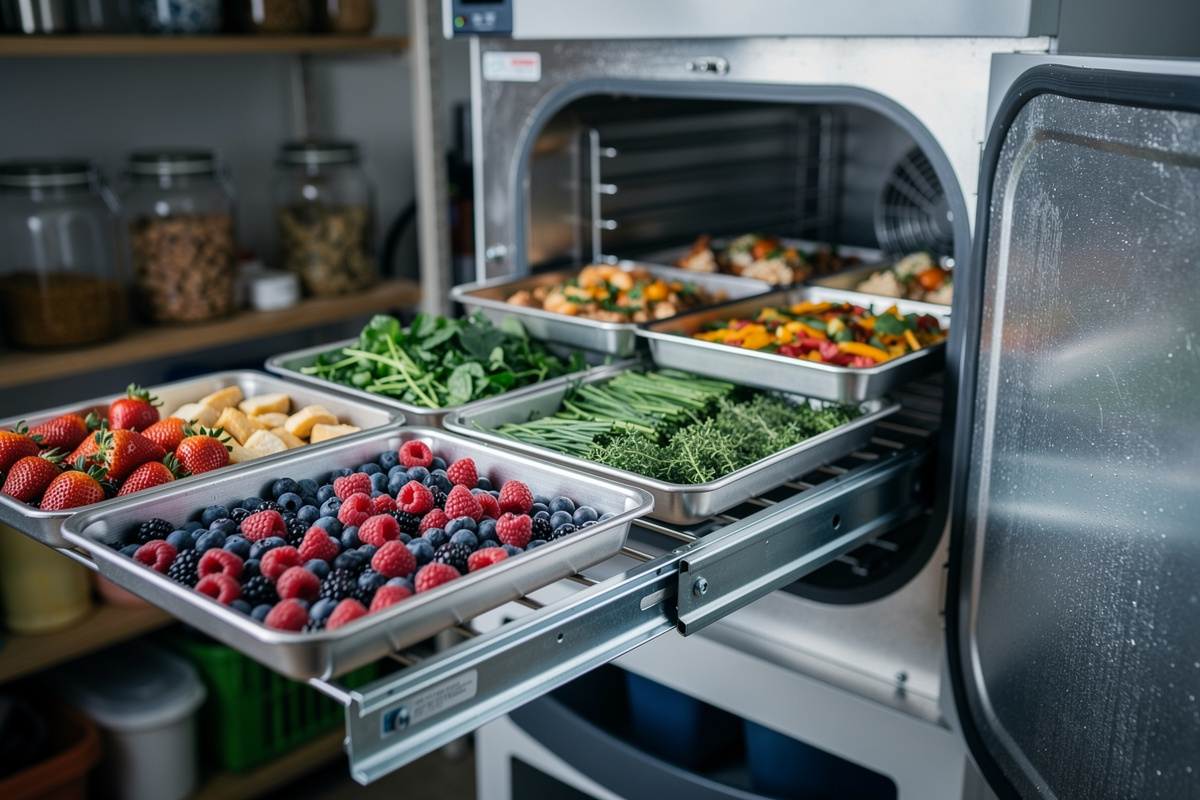

How long does freeze drying take? The marketing answer is a tidy round number, and my batch log says the marketing answer describes an ideal load you will rarely run. The honest answer is a range that depends on what you put in, how you prepared it, how densely you packed it, and the conditions the machine is working in — and crucially, the cycle is not done when the timer says so, it is done when the food passes a dry-check. I have logged hundreds of batches on a Harvest Right Medium-class machine, and what follows is the realistic picture the category answers with a shrug: what actually drives cycle length, what different foods really take, and why building in extra dry time is the difference between food that stores and food that disappoints.
Everything below is from my own log and my own machine on a standard oil pump. I am giving you ranges and the reasoning behind them, not single precise numbers, because anyone who hands you one number for “how long does freeze drying take” is quietly assuming one specific easy load.
Why the marketing number runs optimistic
The displayed estimate on the machine, and the figure in the brochure, describes a best case: a thin, evenly spread, well pre-frozen, low-moisture load in a machine running in friendly conditions. Real loads are messier than that, and every way they differ adds time. A packed tray holds moisture longer than a light one. A high-moisture food has far more water to remove than a dry one. A load that went in warm forces the machine to do the initial freezing work itself before drying even begins. And the center trays routinely lag the outer ones, so the slowest part of the load sets your true finish time, not the average.
None of that is a fault in the machine. It is physics — removing more water takes more time, and removing it from the middle of a dense load takes longer still. The brochure is not lying so much as describing the easiest possible day. Plan your week around the easy day and you will be perpetually behind; plan around the realistic upper end and you will almost never be caught out.
What actually drives cycle length
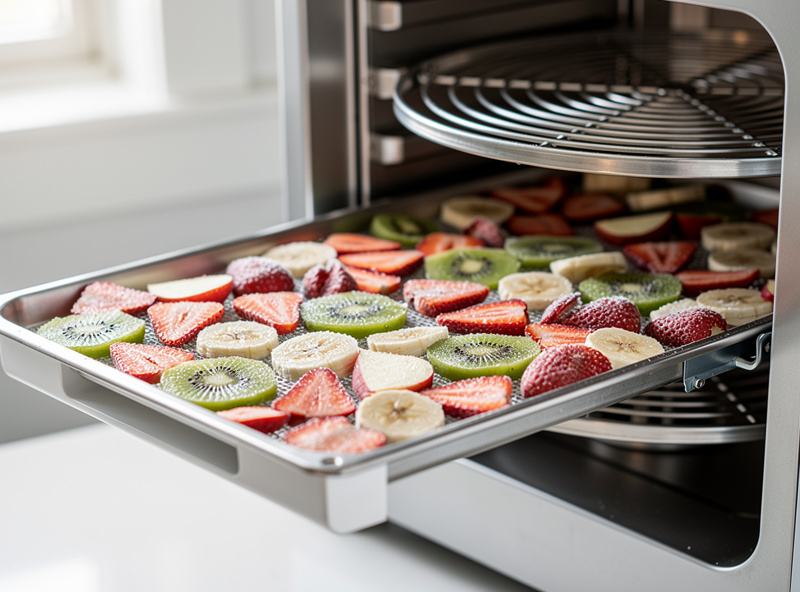
Five levers move the clock, and four of them are in your hands. Moisture content is the biggest: watery foods and liquids take far longer than already-dry items, because there is simply more water to sublimate away. Pre-freezing matters enormously — a load you froze hard in a chest freezer first lets the machine skip straight toward drying, while a fresh load makes the machine spend hours freezing before it can begin. Tray density and thickness control how fast moisture can escape; thin, evenly spread loads dry faster than packed, deep ones. Food type and structure matter because some foods give up water readily and others trap it. And ambient conditions — a warm room makes the machine work harder and slower. Master pre-freezing and sensible loading and you control most of your own cycle times.
Realistic ranges by food type
Here is the shape of what my log shows. I am deliberately giving ranges rather than single figures, because your exact times will shift with your loads and conditions — but the relative ordering and the realistic spread are consistent and useful for planning.
| Food type | Relative cycle length | Why | Planning note |
|---|---|---|---|
| Pre-frozen berries, sliced fruit | Shorter end | Lower moisture once pre-frozen, spreads thin | The friendliest loads; closest to the marketing number |
| Herbs, leafy greens | Shorter end | Light, low mass, but bulky | Fast but watch they do not blow around |
| Cooked complete meals | Middle to long | Mixed moisture and density | Build in extra dry time for dense portions |
| High-moisture produce (tomatoes, melon) | Longer | Very high water content | Expect well past the displayed estimate |
| Liquids on trays | Longest | Maximum water, slow to release from a pool | Plan a dedicated long cycle; do not stack expectations |
The takeaway is the ordering, not a stopwatch. Light, pre-frozen, low-moisture loads land closest to the brochure; high-moisture foods and liquids run well past it. If you plan your batches knowing which category you are running, you stop being surprised.
The cycle is not done when the timer says so
This is the single most important thing in the whole article, and it is the part the category never tells you. The machine’s cycle ending is an estimate, not a verdict. The verdict is the dry-check. Before anything goes into storage, I verify doneness: the snap-or-crumble test (a properly dried piece breaks cleanly rather than bending), a look for any cold or moist spot especially in the dense center of a piece, and for foods I have run many times, a weight check against what my log says that food should weigh when fully dry.
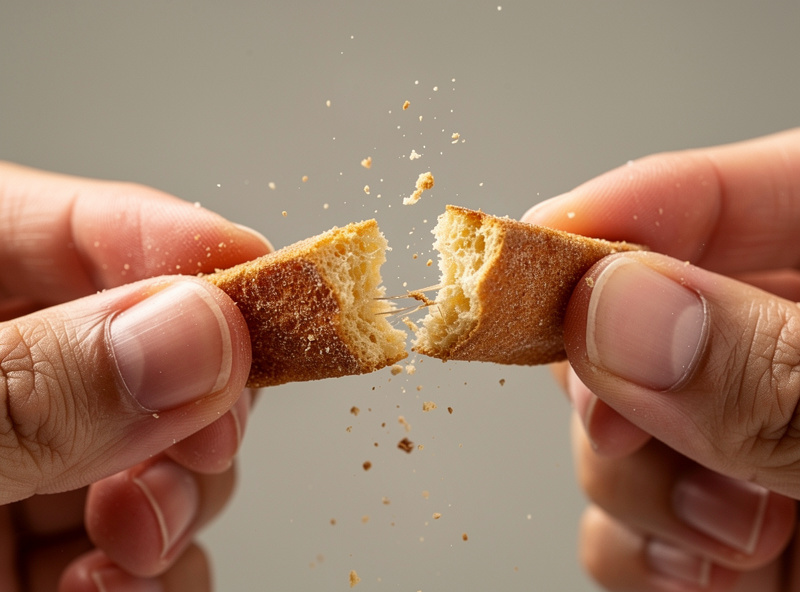
When a load fails the check, it goes back in for more dry time — and this is normal, not a failure. High-moisture foods, thick pieces, and packed center trays are the usual culprits for needing a re-run. Adding dry time is routine on real loads, and budgeting for the possibility is just good planning. The alternative — pulling a load because the timer ended and sealing it while it still holds moisture — is exactly how under-dried food ends up in storage, and under-dried food is the one outcome the whole exercise is meant to prevent.
How I plan a week around it
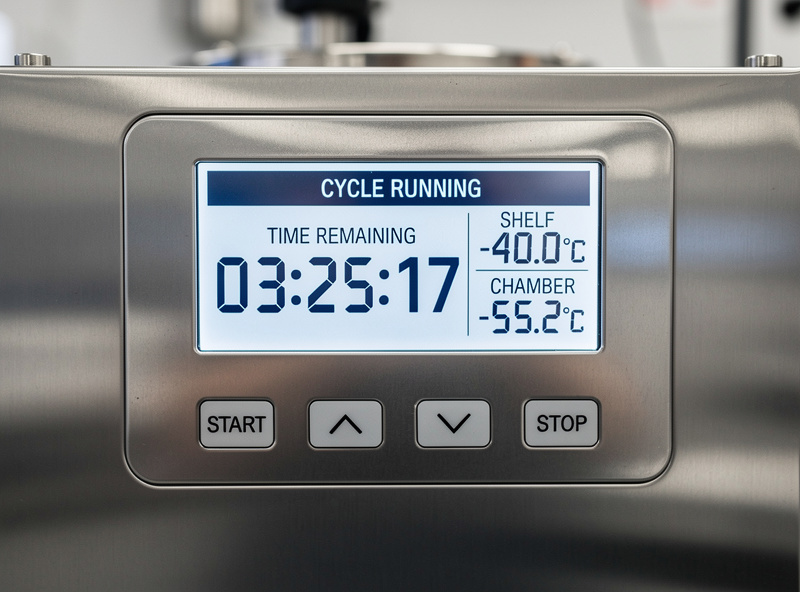
Because cycles are long and variable, I treat the machine as roughly a one-good-batch-a-day tool and plan around the realistic upper end of whatever I am running. If I am doing a friendly load of pre-frozen berries, I might get a second quick batch in; if I am running liquids or high-moisture produce, that is the day’s batch, full stop. I never stack my week assuming two fast cycles a day, because that assumption is what tempts people to pull loads early. Plan for the long end, be pleasantly surprised by the short end, and you will never seal a batch you should not have.
Affiliate disclosure: The links below are Amazon affiliate links — as an Amazon Associate I earn from qualifying purchases at no extra cost to you. The machine is sold direct by the manufacturer, not Amazon; these are the tools that actually shorten and verify cycles.
- A chest freezer for pre-freezing — the single biggest lever on cycle length you control.
- A digital kitchen scale — for the weight-loss dry-check against your batch log.
- Tray liners — for even, thin loading that dries faster and cleaner.
So, how long does it really take?
Longer than the brochure for most real loads, and only as long as it needs once you verify with a dry-check. Friendly loads land near the marketing number; high-moisture foods and liquids run well past it; and any load can need extra dry time the machine did not schedule. The owners who are happy with their machine are the ones who plan around the realistic upper end and verify doneness every time. The frustrated ones planned around the brochure and learned the hard way that a timer is not a dry-check.
Cycle times are one of the five ownership realities in the full freeze dryer ownership guide. Long cycles run the pump longer, which connects to both how loud the machine is and your electricity cost per batch — and a weak vacuum from neglected oil-pump maintenance stretches every cycle longer than it needs to be.
Related reading
- Is a freeze dryer worth it? The full ownership reality
- Freeze dryer electricity cost per batch, measured
- Freeze dryer oil pump maintenance schedule
- Where to put a freeze dryer in your house
- Harvest Right Small vs Medium: real capacity compared
Frequently asked questions
How long does freeze drying take?
For most real loads, longer than the marketing number. The displayed estimate describes an ideal thin, pre-frozen, low-moisture load. Light friendly loads land near that estimate; high-moisture produce and liquids run well past it, and any load can need extra dry time. Plan around the realistic upper end of what you are running.
Why does my freeze dryer take longer than the estimate?
Because your load differs from the ideal the estimate assumes. Higher moisture content, denser or thicker trays, a load that went in warm rather than pre-frozen, packed center trays, and a warm room all add time. None of this is a fault; removing more water simply takes more time.
What food freeze-dries fastest?
Light, low-moisture, well pre-frozen loads spread thin: pre-frozen berries, sliced fruit, and herbs are the friendliest and land closest to the displayed estimate. High-moisture produce like tomatoes and melon, and especially liquids on trays, take the longest.
How do I know when a freeze drying cycle is actually finished?
The cycle ending is an estimate, not a verdict. Verify with a dry-check: the snap-or-crumble test, a look for any cold or moist spot in the dense center, and a weight check against your batch log for foods you have run before. If it fails, run more dry time. A timer is not a dry-check.
Can I speed up freeze drying cycles?
Yes, mostly through preparation. Pre-freeze loads hard so the machine skips its own freezing step, spread loads thin and evenly rather than packing them deep, keep the room cool within reason, and maintain the pump so it pulls a strong vacuum. These are the levers you actually control.