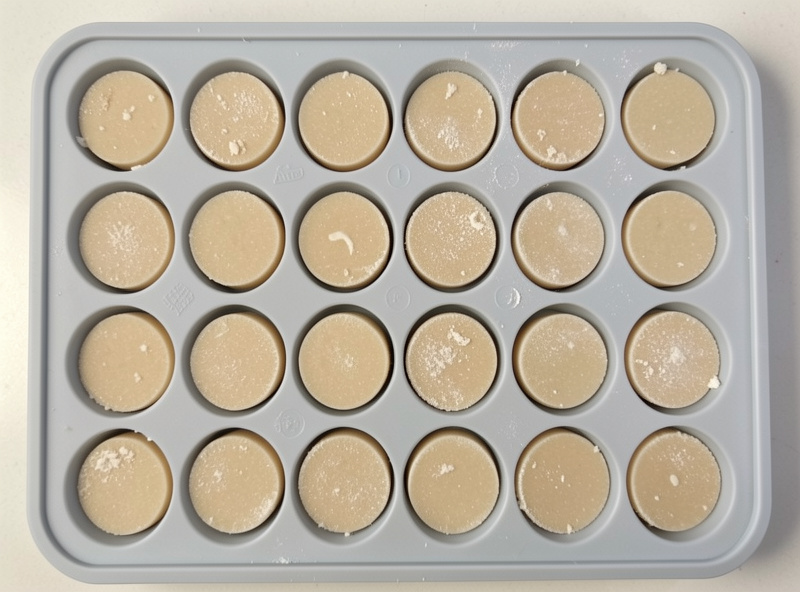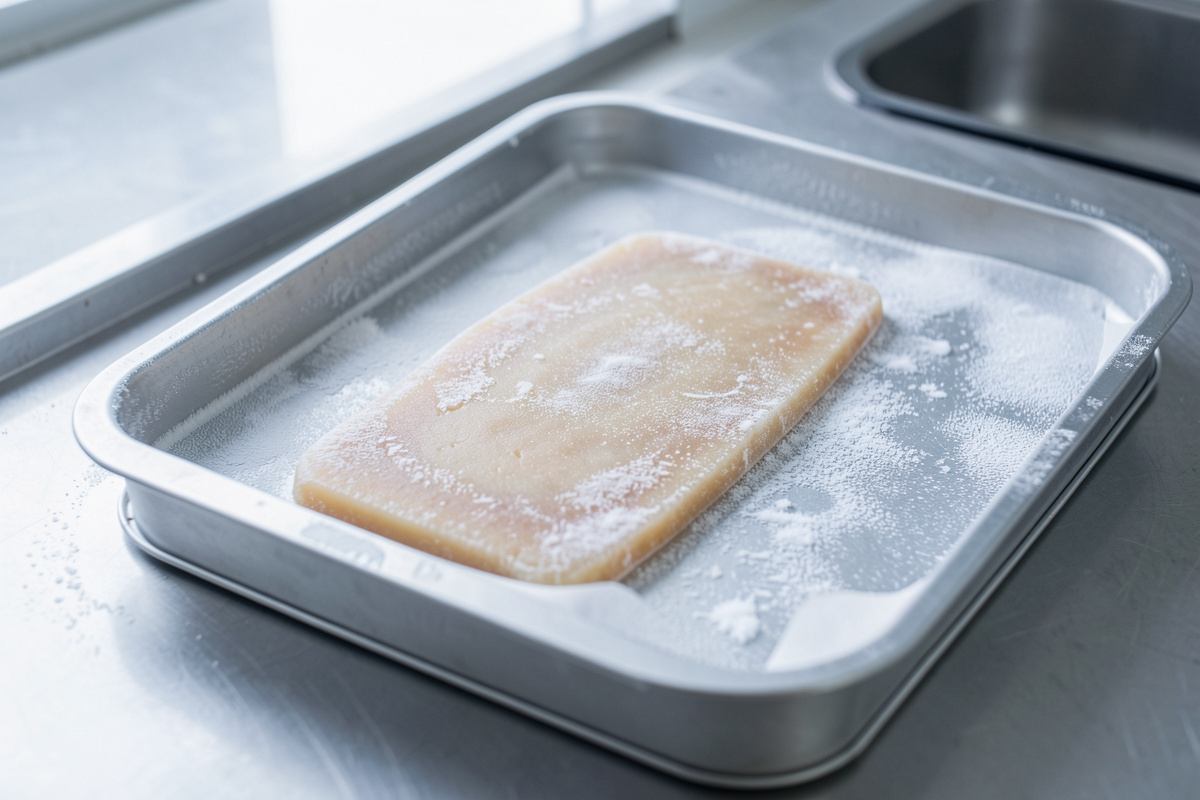

You can freeze dry liquids like broth, milk, pureed fruit, and sauces, but they require pre-freezing flat in the tray and shallow fill depths so they do not slosh into the chamber during pull-down. In my batch log, a half-inch of liquid frozen solid in the tray dries cleanly into a stable powder or wafer; an overfilled tray of unfrozen liquid is how you contaminate the machine.
Liquids are where home freeze drying gets genuinely useful and slightly trickier at the same time. Powdered broth, fruit purees, and milk powder are some of the most valuable things this machine makes, but they punish the shortcuts that solids forgive. I keep liquids out of anyone’s first batch for exactly that reason, and my first freeze dryer batches guide deliberately starts you on forgiving solids instead: get the depth or the pre-freeze wrong and you are cleaning frozen broth out of the chamber instead of stocking your pantry. This guide is the liquids method from my log, the depths I use, the pre-freeze step that makes it safe, and how to handle the powders that result.
How Do You Freeze Dry Liquids Without a Mess?
The key to freeze drying liquids cleanly is to freeze them solid in the tray before the cycle starts. Fill the tray no more than about half an inch deep, freeze it flat and hard in a chest freezer, and only then load it. A solid frozen slab cannot slosh, splash, or boil over when the vacuum pulls down.
The danger with liquids is the pull-down. As the chamber evacuates, any liquid that is not frozen solid can bubble and migrate, and a tray filled too deep can overflow as it expands. Both make a mess that ends up in the chamber and the pump’s path. Freezing the liquid into a stable slab first removes the risk entirely, because a frozen block just sits there and sublimates from the surface inward like any other load. This is the one place where skipping the pre-freeze is not just slower, it is genuinely messy, so I treat it as mandatory for anything pourable. The first time I rushed a tray of broth in only partly frozen, I learned exactly why: as the vacuum pulled, the still-liquid center crept toward the edge and a thin film escaped onto the shelf below. Nothing catastrophic, but it turned a clean run into a cleanup, and it taught me that with liquids the pre-freeze is not optional discipline, it is the whole safety margin. Now every liquid load goes into the chest freezer the night before and comes out a solid slab I can handle like a tray of ice, the same pre-freezing discipline I rely on for every load, just made non-negotiable for anything pourable. That single habit has kept the chamber clean ever since.
What Fill Depth Works Best for Liquids?
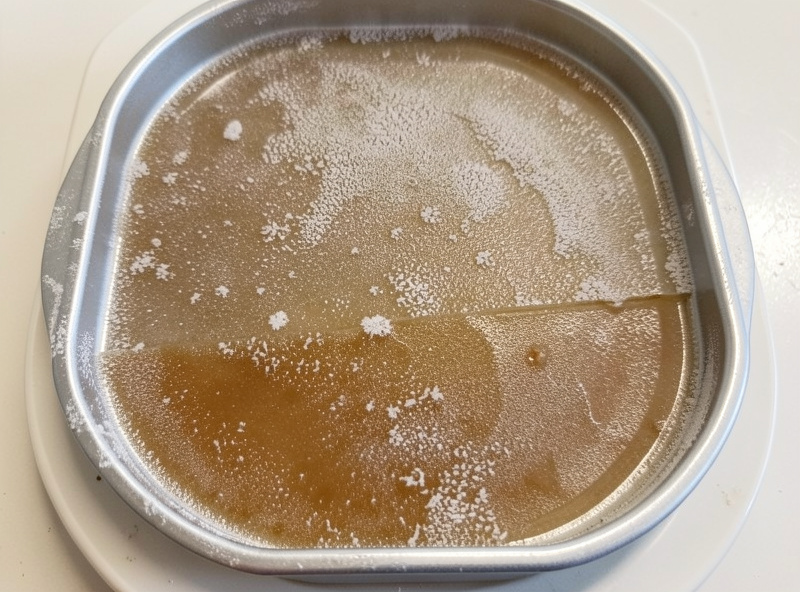
Keep liquids shallow, around a quarter to half an inch deep in the tray. Shallow layers freeze faster, dry more evenly, and leave room for any slight expansion. Deeper pools take much longer to dry, are more likely to retain moisture in the center, and risk overflowing as they freeze and expand.
I think of liquid depth the same way I think of solid tray loading density: thinner is faster and more reliable. A shallow slab of broth has a short distance for moisture to travel out, so it dries predictably. A deep pool behaves like an overloaded tray of solids, finishing at the surface while the center stays moist. The tradeoff is yield per tray, and for liquids I happily accept lower yield per run in exchange for clean, fully dry results. If I want more powder, I run more shallow trays rather than one deep one. The math always favors reliability here, because a deep liquid load that fails is a particularly miserable thing to re-run.
Which Liquids Freeze Dry Well?
Broth, stock, fruit purees, tomato sauce, and milk freeze dry well into shelf-stable powders and wafers. High-fat liquids like cream and high-sugar liquids like syrups are harder, because fat resists drying and sugar can leave the result tacky. Lean, water-based liquids are the easiest and most rewarding to start with.
Broth and stock are my favorites because the resulting powder is intensely useful: a spoonful rehydrates into instant stock, and it stores compactly. Fruit purees make powders for baking and smoothies. Milk freeze dries into a powder, though it benefits from a slightly longer cycle and careful dry-checking because dairy holds moisture stubbornly. The ones I approach with caution are anything fatty or very sugary, since fat does not sublimate and high sugar stays sticky. For those, I keep expectations honest and the layers especially thin. A useful mental model is water activity: the more of a liquid’s content is water rather than fat or dissolved sugar, the cleaner it dries, because freeze drying removes water and only water. Broth is almost all water, so it dries beautifully. Cream carries a lot of fat that simply stays behind, and syrup carries so much dissolved sugar that the result wants to stay tacky. Knowing that, I match the layer thickness to the difficulty: easy water-based liquids can take a normal shallow slab, while fatty or sugary ones go especially thin to give the small amount of water the shortest possible path out. As with all storage claims, the shelf life of these powders is commonly reported rather than guaranteed, and it depends entirely on getting them fully dry and sealed against moisture and oxygen. For the safety side of long-term storage I defer to the official guidance rather than my own log: the USDA Complete Guide to Home Canning and the National Center for Home Food Preservation both stress that low moisture and an oxygen-free seal are what actually keep a dried product safe, not any number printed on a bag.
How Do You Store Freeze-Dried Powders?
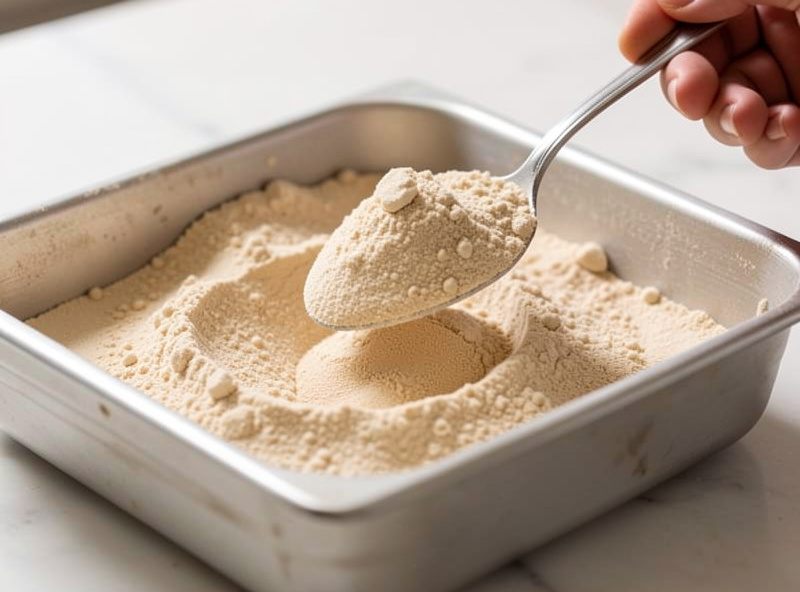
Store freeze-dried powders in airtight containers, ideally mylar bags with oxygen absorbers or sealed jars, because powders are hygroscopic and pull moisture from the air quickly. A powder left exposed will clump and cake within minutes in a humid kitchen, so seal it promptly after confirming it is fully dry.
Powders are the most moisture-sensitive thing this machine produces, which makes sealing technique matter more than usual. I move powder straight from the tray into mylar bags with oxygen absorbers and seal immediately, or into jars for powders I will use quickly. The dry check matters even more here: a powder that feels slightly cool or cakes when pressed is still holding moisture and needs more time, because sealing a damp powder guarantees a clumped, spoiled result. For shaping liquids into easy portions before freezing, food-grade silicone molds let you freeze broth or puree into uniform pucks that load neatly and dry evenly.
As an Amazon Associate I earn from qualifying purchases.
Can You Freeze Dry Liquids Into Candy and Treats?
Yes, liquids and semi-liquids are behind many of the freeze-dried treats people ask about, from puffed candies to yogurt drops and ice cream. These work by freezing the liquid or soft mixture into shapes first, then drying them into a light, crisp version of the original. They are fun, but they are an experiment-load skill, not a first project.
Yogurt is the friendliest entry point. Spoon or pipe small dollops onto a lined tray, freeze them hard, and dry them into crisp drops that keep their shape. Pureed fruit does the same. Where it gets messy is high-sugar candy, which can puff dramatically and stick to everything, so I save those runs for when the chamber is due for a cleaning anyway. The honest truth the trend videos skip is the cleanup: sugary liquids leave residue, and a candy run usually means scrubbing trays afterward. If you go in expecting that, the treats are genuinely rewarding. If you expect a no-mess miracle, you will be annoyed. I plan candy and yogurt runs deliberately, never as an afterthought tacked onto a food load.
What If a Liquid Load Makes a Mess?
If a liquid load splashes or overflows into the chamber, stop, let the machine return to room temperature, and clean the chamber and shelves thoroughly before the next run. Residue left in the chamber can affect the vacuum and bake on over time, so a prompt cleanup protects both your machine and your next batch.
I keep a routine for the rare mess: wipe the chamber and shelves with a damp cloth, dry completely, and check the drain and any path toward the pump for residue. The pump itself should never see liquid, which is the whole reason the pre-freeze and shallow-fill rules exist, but if you suspect any made it through, that is the moment to check your pump oil and condition before running again. Prevention is far easier than recovery here. Freeze solid, fill shallow, and the mess simply never happens, which is why I am so insistent on those two rules for anything pourable. When in doubt about the machine’s condition after a spill, the wider pump maintenance guide covers what to check.
Liquid Freeze Drying Quick Reference
This table summarizes how common liquids behave, based on my batch log. Difficulty reflects fat and sugar content; depths are starting points, not limits. As always, even shallow layers and a thorough dry check matter more than hitting an exact number.
| Liquid | Difficulty | Fill Depth | Result |
|---|---|---|---|
| Broth / stock | Easy | ~1/2 inch | Excellent powder |
| Fruit puree | Easy to moderate | ~1/4 to 1/2 inch | Powder or wafer |
| Tomato sauce | Moderate | ~1/4 inch | Powder, watch sugar |
| Milk | Moderate | ~1/4 to 1/2 inch | Powder, longer cycle |
| Cream / high fat | Hard | Thin | Fat resists drying |
| Syrups / high sugar | Hard | Very thin | Can stay tacky |