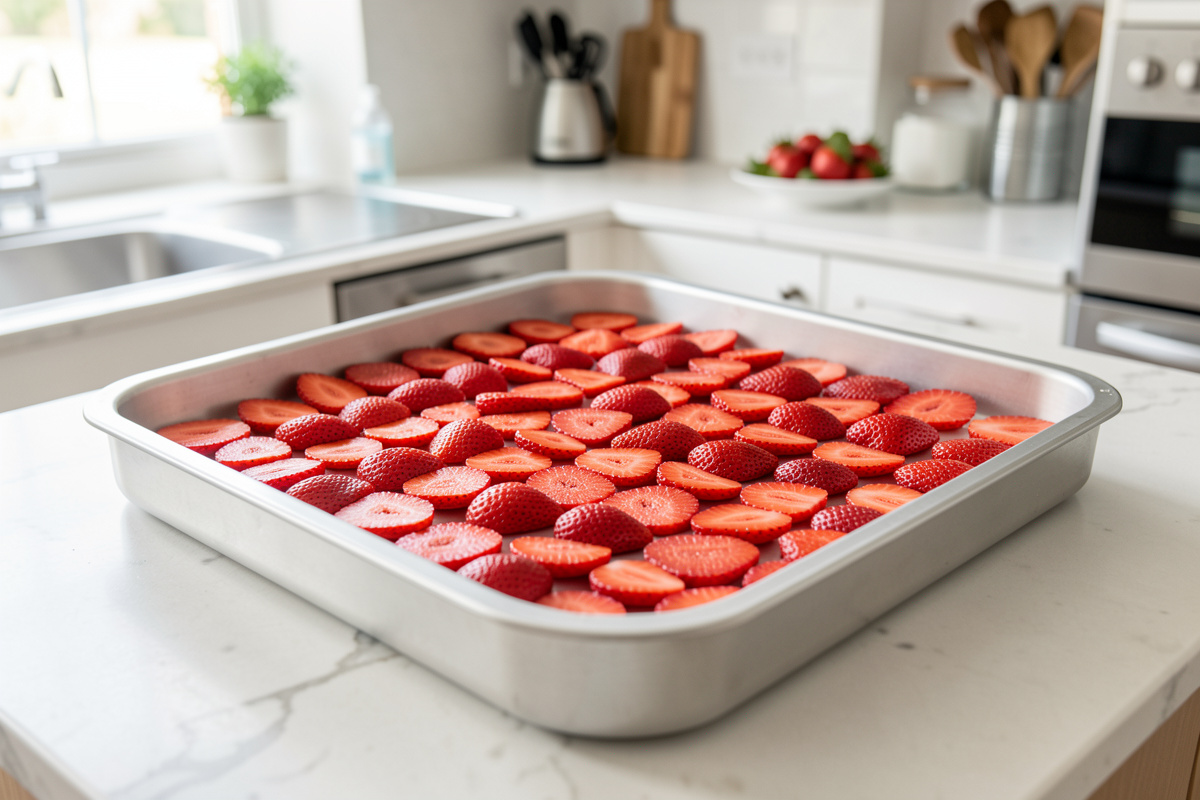

The best first freeze dryer batch is a single tray of pre-frozen sliced strawberries, run at default settings. It costs only a few dollars in store-bought frozen fruit, finishes in roughly 24 to 30 hours, and the dry-check snap test is so obvious that you learn to judge doneness on a load that cannot lie to you.
I have lost count of how many new owners ask me what to run first, and almost all of them want to start with something ambitious: a full load of cooked dinners, a tray of raw meat, the candy everyone posts online. I steer every one of them back to fruit, because the first three batches are not about filling the pantry. They are tuition. You are learning the sound of a healthy vacuum pull-down, the rhythm of your specific machine in your specific room, and the snap of a piece that came out genuinely dry. Cheap fruit teaches all of that without punishing your mistakes. Here is exactly what to load, why, and what to avoid until you have a few clean cycles in your batch log.
Why Strawberries Are the Ideal First Batch
Strawberries are the ideal first batch because they are cheap, pre-sliced when bought frozen, low in fat, and they give an unmistakable dry-check result. A correctly dried strawberry shatters when you snap it; one that is still moist bends. That clarity is worth more than any feature on the machine when you are learning to read doneness.
There is a practical economics angle too. A bag of frozen store-bought strawberries runs a few dollars and is already washed and sliced, so your total downside if the cycle goes wrong is pocket change. Compare that to loading a tray of homemade chili for batch one and losing the whole thing to a botched run, which is exactly how new owners get discouraged and the machine ends up gathering dust. Strawberries also rehydrate into something genuinely useful, so even your learning loads are not wasted. They go into oatmeal, yogurt, and trail mix while you build the experience to tackle harder foods.
What Other Foods Make Good First Batches?
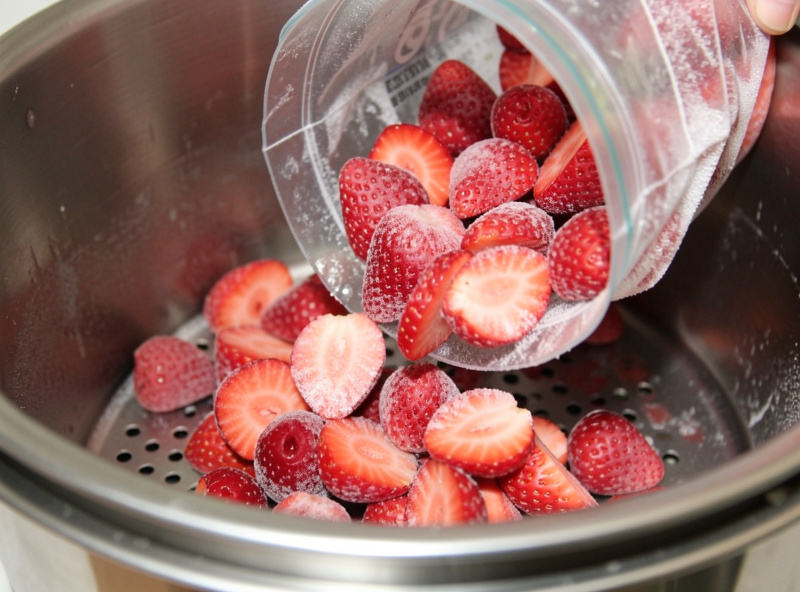
Beyond strawberries, the best beginner foods are frozen sweet corn, diced apple, sliced banana, and frozen peas. All are cheap, low in fat, sold frozen, and forgiving of a slightly imperfect cycle. They run in roughly 24 to 34 hours pre-frozen in a thin layer and rehydrate predictably, which makes them reliable teachers.
I rotate through these for anyone who wants variety in their first few loads. Frozen sweet corn is nearly foolproof and snaps clean when dry. Diced apple is forgiving and makes excellent snacks. Banana is slightly trickier because its sugar can leave it a touch tacky if you rush the cycle, so it is a good second or third batch rather than the very first. The common thread is that none of them carry the fat or density that makes meat, dairy, and full meals hard to read. Master the easy foods, log their cycle times for your machine, and the harder loads stop being intimidating because you will already know what a good cycle feels like.
What Should You Avoid in Your First Batches?
Avoid high-fat foods, raw meat, dense full meals, and liquids in your first batches. Fat does not freeze dry well and can leave food that goes rancid in storage, while dense or liquid loads are hard to read and easy to under-dry. Save them until you have several clean cycles logged and trust your dry-check judgment.
The biggest early temptation is the trendy candy load, and I am not going to tell you never to do it, only that it is an experiment load, not a first batch. Candy behaves unpredictably, gums up trays, and the cleanup is real. Raw meat is a separate caution entirely: freeze drying is not cooking, so any meat should be handled according to standard food-safety practice, and USDA guidance on safe internal temperatures, such as 165°F for poultry, applies to how it was prepared before it ever reaches the tray. None of this is a reason to be afraid of your machine. It is a reason to earn the harder loads by getting the easy ones right first.
Good vs Risky First Batch Foods at a Glance
This table sorts common foods by how suited they are to a first batch. The good ones are cheap, low in fat, and easy to read on the dry check; the risky ones are the loads that discourage new owners. Cycle times are from my batch log, pre-frozen in a thin single layer, and will vary with your machine and load weight.
| Food | First Batch? | Why | Typical Cycle (thin layer) |
|---|---|---|---|
| Sliced strawberries | Best | Cheap, low fat, snaps clean | ~24-30 hours |
| Frozen sweet corn | Great | Nearly foolproof, clear dry check | ~24-30 hours |
| Diced apple | Great | Forgiving, useful snack | ~26-34 hours |
| Frozen peas | Good | Low fat, even drying | ~24-32 hours |
| Sliced banana | Second batch | High sugar can stay tacky | ~30-40 hours |
| Cooked full meals | Avoid early | Dense, hard to read, costly to lose | ~30-44 hours |
| Raw meat | Avoid early | Fat risk, food-safety handling | Varies |
| Candy | Experiment only | Unpredictable, gums trays | Varies |
How to Run Your First Batch Step by Step
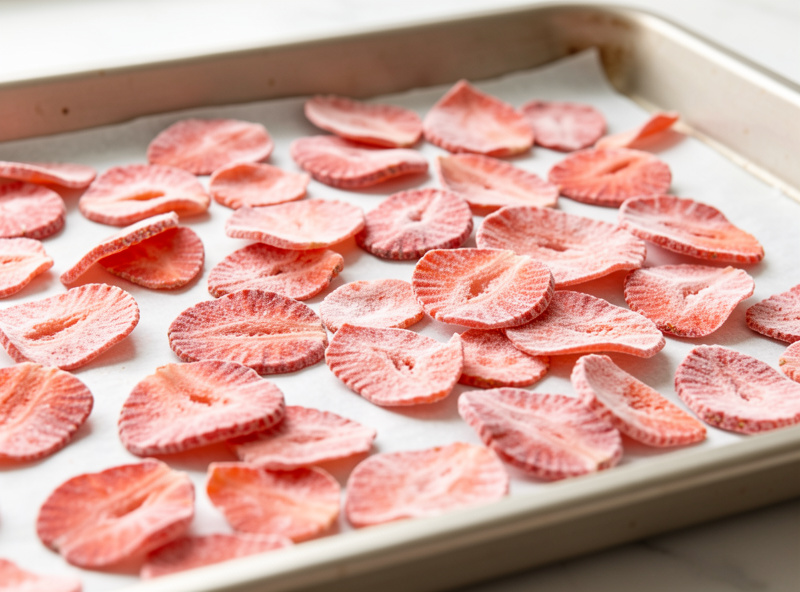
To run your first batch, slice or buy fruit pre-frozen, spread it in a single even quarter-inch layer, pre-freeze the trays solid, load the machine, and run the default cycle. When it finishes, snap the thickest piece to confirm it shatters, weigh against your log if you can, and only then package. The whole process takes 24 to 36 hours.
The detail that matters most is the even single layer. Pile the fruit and the center dries last, which is how a planned 30-hour cycle stretches past 48 and still fails the snap test in the middle. Spread to the tray edges, keep pieces a uniform thickness, and pre-freeze everything hard before it goes in so the machine spends its energy sublimating rather than freezing. Start your batch log on this very first load: write down the food, the weight, the pre-freeze method, the total cycle time, and the dry-check result. That single notebook entry is the beginning of the data that makes every future load predictable, and it is the habit I push before any accessory. If you want the wider context for how the first batch fits into pre-freezing, tray density, and the dry check, the first batches guide walks through the whole process, and the running-cost picture is covered in my electricity-cost breakdown.
What Gear Actually Helps a Beginner?
The one accessory worth buying before your first batch is a digital kitchen scale, because the weight check is the most objective way to confirm a load is fully dry. Everything else, the trays and the machine, you already have. A scale that reads to the gram lets you compare a tray’s weight before and after, and a load that has stopped losing weight is done.
I weigh every load in and out, and that simple habit catches the marginal failures the snap test can miss, the loads that feel dry on the surface but still hold a trace of moisture in a thick piece. A basic digital kitchen scale is inexpensive and earns its place from the first batch onward. Resist the urge to buy a pile of accessories before you have run a load. Get the easy batches right, learn what your machine does, and let your batch log tell you which upgrades you actually need rather than the ones the marketing says you do.
As an Amazon Associate I earn from qualifying purchases.
Frequently Asked Questions
What is the best first freeze dryer batch for a beginner?
A single tray of pre-frozen sliced strawberries is the best first batch. It is cheap, low in fat, and the snap test is unmistakable, so you learn to read doneness on a load that finishes in about 24 to 30 hours.
Can you freeze dry meat as a first batch?
You should not. Raw meat and high-fat foods are hard to read and easy to under-dry, and fat can go rancid in storage. Start with cheap low-fat fruit, log several clean cycles, then move to meat once you trust your dry check.
How long does a first batch of strawberries take?
A thin single layer of pre-frozen sliced strawberries commonly runs about 24 to 30 hours in a home freeze dryer. Exact time depends on load weight, tray density, and your specific machine, which is why logging the first batch matters.
Do you need accessories for your first freeze dryer batch?
The only accessory worth buying first is a digital kitchen scale for the weight check, which is the most objective way to confirm a load is dry. The trays you already have. Let your batch log tell you which upgrades you actually need.
Should your first batch be candy?
No. Candy is an experiment load, not a first batch. It behaves unpredictably, gums up trays, and the cleanup is real. Run several clean fruit loads first so you know what a good cycle feels like before trying the trendy candy projects.