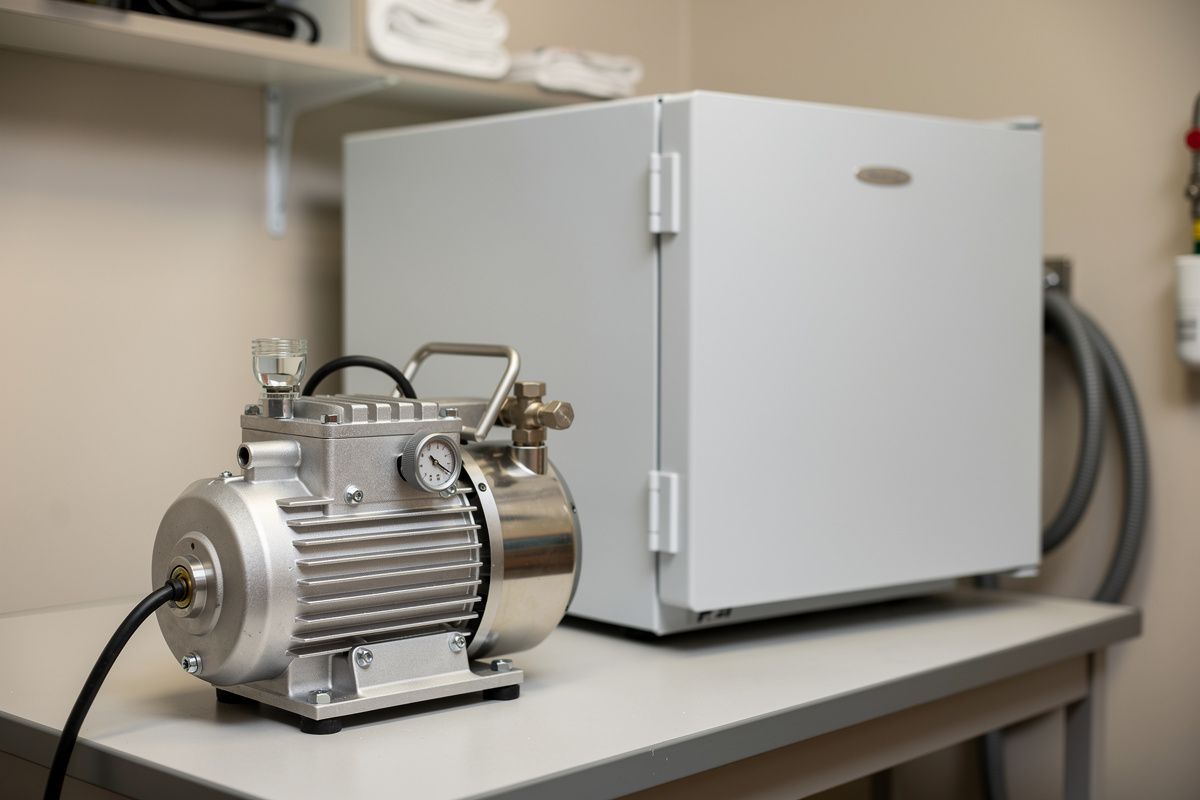

Every home freeze dryer needs a vacuum pump, and the one real fork in the buying decision is whether to run a standard oil-lubricated pump or pay more for an oil-free one. I’ll be straight about where my authority ends on this: I run the oil pump, I’ve logged its maintenance for years, and I can speak to it with full confidence. The oil-free pump I do not own — so everything I say about it is what operators consistently report, flagged as such every time, not a lived verdict I’m dressing up as bench time.
That honesty matters here more than anywhere, because the category is full of confident oil-free verdicts written by people who’ve never changed a drop of pump oil in their lives. This is the decision laid out by someone who actually maintains one of the two options and refuses to fake the other. It’s a companion to the main freeze dryer buying guide.
What the pump actually does
The pump pulls the chamber down to a deep vacuum so that frozen water can sublimate — go straight from ice to vapor — instead of melting. Without a strong, well-maintained vacuum, sublimation stalls and your cycles drag or fail. Both pump types do this same job; the difference is in how they’re lubricated and what owning them costs you in money and maintenance over the years.
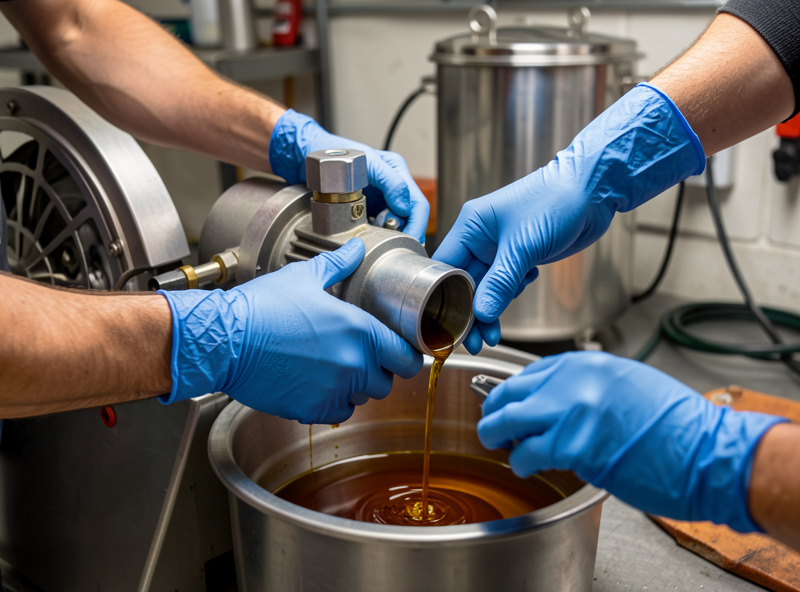
The oil pump — what I actually live with
This is my lane. The standard oil pump is the cheaper entry, it’s reliable, and its maintenance is real but entirely manageable once it becomes a habit. The core routine is changing the oil on schedule — fresh oil pulls a better vacuum and a tired, contaminated oil load is the most common reason a pump starts underperforming. I log my oil changes the way I log batches, because the pump’s behavior over time is data, not guesswork.
The honest downsides: it’s a periodic mess, oil is an ongoing consumable cost, and you have to actually do the maintenance rather than ignore it. The honest upsides: it’s cheaper up front, the failure modes are well understood, and the pump tells you when it’s unhappy — a change in sound, a struggle to pull down, oil that’s gone cloudy. None of that is mysterious once you’ve done a few changes. I cover the full routine in the oil pump maintenance guide; here the point is simply that the maintenance is the price of the lower sticker, and it’s a price I find entirely fair.
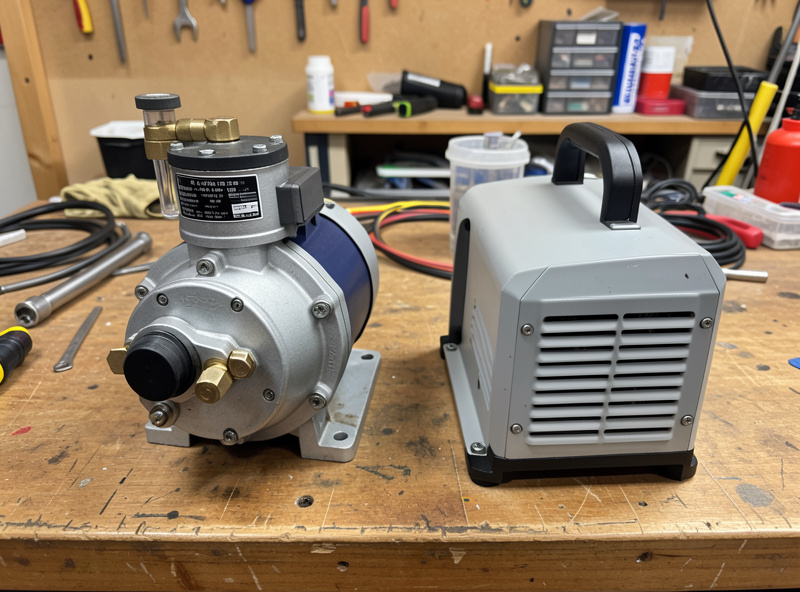
Disclosure: As an Amazon Associate I earn from qualifying purchases. If you run the oil pump, keeping the right vacuum pump oil on hand is the one consumable you genuinely can’t skip. The oil my routine depends on is widely available — here’s a vacuum pump oil search on Amazon so you can match what your pump calls for.
The oil-free pump — what operators report
Here I hand the authority over honestly, because I don’t own one. What oil-free owners consistently report is the obvious appeal: no oil changes, no oil-change mess, and less routine maintenance to forget. For someone who knows they won’t keep up an oil schedule, that’s a real argument — a pump you don’t maintain is a pump that underperforms, and the oil-free design removes that failure mode entirely.
The reported trade-offs are a higher purchase price and a long-term reliability picture that’s genuinely harder to pin down. Oil-free pumps are a newer, more complex piece of equipment, and operator reports on multi-year durability are mixed and harder to generalize than the very well-understood oil pump. I won’t pretend to a verdict I haven’t earned on my own bench — what I can tell you is that the people who love theirs love the freedom from oil, and the people who’ve had trouble point to repair cost and complexity. Weigh those as reports, not as my measured findings.
How I’d actually choose
For a first machine and an informed buyer, I lean oil pump, and I’m transparent about why: it’s cheaper, I understand its maintenance completely, and its failure modes hold no surprises. If you’re the kind of person who will genuinely keep an oil schedule — and if you log anything in your life, you probably will — the oil pump is the rational, lower-cost entry. The maintenance is the deal you’re accepting for the lower price, and it’s a fair deal.
I’d reach for the oil-free option if I knew myself well enough to admit I’d never keep up the oil routine, or if the convenience genuinely outweighed the premium for my situation — and I’d go in treating its long-term reliability as the open question operators report it to be, not as a solved one. Either way, buy the pump that matches your honesty about your own maintenance habits, not the one the marketing flatters you into.
The one thing both pumps demand
Whichever you choose, the pump is the heart of the machine and it rewards attention. The oil pump rewards a maintenance schedule; the oil-free pump rewards keeping it clean and not assuming “maintenance-free” means “ignore-forever.” A healthy pump pulls a deep vacuum, dries food properly, and lasts; a neglected one of either type stalls cycles and shortens its own life. That’s the real lesson from my batch log — the pump’s condition shows up in every cycle, and treating it as process equipment rather than an appliance is what separates owners from operators. Once your pump is healthy and your setup is dialled in, the best first freeze dryer batch guide walks through exactly what to load in those early runs to build confidence fast.
A note on noise, because the pump is the loud part
Worth flagging while you’re choosing, because it affects where the machine lives: the vacuum pump is the loudest component of a freeze dryer, regardless of which type you pick. Both oil and oil-free pumps run for hours during a cycle and put out a steady mechanical drone plus some heat. Oil-free owners sometimes report a slightly different acoustic character, but neither is silent and you should plan your install spot around pump noise either way. If you’re weighing where to put the machine, factor the pump’s sound into the room decision rather than discovering it after the first overnight run.
This is one more reason I treat the pump as the defining component of the purchase rather than an afterthought bundled with the chamber. It’s the part you maintain, the part that determines vacuum quality, and the part you hear. Choosing it deliberately — on price, on your maintenance honesty, and on the reliability picture as it really is for each type — is the whole of this decision.