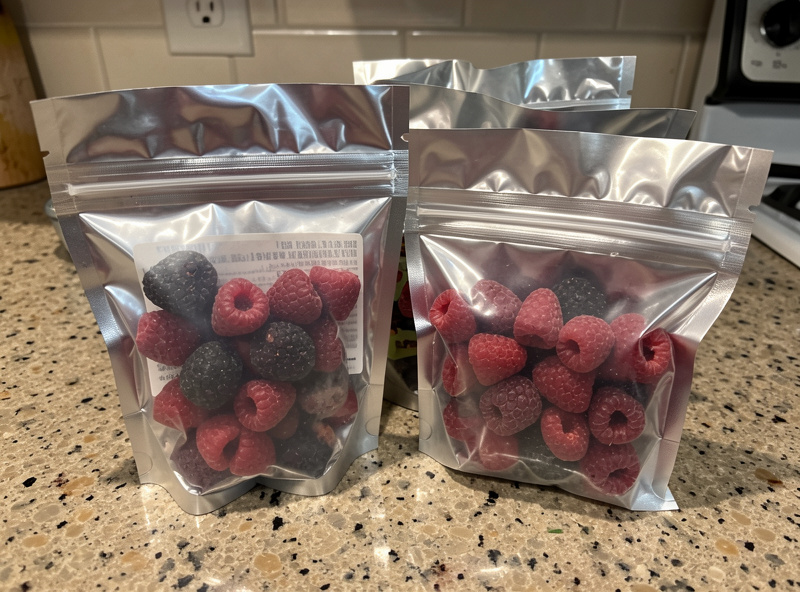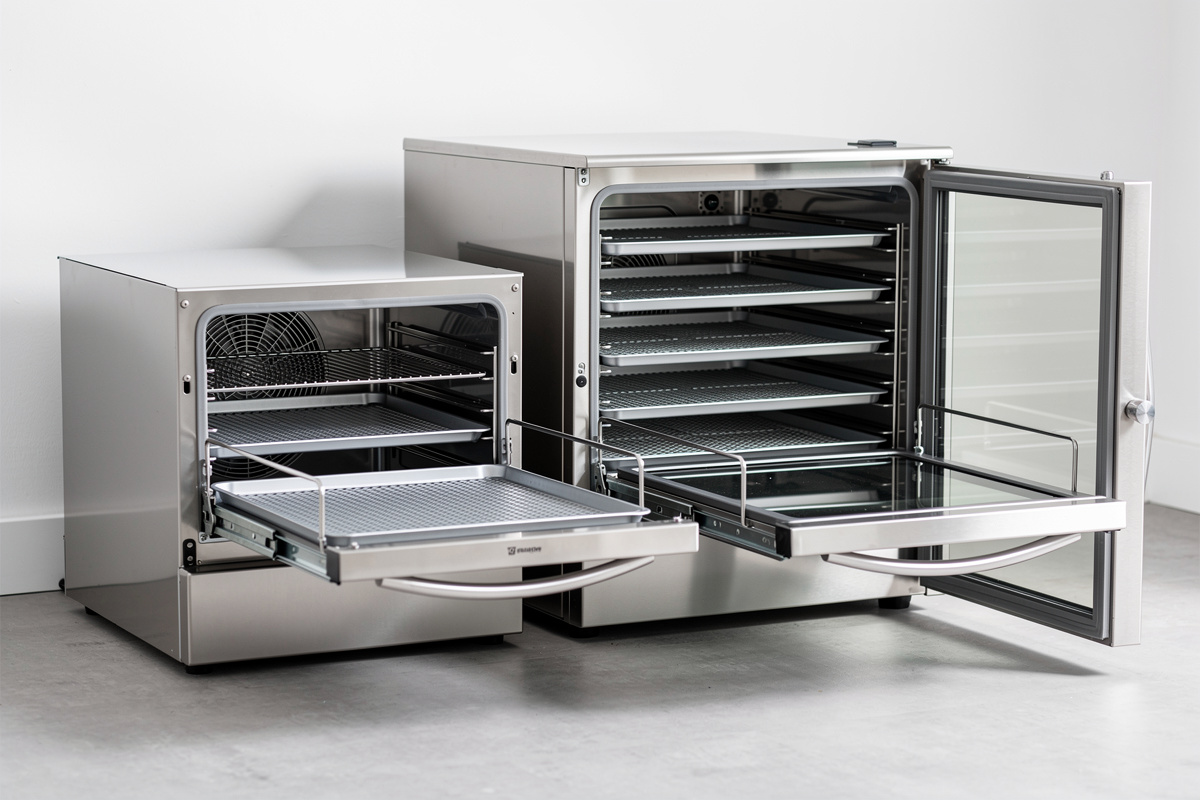

The small-versus-medium decision is the one most home freeze dryer buyers agonize over, and most get it backwards — they buy small to save money and then fight the machine every harvest season. I run a Medium-class unit and have logged years of batches through it, so I can tell you exactly where the two sizes diverge in practice, not on the spec sheet. The headline numbers — tray count, rated batch weight — only tell you part of the story. What matters is how much usable food each size actually moves per cycle once you account for tray density, pre-freezing, and the loads you’ll really run.
This is a companion to the main freeze dryer buying guide, zoomed all the way in on the size question. If you’ve already estimated your real seasonal output (and if you haven’t, start there), this is how to translate that number into the right size class.
What “capacity” actually means
Manufacturers quote a rated batch weight and a tray count, and both are correct as far as they go. But rated weight is a best-case figure for an ideal load, and the gap between rated and useful capacity is where buyers get surprised. A tray of sliced strawberries packs very differently from a tray of liquids or a dense meal-prep load, and you can’t simply pour the rated weight onto the trays and walk away. Tray area and tray density are the honest measures of what a machine moves per cycle.
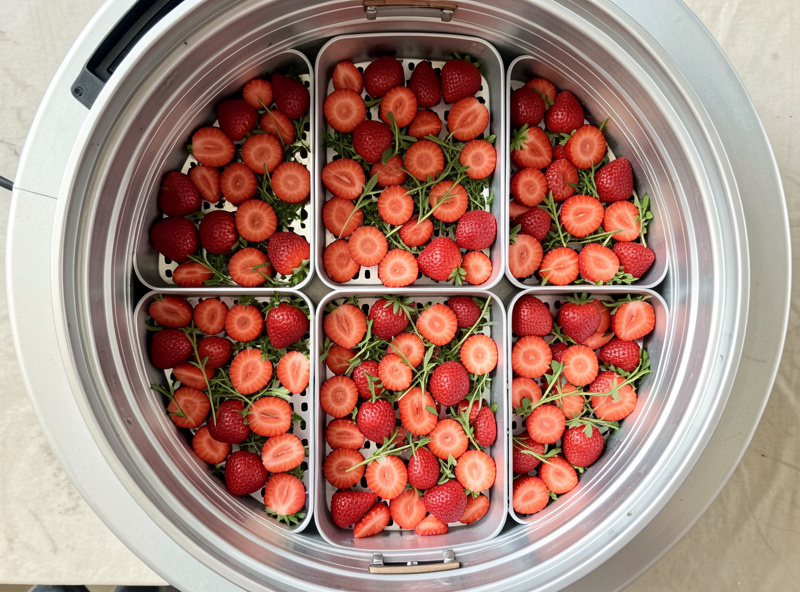
The small unit gives you fewer, smaller trays; the medium gives you more tray area and a bit more headroom per tray. In my log, that difference shows up most at glut season — when the garden delivers more than one batch can hold and you’re suddenly running the small machine three times to do what the medium does once.
Small vs Medium: how they actually compare
| Factor | Small / compact | Medium |
|---|---|---|
| Tray count | 3–4 smaller trays | 4–5 larger trays |
| Real batch fit | A herb glut, a few flats of berries, single-meal loads | A full garden-season load, family meal prep, mixed batches |
| Cycles per harvest glut | More — you’ll run it repeatedly | Fewer — absorbs a big harvest in one go |
| Footprint & weight | Lighter, easier to place | Heavier, needs a planned install spot |
| Noise & heat | Real but smaller | Real and a bit more — plan the room |
| Power draw | Lower | Higher (measure your own) |
| Best buyer | Apartments, couples, low volume, learners | Most households, real gardens, serious preservers |
Notice the table doesn’t quote a single magic kilowatt or cycle-time number. That’s deliberate — energy and cycle length depend on load, food type, pre-freeze, and ambient temperature, and I’d rather you measure your own machine than trust a fabricated figure. What’s reliable is the relationship: medium draws more and runs bigger loads; small draws less and runs smaller ones, more often.
The trap of buying small to save money
Here’s the mistake I see most. A buyer with a genuinely large garden buys the small unit because it’s cheaper, planning to “just run it more often.” That works on paper and fails at harvest. When the berries all ripen the same fortnight, you can’t run enough small cycles to keep up, and food you meant to preserve goes soft on the counter while the machine grinds through batch after batch. The money saved up front gets spent in wasted harvest and frustration.
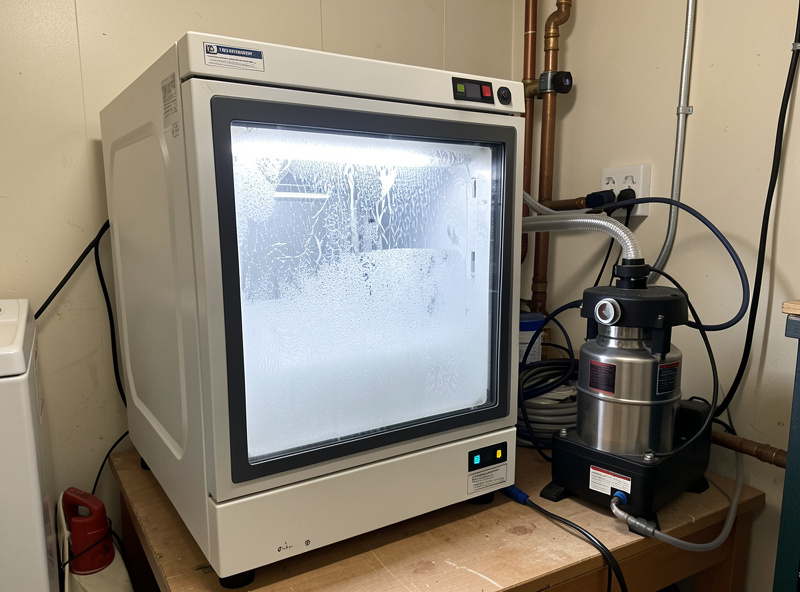
The inverse trap is real too: buying medium when your output is genuinely small means a heavier, louder, hungrier machine running half-empty, which wastes time and power per useful gram. Empty tray space isn’t free — it’s just slower, costlier cycles. The honest answer is to size to your output, not to your budget anxiety or your prepper ambitions.
When small is genuinely the right call
I’m not anti-small — for the right buyer it’s the smart purchase. If you’re in an apartment, if it’s a couple’s kitchen rather than a family’s, if your preservation volume is genuinely modest, or if you’re learning the hobby and aren’t sure it’ll stick, the small unit is lighter to place, cheaper to enter on, and perfectly capable. Plenty of serious preservers run a small machine happily for years because it matches what they actually produce. The size is only “too small” relative to your output — there’s no universal right answer, only the one that fits your harvest.
When medium earns the upgrade
Medium earns its place when your output is real and recurring: a productive garden, family-scale meal prep, the kind of seasonal glut that overwhelms a small machine. It’s the size I run and the one I steer most households toward, because it absorbs a genuine harvest in fewer cycles and still fits a planned utility-room install. The trade-offs are honest — more weight, more noise, more heat, more power, and a spot you plan before it arrives — but for a real preserver those are the cost of not fighting the machine every August.
The upgrade path, and whether to plan for it
A question worth asking before you buy small: do you expect your output to grow? If you’re planting a bigger garden next year, or you suspect the hobby will pull you in deeper the way it did me, the small machine you save money on now may become the bottleneck you replace in two seasons. Selling a well-maintained unit to fund the upgrade is doable — these machines hold resale value reasonably well when the pump’s been cared for and the chamber’s clean — but you’ll take some loss in the churn, and you’ll spend a second round of accessories money on the larger trays.
The alternative is to buy the size you’ll grow into once, accepting the larger machine’s footprint and power from day one even if your first season under-fills it. Neither is wrong. I’d buy small if I were genuinely unsure about the hobby or my volume, and buy medium if I already knew — from my other preservation benches — that I’m the kind of person who logs batches and rotates stock. Honest self-knowledge about your own follow-through is worth more here than any spec comparison.
How I’d decide in one sentence
If your honest seasonal output regularly exceeds what three or four small trays can hold in a single sensible run, buy medium; if it doesn’t, buy small and save the money for consumables. Everything else — noise, power, footprint — follows that core capacity match. And remember the size you choose is a capacity decision, never a shelf-life or safety one: how you store and how long it keeps is commonly reported practice plus USDA and manufacturer guidance, not a function of which machine you bought.