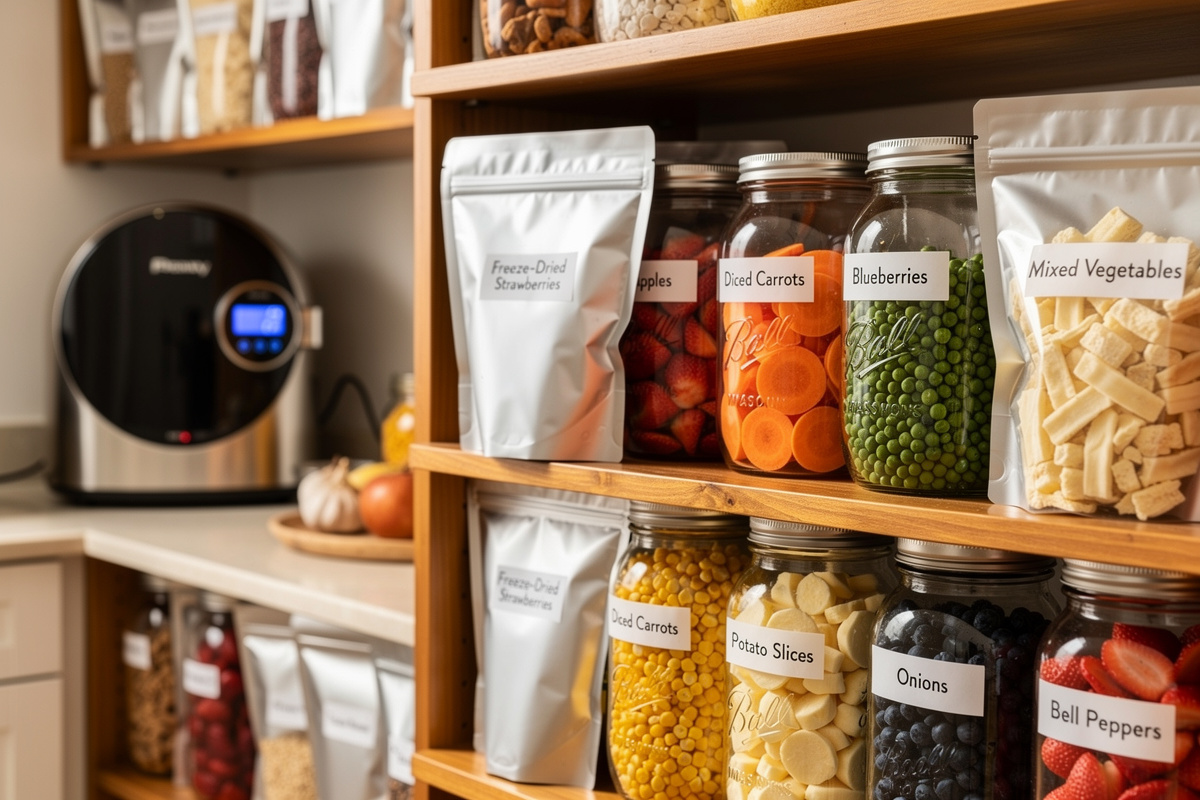

Freeze dryer running costs are the part of ownership the sticker price hides and the affiliate reviews skip entirely. The machine is the big up-front number everyone fixates on, but the question that actually determines whether you stay happy with it is the ongoing one: what does it cost to keep running, batch after batch, year after year? I run a Harvest Right Medium-class machine on a standard oil pump and I track the real ongoing costs the way I track everything else — honestly, against my batch log. So this is the full cost-of-ownership picture: the consumables, the maintenance, the electricity, and the costs nobody puts a number on, plus where the money actually goes and how to keep it sensible.
One scope note so this article earns its place: I treat the per-batch electricity question in depth in a separate piece, because it deserves its own measurement method. Here I am zooming out to the whole picture of ongoing cost — every recurring line item, not just the power meter. Think of this as the running-cost budget; the electricity article is one line in it, examined under a microscope.
The recurring costs, line by line
Ongoing freeze dryer cost is not one number, it is a handful of small, predictable streams that add up over a year of regular use. Naming them all is the first step to budgeting honestly, and it is exactly the list the “pays for itself in months” math conveniently leaves out.
| Running cost | How often | Roughly how big | How to keep it down |
|---|---|---|---|
| Pump oil (standard pump) | Every several batches, by oil condition | Small per change, recurring | Run clean low-moisture loads; consider filtration at high volume |
| Mylar bags and oxygen absorbers | Every long-storage batch | The largest ongoing line for most owners | Buy in bulk; reuse jars for short-cycle items |
| Electricity | Every batch | Modest on a normal rate; varies with cycle and rate | Pre-freeze well, load sensibly, site in a cooler room |
| Occasional parts and gaskets | Rarely | Small, infrequent | Maintain the machine; follow manufacturer guidance |
| Your time | Every batch | Unpriced but real | Batch efficiently; run loads worth running |
For most owners the biggest ongoing money line is not electricity at all — it is the storage consumables. Mylar bags and oxygen absorbers get used on every long-storage batch and they are the recurring spend that quietly dominates the budget. The pump oil is small per change but steady. Electricity is real but, on a normal rate with good batch discipline, rarely the headline. And then there is your time, which no spreadsheet captures but every honest owner feels.
The consumables, in detail
Because consumables are the dominant running cost, they are worth understanding rather than just budgeting blindly. Mylar bags come in different thicknesses, and a sturdier bag resists punctures and holds its barrier better for long-term storage — worth it for food you mean to keep, while thinner bags or reusable jars are fine for short-cycle items you will eat soon. Oxygen absorbers are sized by their capacity, and matching the absorber to the bag volume matters: an undersized absorber leaves oxygen behind and undoes the point of the cycle, while a wildly oversized one is just wasted money. Getting that sizing right is part technique, part not overpaying.
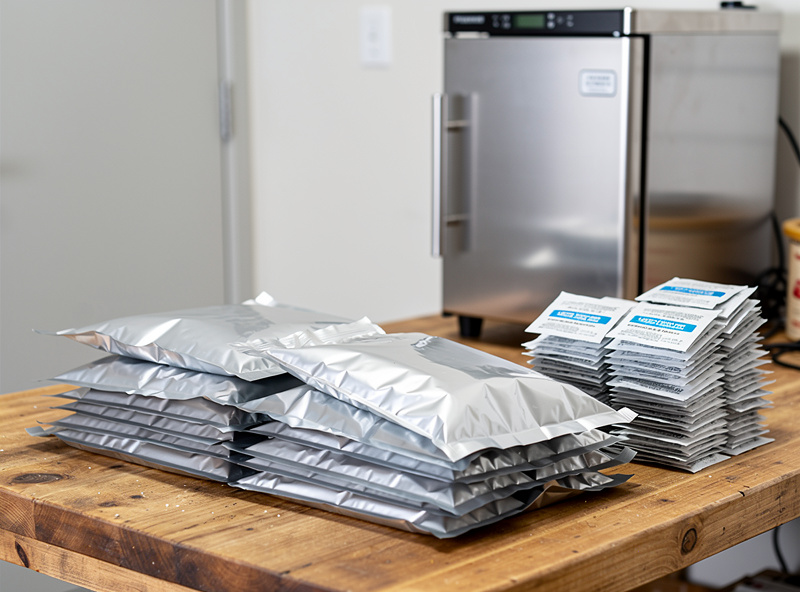
The single biggest lever on consumable cost is buying in bulk. Bags and absorbers bought in large quantities cost dramatically less per unit than small retail packs, and since you will use them steadily for years, bulk buying is one of the few running-cost optimizations that is pure upside. The catch is that oxygen absorbers begin working the moment they hit air, so a bulk supply needs to be stored sealed and used at a sensible pace — buy what you will realistically use, store it properly, and the per-batch storage cost drops sharply.
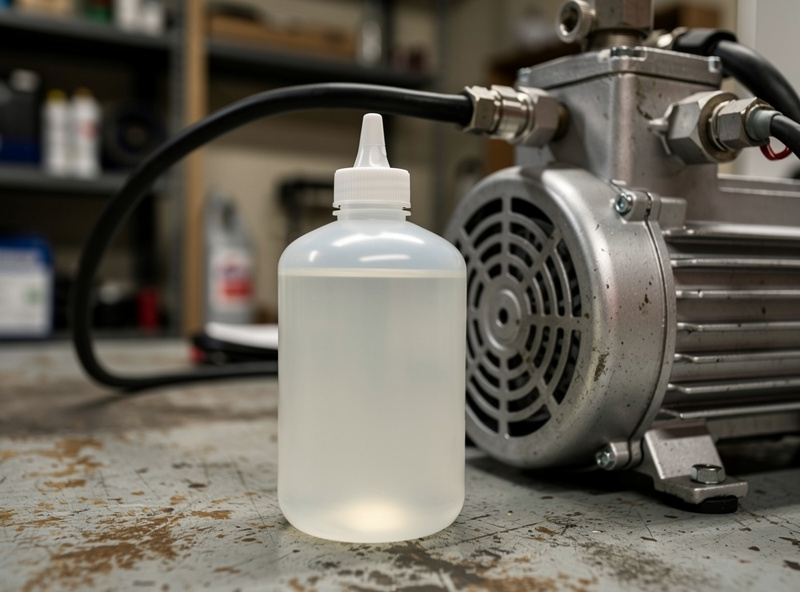
Pump oil is the other steady consumable, and it is genuinely cheap per change. What makes it add up is frequency, and frequency is driven by how hard your loads are on the oil. Clean, low-moisture, well pre-frozen loads are gentle and stretch the oil; wet, fatty, messy loads contaminate it fast and demand more frequent changes. So good batch discipline trims the oil line just as it trims the electricity line — the habits compound.
How running cost changes over the years
The cost profile is not flat over a machine’s life, and knowing the shape helps you budget. The first stretch of ownership often carries a little extra spend as you buy the consumable supplies you did not realize you needed — a good impulse sealer, your first bulk run of bags and absorbers, spare oil, jars. After that initial kit-out, the steady-state running cost settles into the predictable rhythm of consumables-plus-electricity-plus-oil that the budget table describes. Much later in a machine’s life there can be occasional small parts or a gasket, but these are infrequent and modest, and following the manufacturer’s maintenance guidance keeps them rare. The honest shape is: a small hump of setup spending, then a long flat plateau of predictable running cost.
Standard pump versus oil-free, on running cost
A fair running-cost discussion has to mention the pump choice, even though I only own the standard oil pump. On the standard pump, the running cost includes that steady oil consumable and the oil-change labor. The oil-free premium pump removes the oil consumable and its routine, which operators report as a genuine running-cost and convenience saving over time — in exchange for a higher up-front price. I flag that as reported rather than lived, because I run the oil pump and my numbers describe it. The honest framing for a buyer weighing running cost is that the oil-free pump trades a higher purchase price for a lower ongoing maintenance burden; whether that math favors you depends on how many batches you will run over the machine’s life.
Where the money actually goes
If you sat down and tallied a year of my batches, the consumables would lead, the electricity would be a respectable second, and the oil would be a modest steady trickle. That ordering surprises people who came in worried about the power bill — the machine is hungry, yes, but on most electricity rates the per-batch energy cost is a background figure compared to the bags and absorbers you go through preserving the output. The lesson is to budget for consumables as the main running cost and treat electricity as the secondary one, which is the opposite of how most prospective buyers worry about it.
Affiliate disclosure: The links below are Amazon affiliate links — as an Amazon Associate I earn from qualifying purchases at no extra cost to you. The machine is sold direct by the manufacturer, not Amazon; these are the recurring consumables that make up most of the running cost, where buying in bulk genuinely saves money.
- Mylar bags and oxygen absorbers in bulk — the largest ongoing line for most owners; bulk packs cut the per-batch cost.
- Vacuum pump oil — the small, steady consumable for a standard oil pump.
This is also why batch discipline saves money on more than one front at once. Good pre-freezing and sensible loading shorten cycles, which trims electricity; running loads you will actually eat avoids wasting bags and absorbers on food that sits forgotten; and reusing jars for short-cycle items you will eat soon spares the mylar line for genuine long-term storage. The same habits that make good food also make cheap operation.
The costs nobody puts a number on
Two real costs never make it onto a spec sheet. The first is your time: pre-freezing, loading, the long cycle, the dry-check, and the packaging session all recur with every batch. If you enjoy the process — and I genuinely do, the same way I enjoy logging a curing chamber — that time is a feature, not a cost. If you resent it, it is the most expensive line of all, because it turns every batch into a chore.
The second is depreciation and the resale reality. A meaningful number of these machines end up resold within a year or two, usually by owners who did the marketing math instead of the ownership math. That is a cost if you are the one selling at a loss — and an opportunity if you are the informed buyer picking one up secondhand. Either way it belongs in an honest running-cost conversation, because a machine you stop using is pure cost with zero return.
So what does it really cost to run?
Honestly? Less than the up-front price scares you into expecting, and more than the “pays for itself” math pretends. Across a year of regular use the running costs are real but manageable: a steady spend on storage consumables, a modest electricity bill, a trickle of pump oil, and your time. The machine becomes expensive to run only when batch discipline is poor — warm wet overloaded loads burning electricity, food preserved and then forgotten wasting consumables, neglected oil dragging cycles out. Run it like the process equipment it is and the ongoing cost settles into a sensible, predictable rhythm. That, far more than the sticker price, is what determines whether the machine stays a joy or becomes a regret.
Running cost is one thread in the full freeze dryer ownership guide, where I weigh it against the noise, the install, the pump care, and the cycle times to answer whether the machine is worth it at all. For the per-batch electricity line examined in detail, see my measured power cost per batch piece; for the oil line, my oil-pump maintenance schedule; and since long cycles raise both, the real cycle times article shows how preparation keeps every cost down at once.