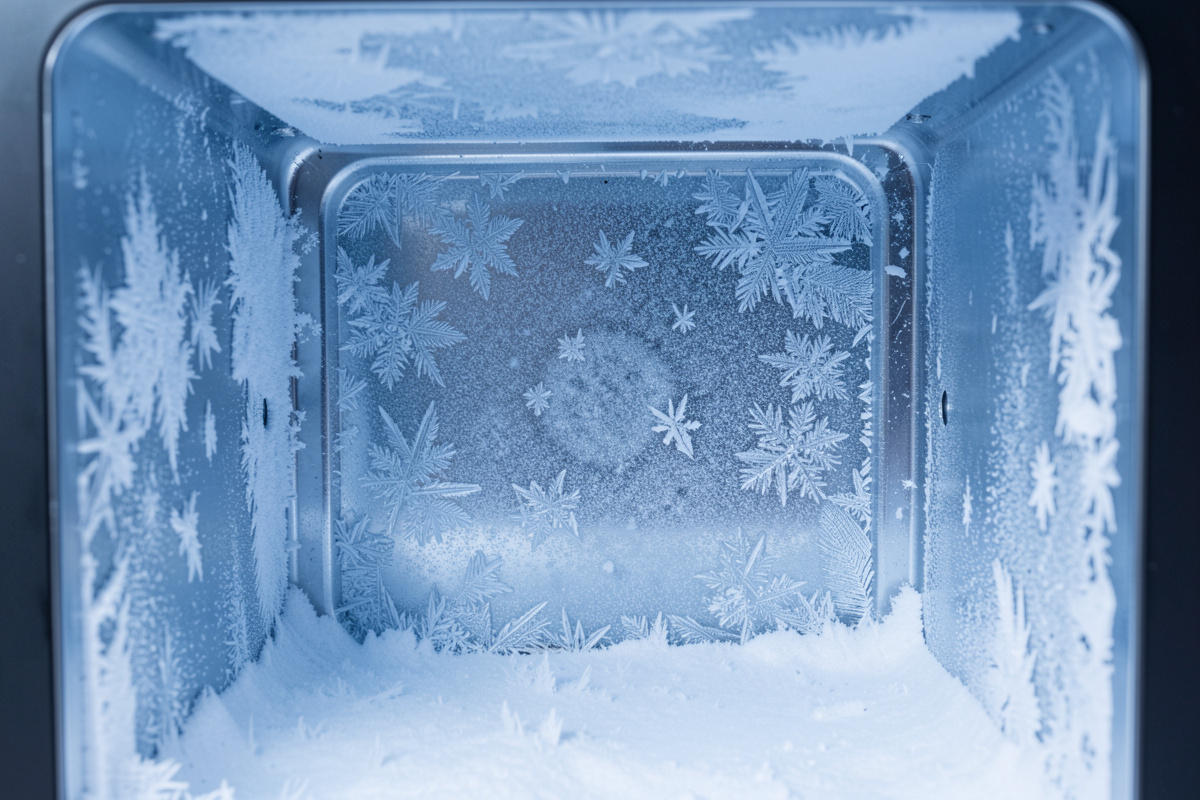

Some ice in a running freeze dryer is normal physics — that frost on the chamber wall is water leaving your food and freezing onto the coldest surface. The problem is excessive ice: a thick collar around the door, or a sheet that forms heavier than the batch could account for. In my batch log, abnormal ice almost always traces to one of two things — humid room air leaking past a tired or dirty door gasket, or running in a damp space. Both are fixable without a technician.
I run my Harvest Right Medium-class unit in a utility-room install I chose partly because it stays drier than a garage would, and that decision alone cut my ice problems. This guide separates the ice you should expect from the ice that signals a leak, walks the gasket and humidity fixes I actually use, and explains why the same leak that frosts your chamber also shows up as a vacuum problem. It is a deep dive under my broader freeze dryer troubleshooting guide.
Normal Ice Versus a Problem
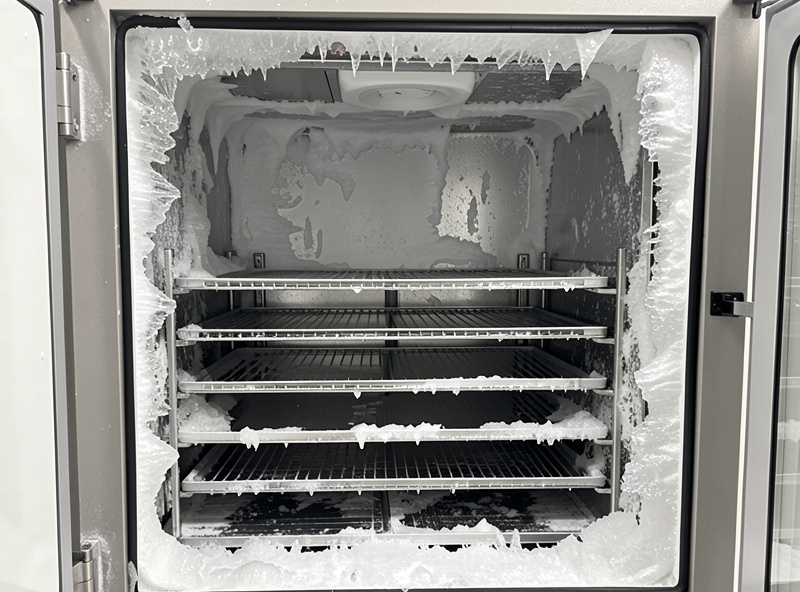
Expect a layer of frost building through the dry stage, concentrated on the coldest interior surfaces — that is sublimated water doing exactly what it should. What is not normal is a heavy ice collar around the door seal, ice forming unusually early, or so much ice that it interferes with the door closing or the trays seating. The quick test: if the ice is roughly proportional to the water you put in (a wet load of soup makes more frost than dry herbs) and lives on the cold walls, it is normal. If it concentrates at the door edge, you have an air leak.
Ice at the door seal specifically is the tell, because that is where humid room air sneaks in and instantly freezes. Frost on the back wall is the food; frost climbing the door gasket is the room. Learning to read that difference is most of the diagnosis.
The Number One Cause: A Leaking Door Gasket
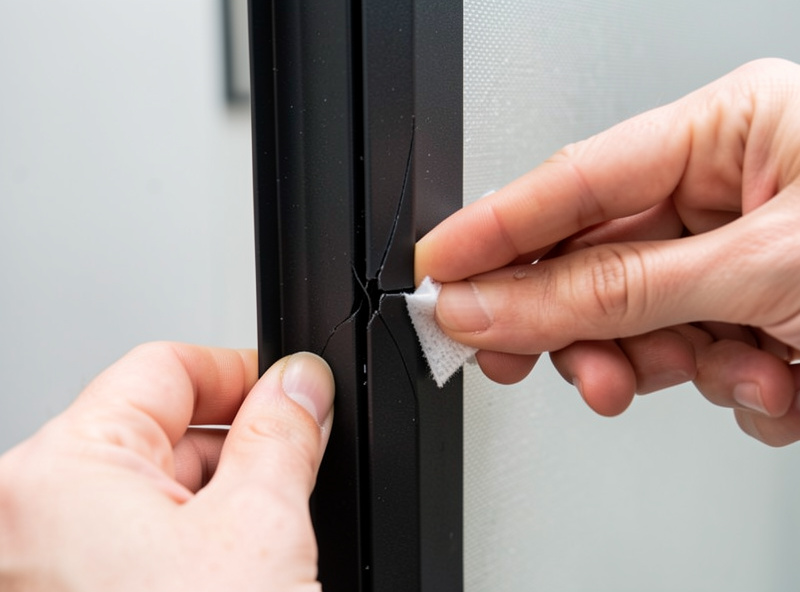
The door gasket is the seal between your deep-vacuum chamber and a room full of humid air. When it is dirty, hardened, pinched, or torn, room air leaks in continuously, and every bit of that humid air dumps its moisture as ice on the cold surfaces. A gasket problem produces a double symptom that makes it easy to confirm: excessive ice and difficulty holding vacuum, because the same leak that lets air in also bleeds your vacuum.
Inspect the gasket every few batches. Wipe it clean of food debris and condensation, run a finger around it feeling for hardened spots, cracks, or tears, and make sure it is seated evenly in its channel. A gasket that has gone stiff or split needs replacing — it is a cheap part and the most common single fix for both ice and vacuum complaints. Because the failure mode overlaps so directly, the seal checks here mirror those in my not reaching vacuum guide.
Humidity in the Room
Even a perfect gasket cannot beat a swampy room. Every time you open the door to load or unload, and through any minor seal imperfection, the moisture content of the surrounding air determines how much water is available to become ice. A humid summer garage, a damp basement, or a closed closet with no ventilation all feed the chamber more moisture than a dry, ventilated space. This is one reason I planned my install around a relatively dry utility room rather than the garage.
You cannot change the weather, but you can manage the space: ventilate it, run a dehumidifier in a damp room — the EPA recommends keeping indoor humidity below 60 percent, a sensible target for a freeze-dryer room too — and avoid leaving the door open longer than necessary during loading. Siting the machine well is part of the same decision — my reasoning is in the where to put a freeze dryer guide. A drier room means less ice, faster defrosts, and fewer seal-related headaches.
Rushed Turnarounds and Residual Ice
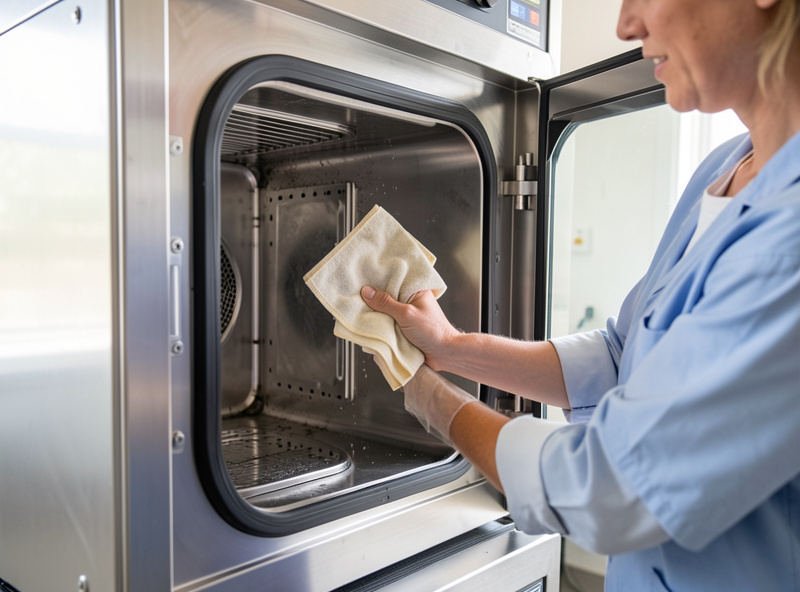
A sneaky cause of “too much ice” is starting a new batch before the last one’s ice fully defrosted and drained. That residual ice gives the new batch a head start on buildup, and it stacks up faster than you expect across back-to-back loads. I learned to fully defrost and dry the chamber between batches even when I am impatient to run the next load, because skipping it compounds.
Let the chamber return to room temperature, let all the ice melt and drain, and wipe it dry before reloading. A clean, dry, room-temperature chamber is the correct starting point for every batch. Rushing the turnaround also leaves moisture that can find its way into the pump, which is its own separate maintenance issue covered in my pump care guide.
| Where the Ice Is | Likely Cause | First Fix |
|---|---|---|
| Back and side chamber walls | Normal sublimated water from food | None needed — expected |
| Thick collar at the door seal | Leaking or dirty door gasket | Clean and inspect, replace if hard/torn |
| Heavy ice on every batch | Humid room air | Ventilate, dehumidify the space |
| Building up fast batch over batch | Incomplete defrost between loads | Full defrost, drain, dry before reload |
Why Ice and Vacuum Problems Travel Together
It is worth understanding the link because it speeds every future diagnosis. A door seal leak does two things at once: it lets humid air in (ice) and it lets your vacuum out (poor pull-down). So if you are fighting heavy door-edge ice and also seeing the machine struggle to reach vacuum, you very likely have a single root cause — the gasket — not two separate failures. Fix the seal and both symptoms usually clear together.
This is exactly the kind of pattern the batch log surfaces. When two symptoms show up on the same batches, I look for the one cause that explains both before I assume two problems. The vacuum side of this story is in the not reaching vacuum guide, and if heavy ice is also coming with a new noise, rule out a loose panel with the loud noise guide.
A Note on Food Quality
Heavy chamber ice from a leak does not make your food unsafe by itself, but it is a sign the batch did not run under ideal conditions — and a leak that hurt your vacuum may also mean the food did not dry fully. If a batch ran with bad ice, check doneness carefully before you trust it for storage. I treat storage and shelf life as a report-not-guarantee topic, and the proper doneness check is in my food still wet guide. When in doubt on a batch, more dry time is cheap insurance.
Frequently Asked Questions
Is ice in my freeze dryer chamber normal?
Some is completely normal. Frost on the cold back and side walls is sublimated water leaving your food. A problem looks like a thick ice collar at the door seal, ice that interferes with closing, or far more ice than the load’s water content should produce.
What causes excessive ice buildup in a freeze dryer?
The two main causes are a leaking or dirty door gasket letting humid room air in, and running the machine in a humid space. A rushed turnaround that skips full defrosting between batches also stacks ice up quickly across loads.
Why is there ice around my freeze dryer door?
Ice concentrated at the door seal almost always means the gasket is leaking. Humid room air sneaks past a dirty, hardened, or torn gasket and freezes instantly on the cold surface. Clean and inspect the gasket, and replace it if it has gone stiff or split.
Does ice buildup mean my freeze dryer is broken?
Usually not. It almost always points to a seal or humidity issue, both of which you can fix yourself. A leaking gasket is a cheap, common part. Only suspect the machine after the gasket, the room humidity, and your defrost routine are all confirmed good.
Can a leaking gasket cause both ice and vacuum problems?
Yes, and that is the clearest tell. The same door seal leak lets humid air in, which makes ice, and lets your vacuum out, which hurts pull-down. If you see heavy door ice and weak vacuum together, fix the gasket first and both usually clear.