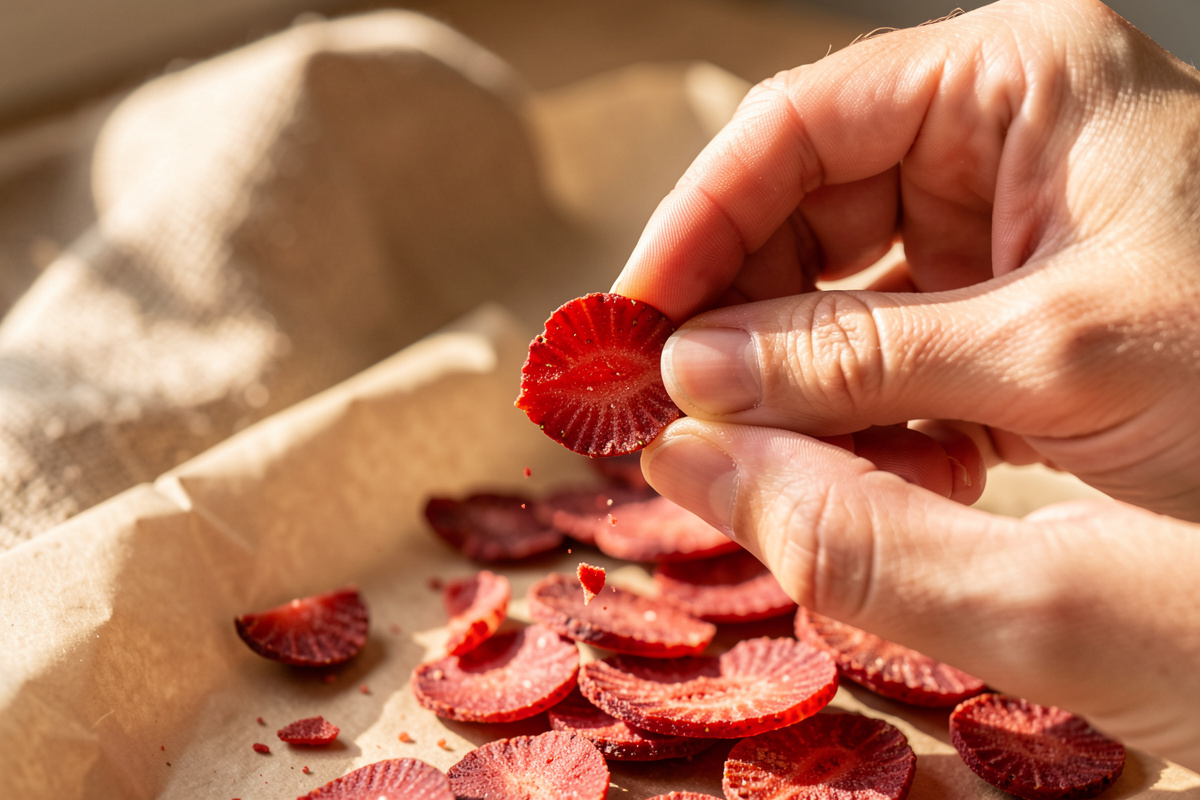

You tell freeze drying is done with three checks: the snap or crumble test on the thickest piece, a weight comparison against your batch log, and a temperature check that the food has warmed to room temperature. A properly dried strawberry shatters; one that bends or feels cool in the center is still holding moisture and needs more time.
This is the single most important skill in home freeze drying, and the one the category teaches worst. The marketing shows you the start button and the finished pantry, but the moment that actually decides whether your food stores for years or spoils in weeks is the dry check. The cheapest mistake in this hobby is sealing a load that was not quite dry, because residual moisture trapped in a sealed bag is what ruins long-term storage. I have made that mistake, found a clumped bag weeks later, and built a three-part check specifically so I would never do it again. This is that routine, in the order I run it.
How Does the Snap Test Work?
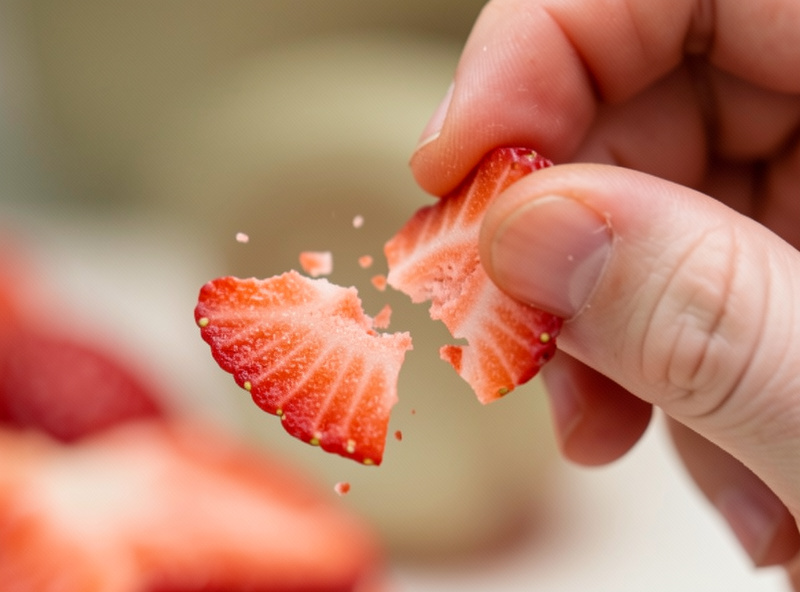
The snap test is the fastest doneness check: take the thickest piece in the load and try to snap it. Fully dried food shatters or crumbles cleanly with no bend and no chew. If the piece bends, folds, or feels leathery, moisture remains and the load needs more dry time. Always test the thickest piece, never an easy edge piece.
The reason the thickest piece matters is that it dries last. An edge piece can shatter perfectly while the dense center of the load is still moist, so testing the easy piece is exactly how people fool themselves into sealing a wet load. I pull from the middle of the load and from the thickest item I can find. For a strawberry, dry means it crunches and crumbles to a light, airy texture; for a piece of fruit with any remaining moisture, you will feel it bend before it breaks. The snap test is qualitative but reliable once you have felt the difference a few times, which is exactly why I push beginners to start on fruit that makes the answer obvious.
Why Use a Weight Check?
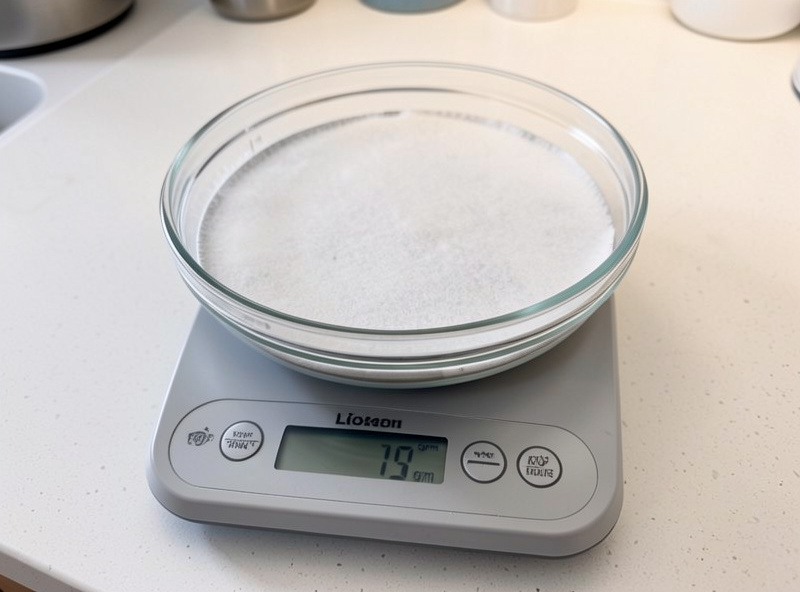
The weight check is the most objective doneness test: weigh a tray, add an hour of dry time, then weigh it again. If the weight has not changed, the food has stopped losing moisture and the load is done. A tray still dropping weight is still releasing water, no matter how dry the surface feels.
This is the check most beginners skip, and it is the one that catches the marginal loads the snap test can miss. A piece can feel dry and snap on the surface while a thick center still holds a trace of moisture, and only the scale will tell you. I log a target finished weight for foods I run often, so I know roughly what two pounds of strawberries should weigh when fully dry. When a tray hits that target and stops dropping, I trust it. A basic digital kitchen scale that reads to the gram is the only tool the dry check requires, and it is the cheapest insurance you can buy against a spoiled load.
As an Amazon Associate I earn from qualifying purchases.
What Does the Temperature Check Tell You?
The temperature check is the simplest of the three: at the end of a cycle, fully dry food should be at room temperature. If the food still feels cool, sublimation is still happening, pulling heat as moisture leaves, which means the load is not finished. Cool food is wet food.
This one takes no tools and takes two seconds. As long as water is leaving the food, the evaporative cooling of sublimation keeps it cold, the same way sweat cools skin. Once all the water is gone, there is nothing left to cool the food and it warms to match the chamber. So when I open a machine, the first thing my hand tells me is whether the load feels neutral or cool. A cool tray goes straight back in for more time. It is not a precise measurement, but combined with the snap and the weight, it is a fast confirmation that nothing is still quietly drying in the center.
Why All Three Checks Together?
No single check is foolproof, but together the snap, weight, and temperature tests catch nearly every failure mode. The snap catches obvious wet pieces, the weight catches marginal moisture the surface hides, and the temperature catches a load still actively drying. Run all three and you almost never seal a bad load.
I treat them as a sequence. The temperature check is instant, so it is first: if the tray is cool, I do not bother with the rest, it goes back in. If it feels neutral, I run the snap test on the thickest piece. If that shatters, I confirm with the weight against my logged target. Only when all three agree do I package. This sounds like a lot, but it takes under a minute and it is the difference between food that stores for the long haul and food that disappoints you weeks later. The discipline of trusting the measurement over the wishful glance is the same habit that keeps my curing chamber honest; the freeze dryer just runs colder.
What Does a Failed Dry Check Look Like?
A failed dry check shows up as a piece that bends instead of snapping, a tray still losing weight, or food that feels cool to the touch. Any one of these means moisture remains and the load needs more dry time. The most dangerous failure is the one that snaps at the edge but hides a moist center, which is why you always test the thickest piece.
Other warning signs include food that feels slightly pliable or rubbery, a powder that cakes when pressed, and condensation appearing inside a bag shortly after sealing, which is the worst case because it means a wet load was already packaged. If you ever see that condensation, open the bag, return the food to the machine, and re-run. Better to catch it then than to lose the whole bag to spoilage. None of these are reasons to distrust your machine; they are reasons to trust your checks. When a load fails, the answer is simple: add more dry time and check again. If a load fails the dry check often, the cause is usually upstream rather than at the machine: food that was not pre-frozen solid or trays packed too deep both leave a moist center that no amount of patience at the end fully fixes. Fix the load, and the dry check stops failing.
Frequently Asked Questions
How do you tell when freeze drying is done?
Use three checks: snap the thickest piece to confirm it shatters, compare the tray weight against your batch log, and confirm the food is at room temperature. If a piece bends or feels cool, moisture remains and it needs more dry time.
What is the snap test in freeze drying?
The snap test means trying to snap the thickest piece in the load. Fully dried food shatters cleanly with no bend. If it folds or feels leathery, it still holds moisture. Always test the thickest piece because it dries last.
Why does the thickest piece matter for the dry check?
The thickest piece dries last, so it is the true test of doneness. An edge piece can shatter while the dense center of the load is still moist. Testing the easy piece is exactly how people fool themselves into sealing a wet load.
How does the weight check confirm dryness?
Weigh a tray, add an hour of dry time, then weigh again. If the weight has not changed, the food has stopped losing moisture and is done. A tray still dropping weight is still releasing water, even if the surface feels dry.
Why does dry food need to be at room temperature?
As long as water leaves the food, the cooling of sublimation keeps it cold. Once all moisture is gone, nothing cools the food and it warms to room temperature. Cool food still feels cold because it is still drying, so it needs more time.
What happens if you seal food that is not fully dry?
Residual moisture trapped in a sealed bag clumps powders, softens dried food, and can lead to spoilage, ruining long-term storage. If condensation appears in a bag after sealing, reopen it, return the food to the machine, and re-run the cycle.
Do you need special tools for the dry check?
No. The snap and temperature checks need no tools at all. The only tool worth having is a digital kitchen scale for the weight check, which is the most objective way to confirm a load has truly stopped losing moisture.