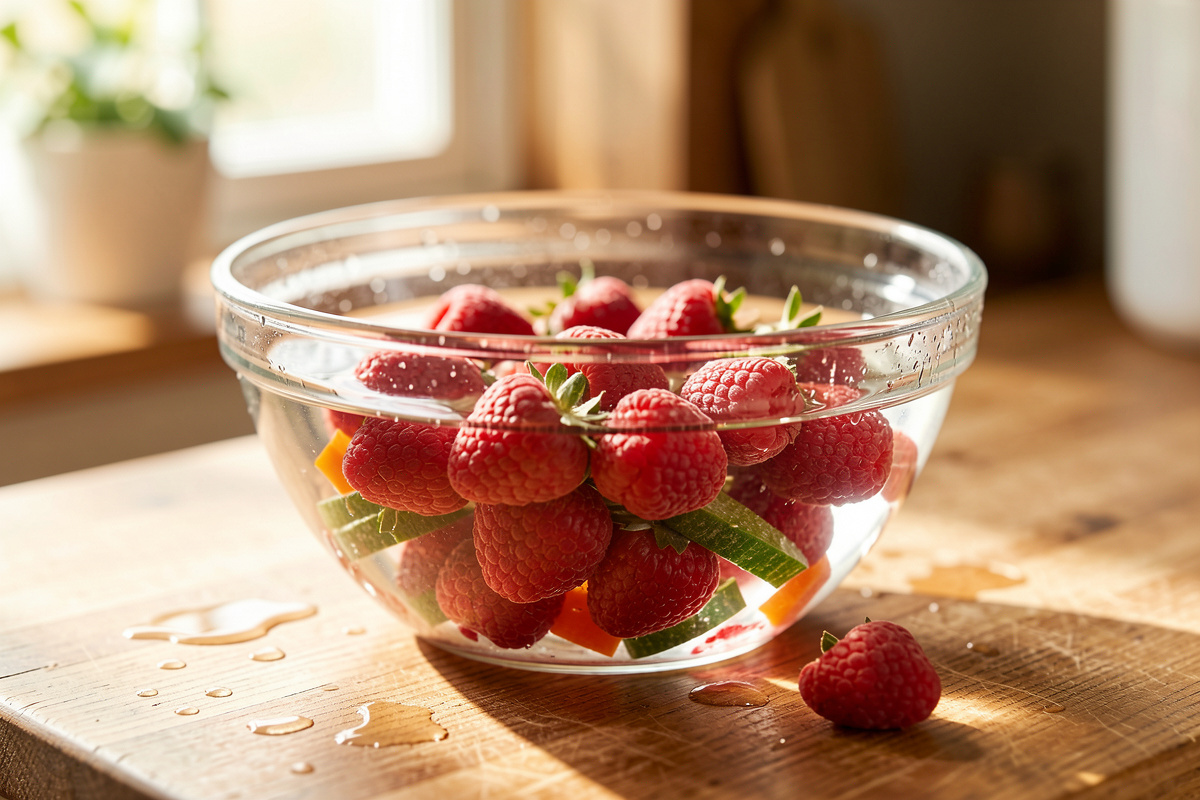

To rehydrate freeze dried food, add back the water sublimation pulled out — submerge or mist the food in clean water, give it time, and don’t rush heat into proteins. Most fruit and small vegetables come back in 5 to 15 minutes; dense meats and beans can need 20 to 40 minutes plus a hot finish. The water you removed is the water you add back, and patience does most of the work.
I’ve kept a batch log on my Medium-class home freeze dryer for years now, and rehydration is the part of the process the marketing skips entirely. Everyone films the dramatic candy and the strawberries snapping in half. Almost nobody shows you what happens an hour later when you actually try to put that food back on a plate. This guide is the whole rehydration picture from my own loads — the method, the temperatures, the honest texture results, and the food-safety lines I will not cross.
What Rehydration Actually Is (And Why It’s Easier Than Drying)
Freeze drying works by sublimation: under vacuum, the ice in frozen food turns straight to vapor without ever melting, leaving a rigid, porous structure with the original shape intact. Rehydration is just the reverse errand — you flood those empty pores with water until the food returns to something close to its original state. Because the cell structure was held open by ice instead of collapsed by heat, freeze dried food rehydrates faster and more completely than anything from a dehydrator.
That porous structure is the whole reason this works so well. A dehydrated tomato is a leathery, shrunken thing because hot air evaporation collapses the cells as it pulls moisture. A freeze dried tomato is a fragile, full-size sponge. Drop it in water and capillary action does the work — the pores wick liquid back into the spaces the ice vacated. In my batch log, the foods that rehydrate best are the ones with the most open structure: berries, leafy greens, cooked rice, anything that was high in water to begin with.
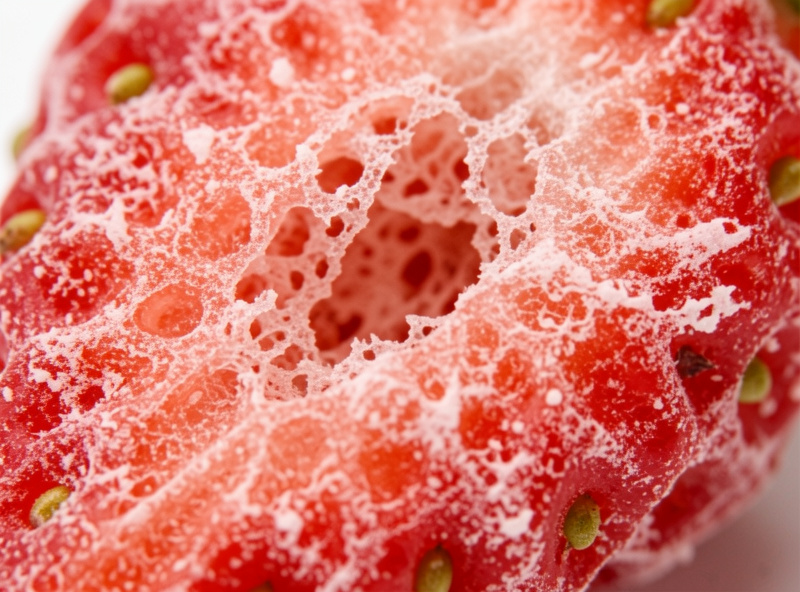
The mental model I use after years of this: I removed roughly 95 to 98 percent of a food’s water during the dry cycle, verified against the scale in my log. Rehydration is me handing that water back. Get the amount and the temperature right and the food doesn’t know the difference. Get impatient and you end up with a crunchy center and a mushy outside — the single most common rehydration failure I see.
My Step-by-Step Rehydration Method
I run rehydration the same disciplined way I run a dry cycle: measured, not eyeballed. Here is the process I’ve settled on across hundreds of loads, and it works for most foods before you start fine-tuning by type.
Step one — start with clean, cool-to-warm water for most foods. For fruit, vegetables, and anything you’ll eat as-is, I use room temperature or lightly warm water. For dense proteins and legumes, I start warm and finish hot. The temperature decision matters enough that I gave it its own full guide.
Step two — match the water to the food, not the other way around. Loose pieces (corn, peas, diced fruit) get submerged in a bowl with water just covering them. Built dishes (a freeze dried soup or stew) get water added back roughly to the level it had before drying — I note original weights in my log specifically so I can pour back the right amount.
Step three — wait, then check, then wait again. The mistake is treating a guessed number as gospel. I set a timer, then pull a test piece and bite it. If the center is still crisp or styrofoam-dry, it goes back in. Rehydration times vary wildly by food, so I check rather than assume.
Step four — drain or absorb the excess. Over-watering is as common as under-watering. If I floated the pieces, I drain the surplus. The food should be plump and pliable, not waterlogged and falling apart.
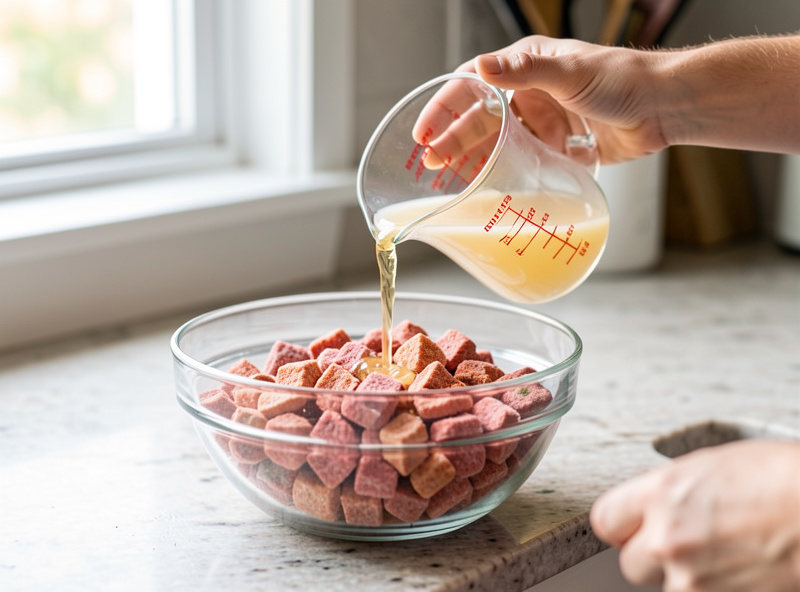
That’s the universal method. From there, fruit wants one approach, vegetables another, and proteins demand respect for the temperature rule below. The per-food guides in this cluster exist because the differences are real and worth getting right.
Water Temperature — And Why Proteins Are the Exception
For most foods, water temperature changes the speed of rehydration, not the safety of it. Warm water moves faster than cold; boiling water can actually toughen delicate fruit. You have room to experiment with vegetables and fruit and the worst outcome is texture you don’t love.
Proteins are different, and this is the one place I stop being casual. Freeze dried raw or cooked meat that you rehydrate must be brought to a complete, fully hydrated state and then handled like the perishable food it becomes the moment it has water in it again. The USDA’s guidance on cooked and perishable foods doesn’t stop applying just because the food spent time dry. Once a freeze dried chicken piece has absorbed water and is sitting at room temperature, it is back in the temperature danger zone (roughly 40 to 140 degrees Fahrenheit) and the clock is running.
My rule from the batch log: I rehydrate proteins in warm-to-hot water, I make sure they are fully rehydrated to the center with no dry core, and if there is any doubt about doneness or handling, the meat gets cooked or heated to a safe internal temperature rather than eaten as-is. I do not eat partially rehydrated meat, and I do not leave rehydrating proteins sitting out for hours. For the full protein breakdown, the freeze dried meat guide goes deeper, but the principle is simple: report, never guarantee, and when proteins are involved, default to heat and full hydration.
How Long Different Foods Take to Rehydrate
This is the question the category answers with a shrug, so here are real ranges from my log. Treat them as starting points — your piece size, water temperature, and how densely the food was packed all move the number. I always check rather than trust a timer blindly.
| Food Type | Typical Rehydration Time | Water Temperature I Use | Notes From the Log |
|---|---|---|---|
| Berries (whole/sliced) | 5–10 minutes | Room temp or eat dry | Many people prefer them dry as a snack |
| Sliced fruit (apple, peach) | 8–15 minutes | Room temp to lightly warm | Hot water can make them limp |
| Leafy greens / herbs | 2–5 minutes | Cool water | Rehydrate fast; easy to overdo |
| Corn, peas, diced veg | 8–15 minutes | Warm | Drain after; they hold water well |
| Cooked rice / pasta | 10–15 minutes | Hot | Comes back remarkably close to fresh |
| Cooked beans | 15–25 minutes | Hot | Dense; needs patience and heat |
| Cooked meat (diced) | 20–40 minutes | Hot, finish by heating | Full hydration + safe handling mandatory |
| Full built meal (soup/stew) | 10–20 minutes | Boiling water added back | Add back to original liquid level |
The pattern is obvious once you see it laid out: water content and density drive the time. High-water, open-structure foods snap back in minutes. Dense, cooked, protein-heavy foods need both time and heat. I built a dedicated rehydration times guide because dialing these in for your own kit is the difference between a meal and a disappointment.
Cold Rehydration vs Hot Rehydration
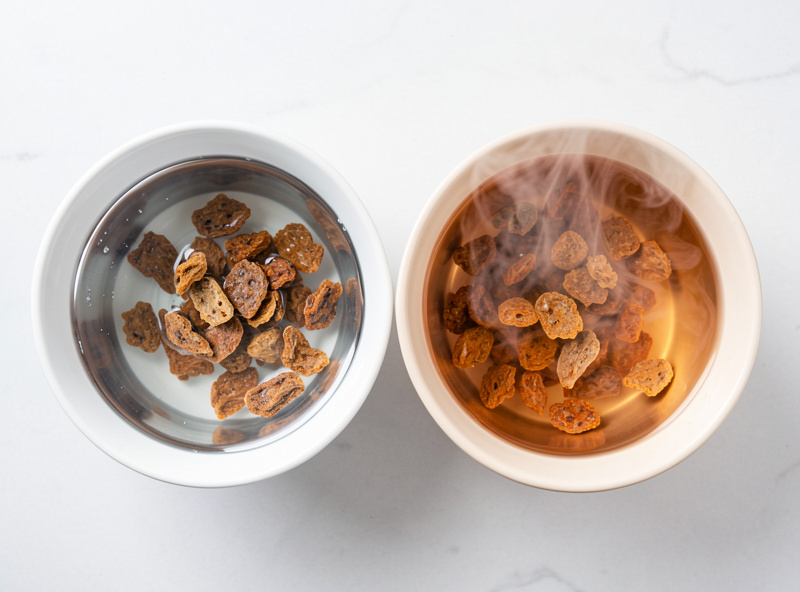
You don’t always need heat. Cold rehydration — soaking in cool water — works fine for fruit, vegetables, and anything you’ll eat cold, and it’s the only option when you’re somewhere without a stove. It’s slower, but for delicate foods it’s actually gentler and preserves shape better.
Hot rehydration is faster and, for proteins and dense legumes, necessary. The heat speeds water uptake and, critically, helps bring proteins to a safe state. In the field I’ve rehydrated a freeze dried meal with cold water in a sealed jar over a couple of hours while hiking, and I’ve also poured boiling water into the same meal for a ten-minute turnaround. Both work; the trade-offs are speed, texture, and what you’re rehydrating. I compared them properly in the cold vs hot rehydration guide because the right choice genuinely depends on the food and the situation.
Texture After Rehydration — The Honest Version
Here’s the part affiliate reviews won’t tell you: rehydrated food is good, not magic. Some things come back so close to fresh you’d struggle to tell the difference. Others are clearly “reconstituted” and you should set your expectations accordingly. Pretending otherwise is how people end up disappointed and selling their machine.
What comes back beautifully in my experience: cooked rice and pasta, soups and stews, corn, peas, most cooked vegetables in a dish, and berries (which many people prefer to just eat dry). What comes back as a clearly-rehydrated version of itself: sliced raw fruit can be a touch limp, leafy greens go soft fast, and raw vegetables you intended to eat crisp will not be crisp again. The cell walls were rigid with ice and that rigidity doesn’t fully return. I wrote an unvarnished texture expectations guide because honest expectations are the most useful thing I can give a new owner.
Rehydrating for Cooking vs Eating As-Is
A huge amount of freeze dried food never needs separate rehydration at all — you rehydrate it during cooking. Toss freeze dried vegetables straight into a simmering soup and they rehydrate in the pot. Add freeze dried corn to a chili and it pulls water from the dish. This is, honestly, the most practical way to use a lot of what I make, and it sidesteps the limp-texture problem because the food is being cooked, not just soaked.
When you’re cooking with freeze dried ingredients, you account for the water they’ll drink — a soup with a cup of freeze dried vegetables needs a bit more liquid. I keep notes on this for my regular recipes. The cooking with freeze dried food guide covers how I fold these ingredients into real meals without turning every dish into a soaking project. The same logic applies to rehydrating built meals in the field, where the dish does the work for you.
How Much Water to Actually Add Back
The amount matters as much as the temperature, and it’s where I see the most guesswork. The honest answer is that you’re replacing the water you removed, so the original weight of the food is your best guide. This is exactly why I log load weights before and after every cycle — that “before” number is the rehydration target hiding in plain sight.
For loose pieces eaten on their own, I don’t measure precisely; I add enough water to submerge, wait, and drain the excess. The food only takes back what it can hold, so a little surplus is forgiving. For built dishes it’s the opposite — too much water turns a stew into a soup. There, I add back to the original liquid line, which I either remember from the recipe or read off my log. A freeze dried meal that weighed 110 grams dry and 400 grams as a finished portion needs roughly 290 grams (about 290 ml) of water returned to it, give or take what evaporates in a hot soak.
Start a little short rather than long. You can always add more water to a dish that’s too thick; you can’t pull it back out of one that’s drowned. After a few batches of the same food you’ll know the ratio by feel, and you’ll stop measuring entirely for the things you make often — which is the quiet luxury of running the same trays at the same weights, batch after batch.
The Rehydration Mistakes From My Failed Loads
Every rule I have came from getting it wrong first. The recurring failures in my early log entries: rushing the time and biting into a dry core; drowning delicate fruit in too much water until it disintegrated; using boiling water on sliced peaches and turning them to mush; and — the one that taught me to respect the protein rule — treating a freeze dried meat dish as casually as I’d treat dried fruit. Don’t.
The other quiet mistake is storage-related, not rehydration-related, but it shows up at rehydration time: food that wasn’t dried completely or wasn’t stored properly rehydrates oddly or shows residual moisture problems. That’s a drying discipline question, and it’s why I verify final dry against the scale before anything goes into mylar with an O2 absorber. A bad rehydration sometimes points back to a bad dry cycle, the same way an off batch from my vegetable loads usually traces to tray density rather than the soak.
Food Safety: The Lines I Don’t Cross
I’ll close on the part that matters most and the part I’m most careful about. I am an operator with a batch log, not a food scientist, and freeze drying is a topic where bad advice does real harm. So: I report what I do and point to official guidance; I never guarantee a shelf life as fact; and I treat rehydrated proteins as the perishable foods they are. Manufacturer and USDA guidance on safe handling, full hydration of proteins, and not leaving perishable food in the temperature danger zone all apply to rehydrated freeze dried food exactly as they apply to any other food. When in doubt, heat it through, and when something seems off, throw it out. That humility is the whole reason I trust my own kitchen — and it covers fruit, vegetables, and proteins alike.
Frequently Asked Questions
Do you have to rehydrate freeze dried food before eating it?
No. Many freeze dried foods — berries, fruit slices, corn, and snack vegetables — are meant to be eaten dry and are delicious that way. Rehydration is for when you want the original texture, are cooking a dish, or are dealing with proteins that need full hydration and safe handling.
What temperature water is best for rehydrating freeze dried food?
For fruit and vegetables, room temperature to lightly warm water preserves texture best. For dense proteins, beans, and built meals, hot or boiling water is faster and, for proteins, helps reach a safe state. Boiling water can make delicate fruit limp, so match the temperature to the food.
How long does freeze dried food take to rehydrate?
It ranges from about 2 to 5 minutes for leafy greens up to 20 to 40 minutes for dense cooked meat. Most fruit and small vegetables land in the 5 to 15 minute range. Piece size, water temperature, and density all move the number, so check a test piece rather than trusting a timer.
Is rehydrated freeze dried food safe to eat?
Yes, when handled correctly. The key is that once freeze dried food absorbs water it becomes perishable again. Proteins must be fully rehydrated and handled like fresh meat, kept out of the temperature danger zone, and heated when there is any doubt. Follow USDA and manufacturer guidance for safe handling.
Why is my rehydrated food mushy on the outside and dry inside?
That is the classic sign of rushing. The surface absorbs water quickly while the dense center is still dry. The fix is patience and the right water temperature — give it more time, check a test piece from the middle, and for thick pieces use warmer water so hydration reaches the core evenly.
Can you rehydrate freeze dried food with cold water?
Yes. Cold rehydration works well for fruit, vegetables, and anything eaten cold, and it is the go-to method when no heat source is available. It is slower than hot water and gentler on delicate foods. Proteins are the exception — they benefit from heat and should be brought to a safe state.
Does freeze dried food ever fully return to its original texture?
Some foods come back remarkably close — cooked rice, pasta, soups, and corn are nearly indistinguishable from fresh. Others, especially raw fruit slices and leafy greens, return softer than the original because the rigid ice-supported cell structure does not fully rebuild. Honest expectations make freeze dried food far more satisfying to use.