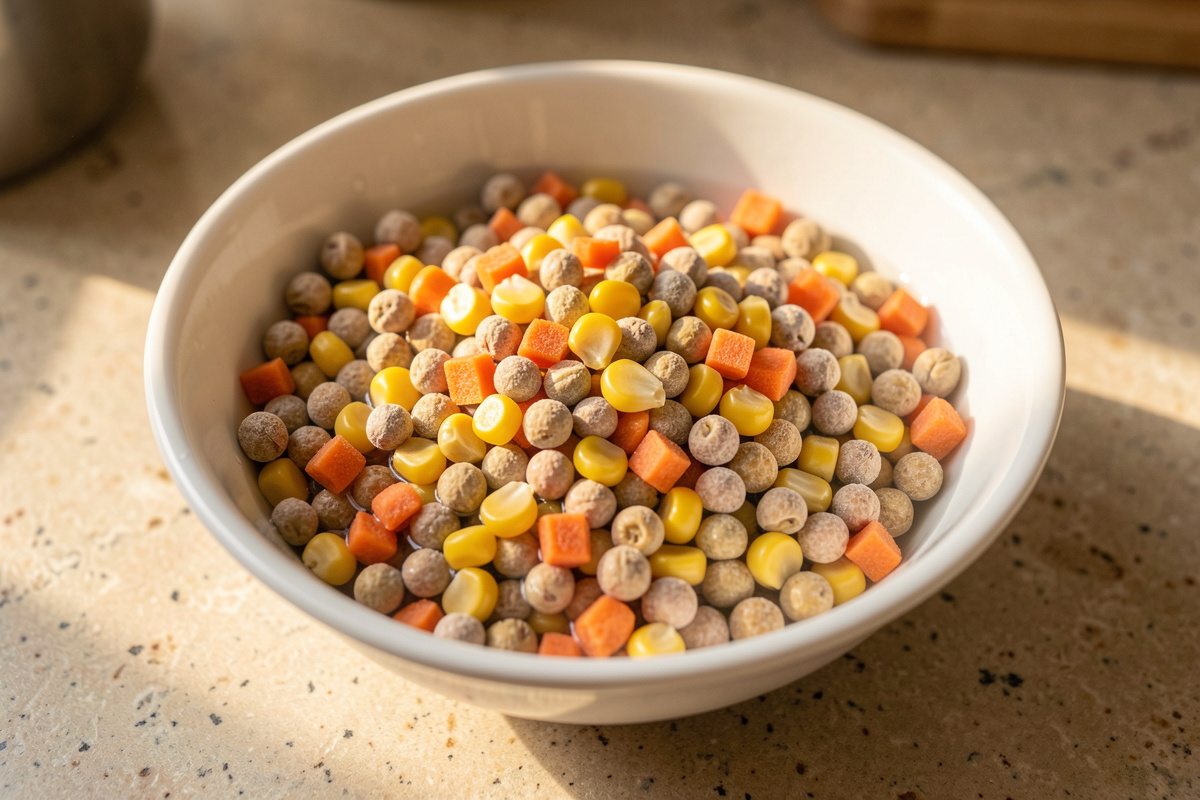

To rehydrate freeze dried vegetables, cover them in warm water and wait 8 to 15 minutes, then drain the excess. Peas, corn, and diced carrots come back well; leafy greens rehydrate in under five minutes; and most of the time the smartest move is to skip the bowl entirely and rehydrate them right in whatever you’re cooking. In my batch log, vegetables are the most forgiving category there is.
Vegetables are the workhorses of my freeze dryer. They’re what justifies running the machine through a Swedish garden glut, and they’re what I reach for most when cooking. After years of loads I’ve learned that “rehydrating” freeze dried vegetables is usually the wrong frame — you reconstitute the ones you eat on their own, and you cook the rest back to life without a separate soaking step at all.
The Two Ways to Rehydrate Vegetables
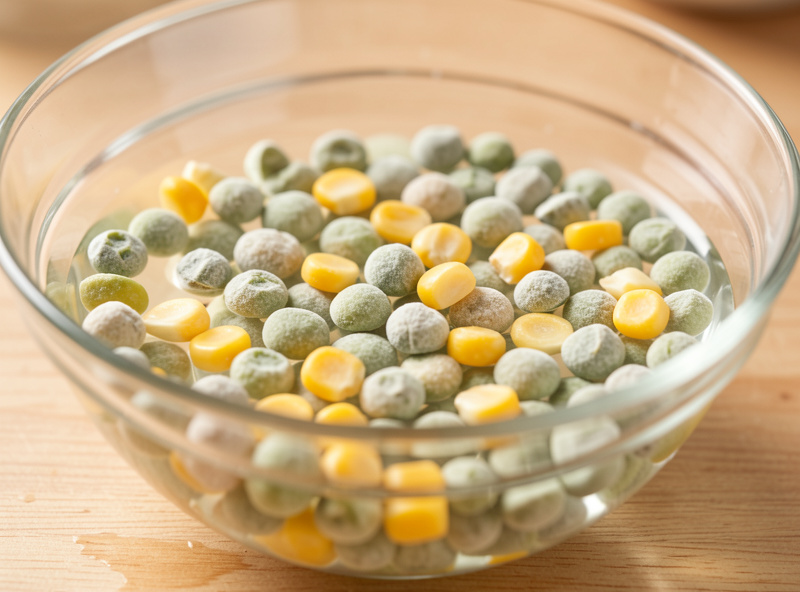
There are exactly two methods and choosing between them is most of the skill. The first is a straight soak: cover the vegetables in warm water, wait, drain. This is for vegetables you’ll eat as a side or fold into something cold. The second — and the one I use far more often — is cooking them back, where the vegetable rehydrates in a soup, sauce, or pan as part of the dish. No bowl, no draining, no timing.
The soak method runs about 8 to 15 minutes for most diced vegetables in warm water. Cooler water works but takes longer; I stay away from a hard boil on a standalone soak because it can turn softer vegetables to mush. When I’m cooking them back, I simply account for the water they’ll drink — a pot of soup with a cup of freeze dried vegetables wants a bit of extra liquid, and the vegetables pull what they need over a few minutes of simmering.
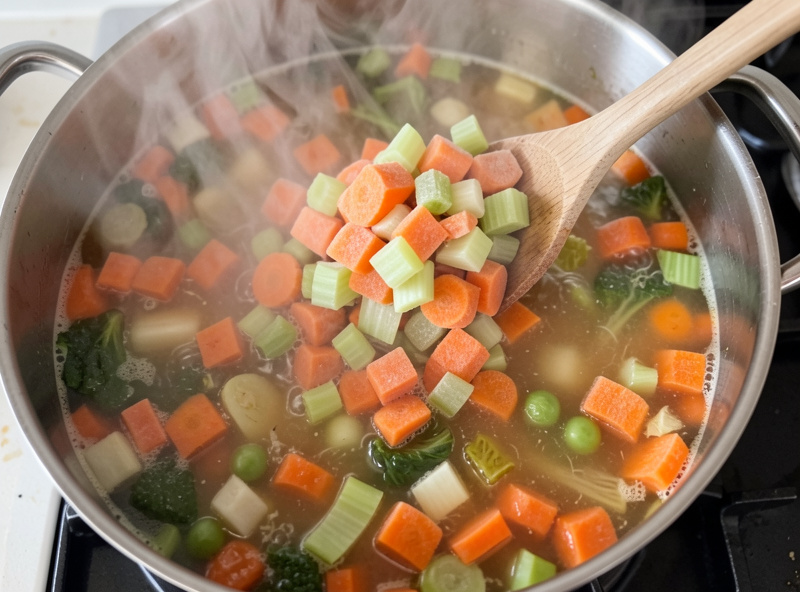
That second method is the quiet superpower of freeze dried vegetables. Drop freeze dried onions, peppers, and celery straight into the base of a stew and by the time the dish has cooked they’re indistinguishable from fresh. It’s the most practical way to use them, and it sidesteps the texture compromises a plain soak can introduce.
How Long Each Vegetable Takes
Density and water content drive the timing, exactly as they do across every food in the main rehydration guide. High-water vegetables snap back in minutes; dense, starchy ones need patience. These are the ranges from my log, for a warm-water soak.
| Vegetable | Soak Time (warm water) | Best Use | Note |
|---|---|---|---|
| Leafy greens (spinach, kale) | 2–5 min | Soups, eggs | Rehydrate almost instantly; easy to overdo |
| Peas | 8–12 min | Side, fried rice | Come back close to fresh |
| Corn | 8–12 min | Chili, salsa, side | One of the best performers |
| Diced carrots | 12–18 min | Soups, stews | Dense; benefits from cooking-back |
| Bell peppers | 8–12 min | Sauces, fajitas | Go slightly soft; fine in cooked dishes |
| Onions / celery | 5–10 min | Any cooked base | Best added dry to the pot |
| Tomatoes (diced) | 10–15 min | Sauces | Rehydrate into excellent sauce |
| Broccoli / cauliflower | 10–15 min | Soups, casseroles | Florets hold water; drain well |
If you want the full cross-food picture, the rehydration times guide puts vegetables alongside fruit, grains, and proteins so you can see where they sit.
Water Temperature for Vegetables
Warm water is my default. It’s faster than cold and gentle enough that it won’t damage the structure of most vegetables. I save boiling water for when vegetables are going into a dish anyway — a soup or a sauce — where the heat is doing double duty. For a standalone side I keep it warm rather than scalding, because aggressive heat on a plain soak tends to push softer vegetables past pleasant and into limp. The water temperature guide digs into exactly why this happens.
One practical note from the log: harder vegetables like carrots reward a longer soak in warmer water, while delicate greens want cool water and a short dip. Matching the temperature to the vegetable’s density is the single adjustment that fixed most of my early misfires.
The Texture Truth About Rehydrated Vegetables
Here’s where I stay honest. Vegetables you cook back into a dish are excellent — genuinely hard to distinguish from fresh once they’ve simmered. Vegetables you rehydrate raw and eat as a crisp side are a different story: they will not be crunchy again. The rigid cell structure that gave a fresh pepper its snap was held by ice, and a soak doesn’t rebuild it. If you want crisp raw vegetables, freeze drying isn’t the tool; if you want vegetables for cooking, it’s superb. I lay out the full food-by-food breakdown in the texture expectations guide.
This is also why I rarely bother rehydrating vegetables to eat plain. Their best life is in a pot. The exception is peas and corn, which come back sweet and close enough to fresh that they work as a quick side straight from a warm soak.
Food Safety With Rehydrated Vegetables
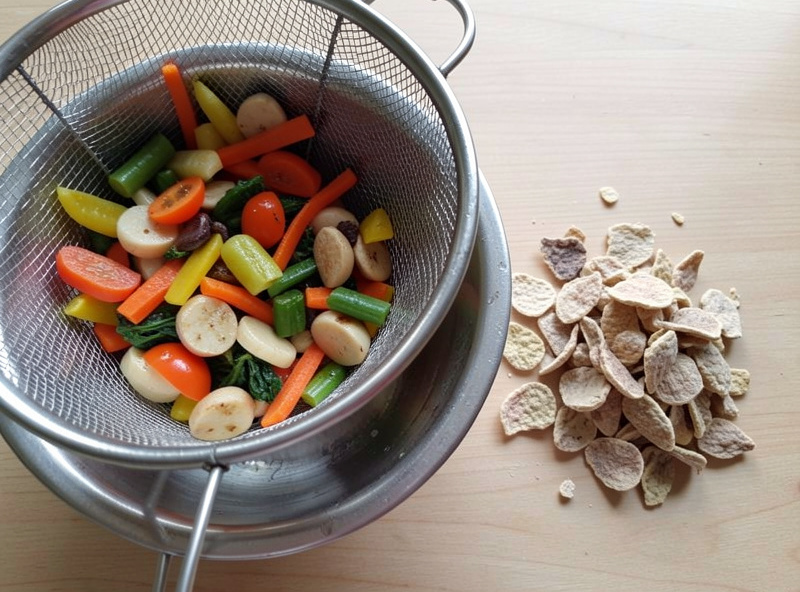
Vegetables are low-risk compared to proteins, but once they’re rehydrated they’re perishable like any cut vegetable — use them or refrigerate them, don’t leave a bowl of rehydrated vegetables sitting out for hours. If you’re combining them with rehydrated meat in a dish, the protein rules govern: full hydration and proper heating. I follow USDA guidance for handling cooked and perishable foods and never treat a rehydrated ingredient as shelf-stable once it has water in it again. That’s the same discipline I apply to cooking with freeze dried ingredients generally.
Frequently Asked Questions
Do you need to rehydrate freeze dried vegetables before cooking?
Usually not. The most practical method is to add freeze dried vegetables directly to soups, stews, sauces, and casseroles, where they rehydrate in the cooking liquid. Add a little extra liquid to the dish to account for what the vegetables absorb. A separate soak is only needed for vegetables eaten as a standalone side.
How long do freeze dried vegetables take to rehydrate?
Most diced vegetables take 8 to 15 minutes in warm water. Leafy greens rehydrate in 2 to 5 minutes, while dense vegetables like carrots can need 12 to 18 minutes. Cooking them back in a dish happens over the normal simmer time, so no separate timing is required.
What water temperature is best for rehydrating freeze dried vegetables?
Warm water is the best default — faster than cold and gentle enough to protect texture. Save boiling water for vegetables going into a cooked dish. A hard boil on a standalone soak can push softer vegetables like peppers into mushiness, so keep plain soaks warm rather than scalding.
Why are my rehydrated vegetables mushy?
Mushiness usually comes from too much heat, too long a soak, or too much water on delicate vegetables. Greens and peppers are especially prone to it. Use warm rather than boiling water for plain soaks, drain promptly, and reserve aggressive heat for vegetables being cooked into a dish where softness is fine.
Can you eat freeze dried vegetables without rehydrating them?
Yes. Many freeze dried vegetables, including peas, corn, and carrot pieces, are pleasant eaten dry as a crunchy snack and are often sold that way. Rehydration is for when you want the cooked texture or are building a dish. Eaten dry, they are simply a crisp version of the vegetable.
Will rehydrated vegetables be crunchy like fresh ones?
No. Raw crunch does not fully return after rehydration because the rigid cell structure that provided it was supported by ice during freeze drying. Rehydrated vegetables are excellent in cooked dishes but will not snap like a fresh raw pepper or carrot. For cooking, this difference does not matter.