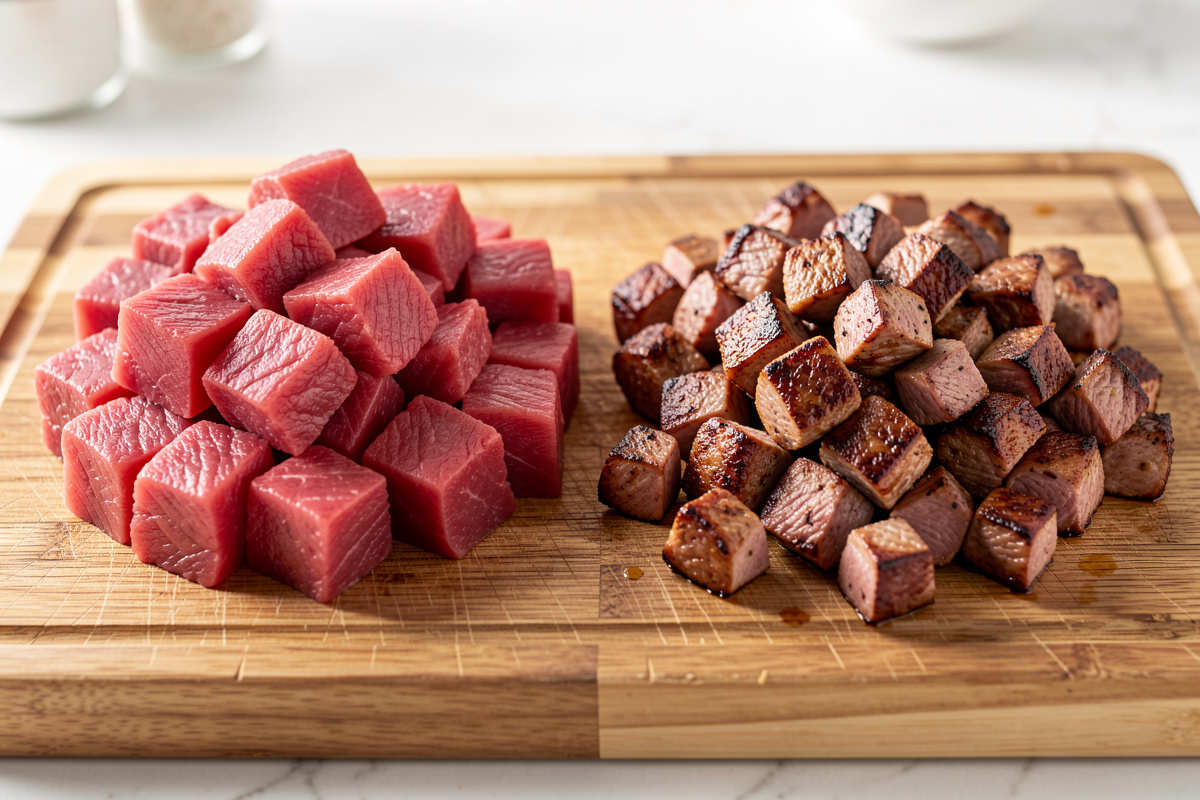

Freeze drying meat cooked is the right default for almost every home operator: the kill step is already done, rehydration takes minutes instead of a careful simmer, and the food comes back closer to a finished meal. Raw freeze drying preserves the option to cook from “fresh” later, but it stays raw the entire time it sits in the bag — and that single fact reshapes how you have to handle it.
Freeze drying raw vs cooked meat is the first decision I make before any meat load, and my batch log says I choose cooked roughly nine times out of ten. Below is the honest comparison — safety, texture, speed, and the few real cases where raw earns its place — from someone who runs both and logs the results.
The Core Difference: Freeze Drying Is Not a Kill Step
The whole raw-versus-cooked question turns on one fact: freeze drying removes water and pauses microbes through sublimation, but it does not kill them. Raw meat that goes in raw comes out raw, dehydrated, and still carrying whatever bacteria it had — dormant, not dead. Cooked meat that goes in already had its kill step.
The University of Georgia’s National Center for Home Food Preservation states this plainly in its guidance on freeze drying meat, poultry, and seafood: the process is dehydration, not sterilization. That is why the choice is not really “raw or cooked” — it is “cook now or cook later,” and there is no option where the meat never gets cooked at all.
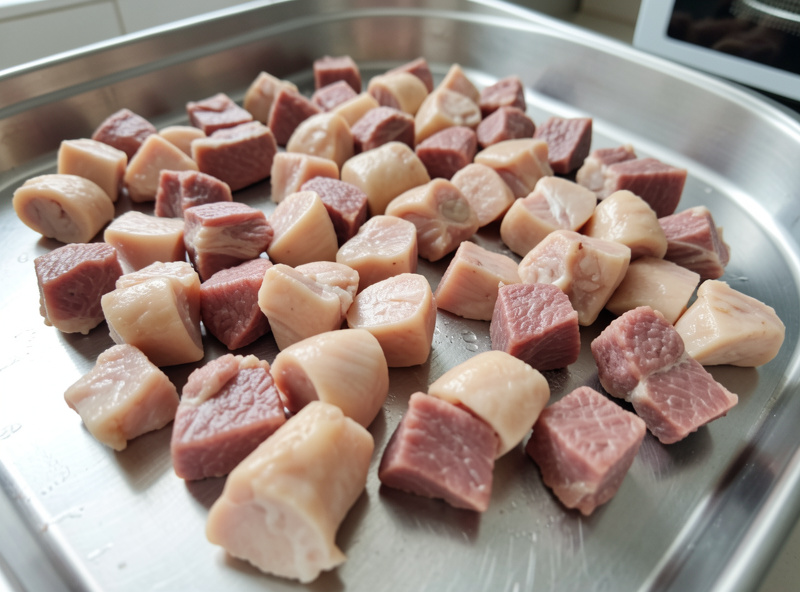
Cooked Meat: The Operator Default
Cooked freeze-dried meat is the safer, faster, more forgiving choice, and it is what I run for the overwhelming majority of loads. Because the meat was brought to a USDA safe internal temperature before drying — 165°F for poultry, 160°F for ground, 145°F for whole cuts — rehydration is just adding hot water and bringing it back to a safe serving temperature. No second cook to chase.
The texture advantage is real too. Cooking denatures the proteins and opens the structure, so cooked meat drinks water back fast and comes back like a stew or a casserole component rather than something you have to rebuild. Cooked meat is also more forgiving of an imperfect dry-check, because you are reheating to a safe temperature when you eat it regardless. For dropping freeze-dried protein into freeze-dried meals or a camping pot, cooked is simply better.
The trade is that cooked meat is locked into its cooked form. You cannot turn freeze-dried cooked stew beef back into a raw steak. For most home storage — chili meat, diced chicken, taco filling — that is exactly what you want anyway.
Raw Meat: The Narrow Case
Raw freeze drying has exactly one genuine advantage: it preserves the meat in its uncooked state, so you can cook it however you like after rehydration. If you specifically want to store raw protein to pan-sear or grill later, raw freeze drying keeps that door open in a way cooked drying does not.
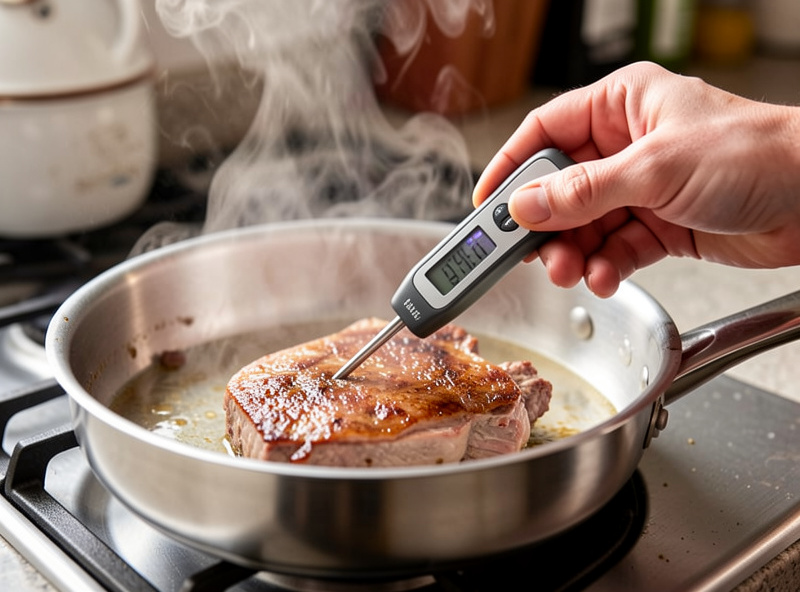
The costs are steep. Raw meat rehydrates more slowly and can come back mealy if you rush it, because the protein structure is tighter. It offers zero safety margin — you must cook it to the full USDA temperature after rehydration, with a thermometer, every time, treating it exactly like thawed raw meat from the freezer. And raw meat is less forgiving of a weak dry-check, because a damp pocket in raw meat is a damp pocket of raw meat in long storage. I keep raw loads small, lean, and meticulously dried, and I label them in big letters so nobody in the house mistakes them for ready-to-eat.
Side by Side: Raw vs Cooked
| Factor | Cooked before freeze drying | Raw freeze drying |
|---|---|---|
| Kill step | Done up front, before drying | Must be done after rehydration, every time |
| Rehydration speed | Fast — minutes in hot water | Slower — needs a simmer, not a soak |
| Texture on return | Stew-like, integrated | Can be mealy if rushed |
| Safety margin | High — reheat to serving temp | None — full cook required |
| Forgiveness of imperfect drying | Higher | Lower |
| Flexibility to cook later | Locked into cooked form | Cook any way you like |
| Best for | Meals, camping, everyday storage | Storing raw protein to cook fresh later |
Cycle Time and Drying Behavior
Cooked and raw meat dry at broadly similar rates, but cooked meat’s open structure tends to give up its water a little more readily, while dense raw cuts hold moisture tightly in the center. Either way, both benefit hugely from a hard pre-freeze and a single-layer load — meat is dense and punishes a crowded tray with a damp core.
I pre-freeze both raw and cooked meat solid in the chest freezer before a cycle, exactly as covered in pre-freezing before freeze drying, and I expect meat cycles to run on the longer end — the real numbers are in how long freeze drying takes. The dry-check is where raw and cooked diverge in importance: with raw meat I am stricter, re-running anything that does not snap cold, using the method in how to tell if freeze drying is done.
The Middle Ground: Par-Cooking
There is a third option people rarely talk about: par-cooking, where you cook the meat partway before drying. I want to be clear that this is the worst of both worlds for safety, not a clever hack — partially cooked meat has neither the full kill step of cooked nor the honest “treat it as raw” framing of raw. If it did not reach the USDA safe temperature, it is raw for food-safety purposes and must be cooked fully after rehydration.
The only par-cook I use is searing the outside of a lean cut purely for flavor while treating the whole thing as raw afterward — same thermometer, same full cook on rehydration. If you take nothing else from this section: a brown exterior is not doneness, and freeze drying does nothing to change that. Pick a lane. Cook it fully up front, or commit to cooking it fully later. The murky middle is where people talk themselves into eating under-cooked meat.
Why Cooked Comes Back Better
The texture gap between rehydrated raw and rehydrated cooked meat comes down to what heat already did to the proteins. Cooking denatures muscle protein and loosens the fiber structure, so when freeze drying pulls the water out and you put it back, the water has open pathways to travel and the meat reassembles into something tender. Raw meat’s structure is tight and intact, so rehydration is slower and the result can read as grainy or mealy if you do not give it gentle, patient heat.
This is the single biggest reason my log favors cooked. A bag of freeze-dried cooked diced chicken becomes dinner in the time it takes to boil water; a bag of raw diced chicken needs a real simmer and attention to come back right, and then still needs to hit 165°F. For the way most people actually use freeze-dried meat — fast meals, camping, grab-and-go — cooked wins on convenience before safety even enters the argument.
What I Actually Do, By Meat
My standing rule is cook-first unless I have a specific reason not to. Chicken, beef, and ground meat all go in cooked — the detail is in the chicken guide, the ground meat guide, and the beef guide. Fish goes in cooked without exception, for both safety and smell reasons covered in the fish guide.
The only raw loads I run are small batches of very lean, fresh muscle meat that I specifically want to cook fresh later — and even then I am buying myself flexibility at the cost of slower rehydration and a tighter safety routine. Nine times out of ten that trade is not worth it, which is why cooked is the default this whole site is built around. Whichever you choose, the rehydration-and-cook discipline is covered in rehydrating freeze-dried meat.
The Bottom Line
For home operators, cook your meat before you freeze dry it. You get faster rehydration, better texture, a real safety margin, and forgiveness for the small mistakes everyone makes. Raw freeze drying is a specialist move for when you genuinely need to store uncooked protein to cook fresh later — and when you do it, treat every rehydrated piece as raw meat from the freezer, cook it to the full USDA temperature with a thermometer, and dry it ruthlessly. Both paths end at a cooked plate. Cooking up front just makes the whole journey safer and easier.
Start from the freeze drying meat at home hub for the full per-meat playbook, the fat problem, and the storage realities that follow whichever choice you make.
As an Amazon Associate I earn from qualifying purchases. The one tool I would not run a meat load without is a fast instant-read thermometer — it is what makes both cook-first and cook-after safe instead of guesswork.