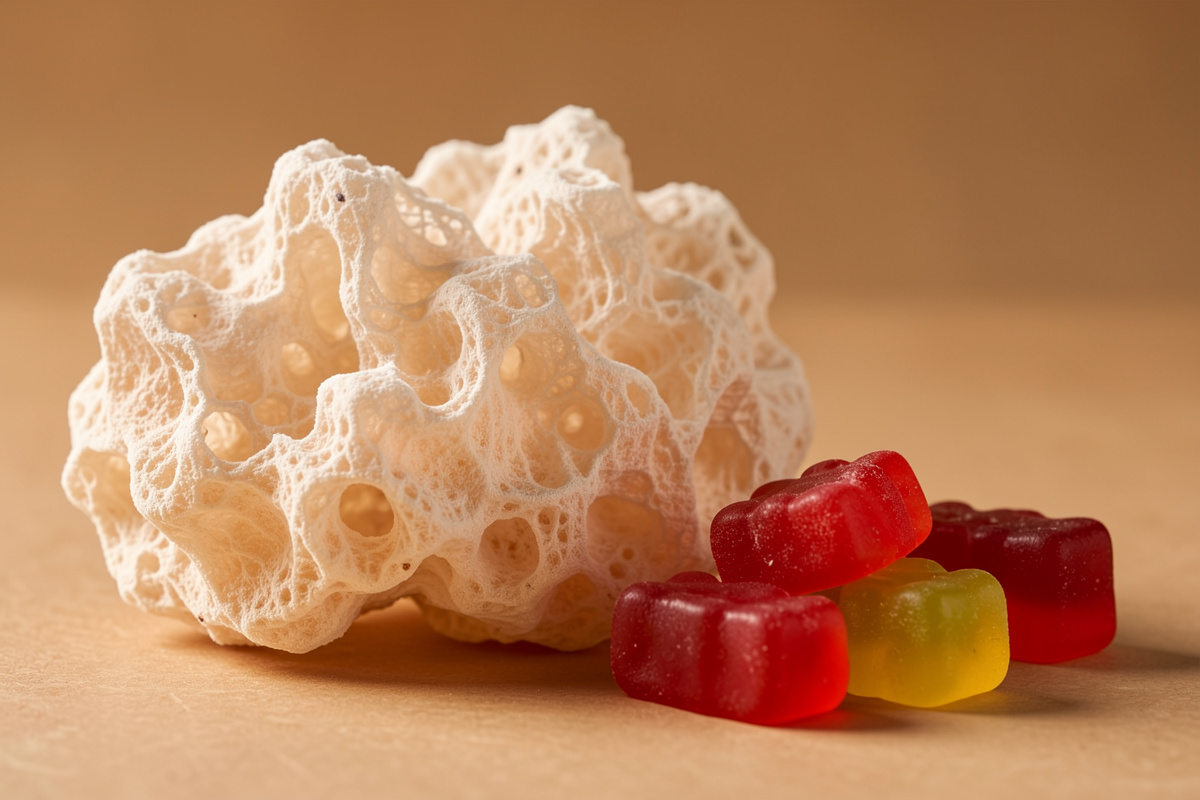

Freeze-dried gummy bears are the most dramatic transformation in the whole candy chamber: each bear swells to roughly three times its size and flips from a dense chew into a light, crisp foam that dissolves on your tongue. A tray takes 16–24 hours because the gelatin holds moisture tightly, but the payoff is the candy that makes people pull out their phones.
I have run more gummy loads than any other candy except Skittles, mostly because the before-and-after is so satisfying. The texture does not just change — it inverts. Here is how I run gummy bears from my batch log: why they puff so hard, the longer cycle they need, the dry check that matters more here than anywhere, and the packaging that keeps that crisp from collapsing.
The transformation: chew becomes crunch
Gummy bears puff harder than almost any other candy because their gelatin-and-sugar matrix traps a lot of structure, and when the moisture sublimates away it leaves a large, rigid scaffold behind. The dense, rubbery bear expands to about triple its size and turns into a pale, airy crisp that shatters and then melts. It is the single most counterintuitive result a home freeze dryer produces — people genuinely do not believe the puffed version started as a normal gummy.
The flavor concentrates along with the texture change, so a freeze-dried gummy tastes sweeter and more intensely fruity than the original. This is the same scaffold-leaving physics behind every freeze-dried result, just exaggerated because gelatin holds shape so well. If you have already run Skittles, gummy bears are the natural next step up in drama, and the freeze-dried candy guide covers the full texture science.
Loading and the longer cycle
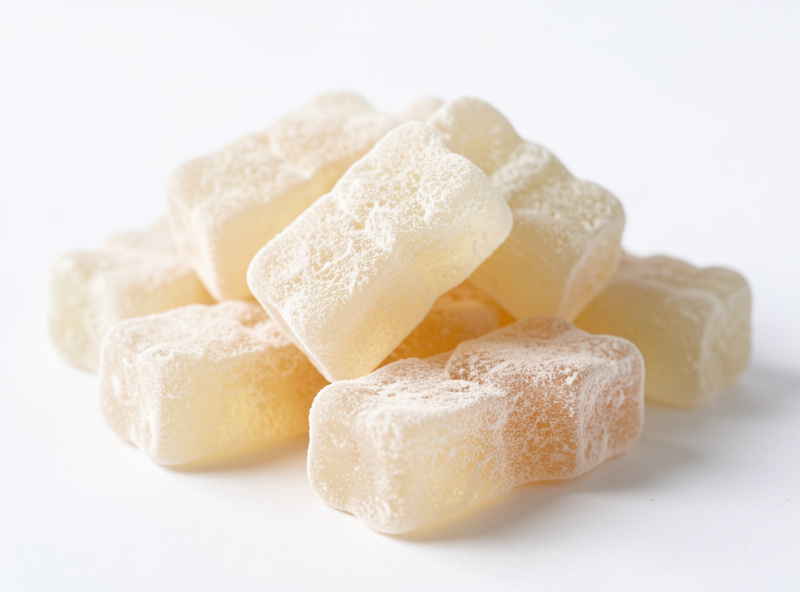
Gummy bears need no pre-freezing, but they need space and patience. Because they triple in size, I lay them out with generous gaps — far more than I leave for Skittles — or the swelling bears fuse into a single sheet that will not break cleanly. A lined tray is non-negotiable here; gummies release sticky syrup as they warm and will weld themselves to a bare tray.
The cycle runs longer than most candy, typically 16–24 hours, because gelatin clings to its moisture. This is where candy mode earns its keep: the warmer, extended dry phase coaxes out that last stubborn moisture. If your machine lacks the setting, plan on adding several hours of extra dry time and verifying by hand. Gummies are also bulky once puffed, so a Medium machine earns its tray space fast on a gummy load.
The dry check that actually matters here
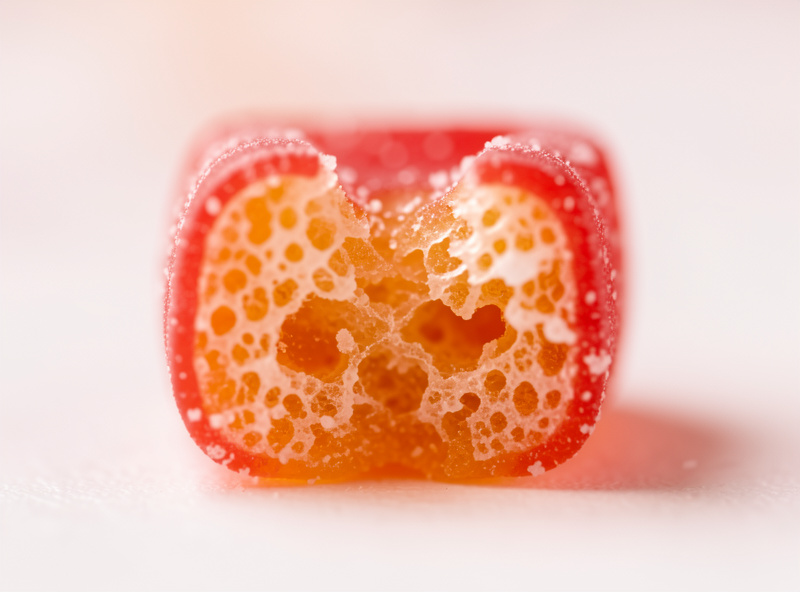
Under-drying ruins more gummy batches than any other mistake, because a gummy that looks puffed can still hide a chewy, moist core. A properly finished freeze-dried gummy is crisp all the way through and snaps with no resistance; if the center is dense, cool, or chewy, it is not done and will turn sticky in storage within a day. I break one open from the densest part of the tray and look for a uniform airy texture, not just a puffed exterior.
My rule is to trust the inside, not the outside. A gummy can balloon early in the cycle and still need hours more to dry through. I let it run, pull a test bear from the center, snap it, and check the core; any chew means more time. The full method is in how to tell if freeze drying is done — and it matters more for gummies than for any other candy.
Packaging: protect that fragile crisp
Freeze-dried gummies are more fragile and more hygroscopic than hard candy, so they need both moisture protection and gentle handling. Left open they soften back toward chew within an hour as they reabsorb humidity, and crammed into a bag they crush into dust. I seal them the moment they come off the trays, the same way I handle every candy — they do not need to “cool,” they need to stay dry.
For snacking I keep gummies in a rigid jar so they do not get crushed, with a small oxygen absorber; for storage they go into mylar bags, packed loosely. A basic mylar and oxygen absorber kit covers it. As with all candy, any shelf-life number is commonly reported rather than guaranteed; I label and rotate per my storage guide. As an Amazon Associate I earn from qualifying purchases.
Which gummies work best
Standard fruit gummy bears are the reliable choice, but most gelatin gummies freeze dry well — worms, rings, and sour varieties all puff and crisp. Sour-coated gummies keep their tartness and the sugar coating turns delightfully crunchy. The ones to approach carefully are very large or very thick gummies, which take longer to dry through and are easier to leave chewy in the center. Smaller, thinner gummies dry faster and more evenly.
Avoid anything with a chocolate or yogurt coating in a gummy load — the fat behaves like chocolate and makes a mess. Plain gelatin gummies are the clean, dependable run. If you want the next easy win after gummies, marshmallows and fruit snacks are close cousins that behave similarly in the chamber.
Eating and using freeze-dried gummies
Freeze-dried gummy bears are meant to be eaten dry and crisp — that airy crunch is the entire point, and unlike fruit or vegetables you would never rehydrate them. They make a light, intensely sweet snack that genuinely surprises first-timers, and they hold up well as a party trick or a lunchbox novelty as long as they stay sealed. Because they are so light, a single bag goes a long way.
One honest note: they are a treat, not a health food, and freeze drying does not change that. The process removes water, not sugar, so a freeze-dried gummy is exactly as sugary as the original, just lighter and crunchier. I keep that framing on every candy page because the category is full of vague wellness claims that do not hold up. Enjoy them for what they are — a fun, photogenic crisp — and store the rest dry so the crunch survives until you get to it.
Frequently Asked Questions
How long does it take to freeze dry gummy bears?
Gummy bears typically take 16 to 24 hours, longer than most candy, because gelatin holds onto its moisture tightly. Candy mode or several hours of extra dry time helps coax out the last moisture. Always confirm with a snap test of the center.
Why are my freeze-dried gummy bears still chewy inside?
They were pulled before the center dried through. Gummies can puff on the outside while staying moist and chewy in the core. Break one open from the densest part of the tray; if the center is not uniformly crisp, add several hours of dry time and re-check.
How big do gummy bears get when freeze dried?
They swell to roughly three times their original size, the most dramatic puff of any common candy, because the gelatin matrix traps so much structure. Leave generous gaps on the tray so the expanding bears do not fuse into a single sheet.
Do you pre-freeze gummy bears before freeze drying?
No. Like most candy, gummies hold little free water and load straight onto room-temperature trays. The machine’s freeze phase handles them. They do need a lined tray and plenty of spacing because they expand and release sticky syrup as they warm.
How do you store freeze-dried gummy bears?
Seal them immediately after the cycle, while keeping them from getting crushed. A rigid jar with a small oxygen absorber works for snacking; mylar bags packed loosely work for storage. They are fragile and hygroscopic, softening within an hour if left open.