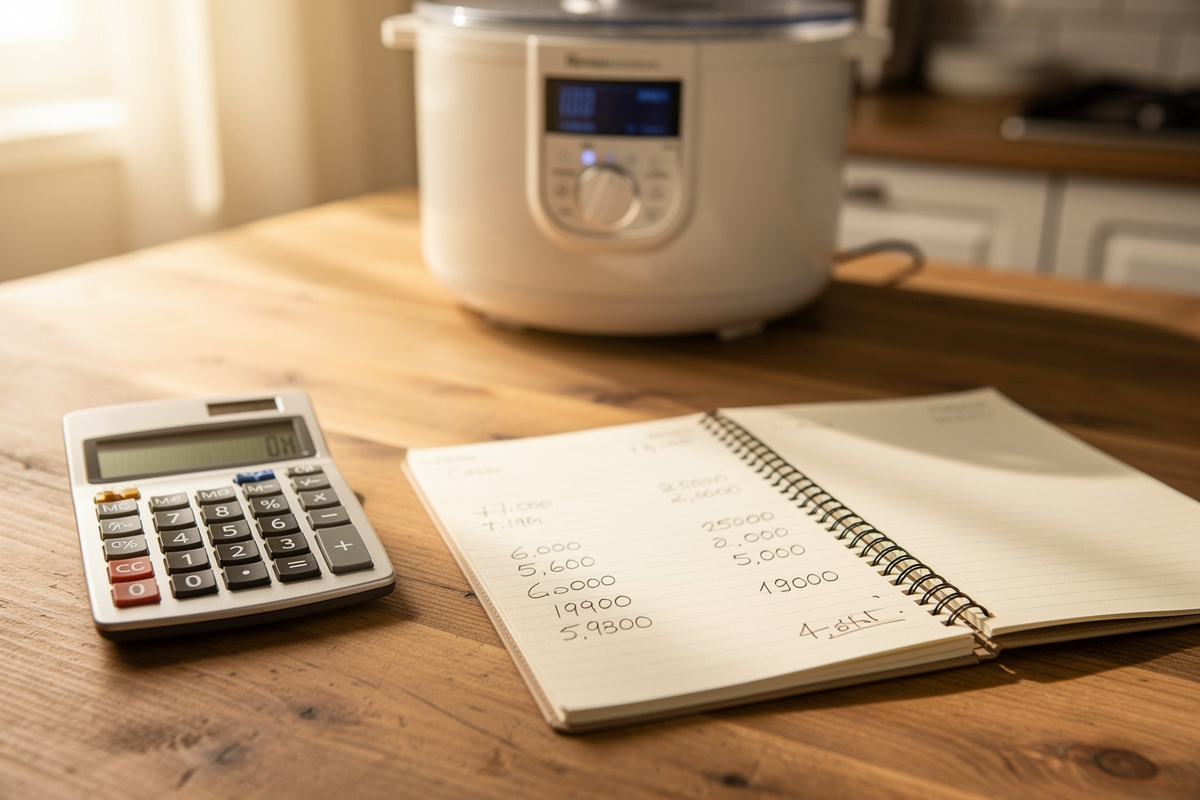

“It pays for itself” is the most over-promised line in the entire freeze drying category, and the financing math is where that fantasy meets reality. Manufacturers offer payment plans, and they can genuinely make sense — but only if you do the honest arithmetic first, and that arithmetic looks nothing like the ROI table a seller hands you. A monthly payment doesn’t change the total cost; it just spreads it out, and it adds the cost of the financing itself on top.
This is the financing decision laid out by someone who runs the machine and refuses to sell you a fantasy. I’m not going to quote you a fabricated “pays for itself in eight months” figure, because the honest answer depends entirely on your own output and your own honesty — and I’ll show you how to build your real number instead. It’s the money-side companion to the main freeze dryer buying guide.
Financing changes when you pay, not what you pay
Start with the simplest truth: a payment plan spreads the cost over time and usually adds interest or fees, so the total you pay is the same or higher than buying outright, never lower. That’s not an argument against financing — spreading a large purchase can be the right call for plenty of budgets — but it is an argument against the framing that financing somehow makes the machine cheaper. It doesn’t. Decide on financing the way you’d decide on any other large purchase: can you carry the monthly payment comfortably, and is the cost of the credit worth the convenience of not paying all at once?
The total cost people forget to add
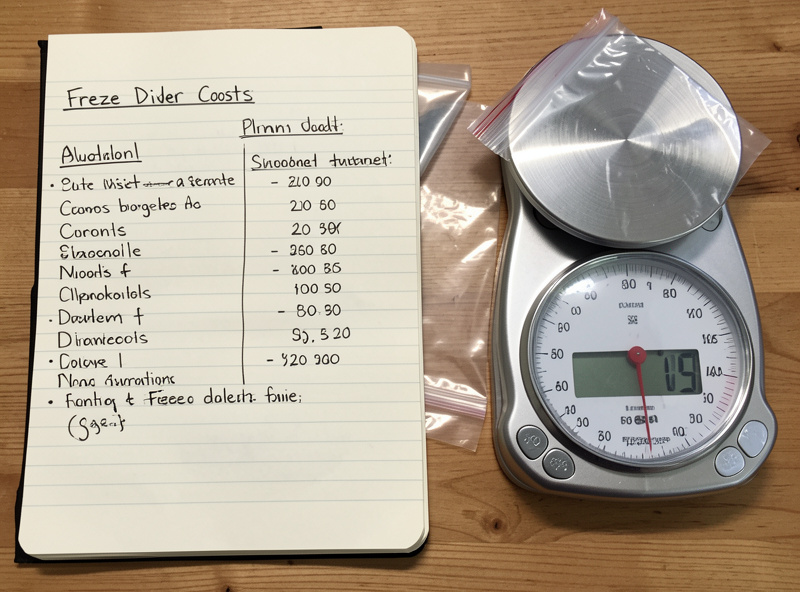
The purchase price is the number everyone fixates on, and it’s the easiest part to plan for. The cost that ambushes people is everything around it. To build an honest total, you have to add the running and consumable costs to the sticker and the financing — because those are real, recurring, and conveniently absent from the “pays for itself” pitch.
| Cost component | What it is | How to estimate it honestly |
|---|---|---|
| Purchase price | The machine itself (sold direct by the maker) | The one fixed, knowable number |
| Financing cost | Interest/fees if you use a payment plan | Add the plan’s total cost over the sticker |
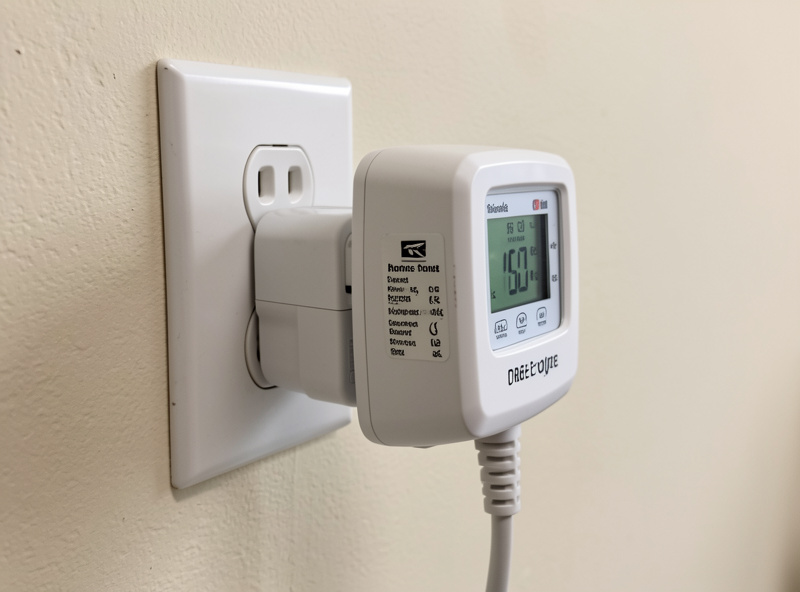
| Electricity | Power per cycle over a year | Measure your own with a plug-in meter — don’t guess |
| Pump oil (oil pump) | Ongoing consumable for the oil pump | Cost per change × your change frequency |
| Mylar + oxygen absorbers | Storage consumables, scaled to volume | The more you preserve, the more you spend here |
| Day-one accessories | Sealer, scale, pans, liners | Mostly one-time; budget with the machine |
Notice I’m not handing you a single dollar figure for any of the recurring lines. That’s deliberate and it’s the honest position: electricity depends on your machine, your loads, and your local rates; consumables depend on how much you preserve. The way to know your numbers is to measure and track them, which is exactly what I do — my running-cost answers are ranges by food type and usage, never one fabricated value. I break the ongoing side down in the running costs guide.
Disclosure: As an Amazon Associate I earn from qualifying purchases. Two tools that turn the guesswork into real numbers: a plug-in energy meter to measure your machine’s actual draw instead of trusting a brochure figure, and a sensible supply of mylar bags with oxygen absorbers so you can price your real per-batch storage cost.
The “pays for itself” trap
Here’s where buyers feel cheated six months in. The pitch says the machine pays for itself by preserving food you’d otherwise buy or waste. That can be true — but it depends entirely on what your garden, your freezer, and your honesty actually produce. If you have a gluttng garden and you genuinely process the harvest, the avoided waste and grocery savings are real and the machine can earn its keep over time. If you bought it on the fantasy and run it a handful of times a year, it never comes close, and the “ROI” was always a story.
So I’d flip the question. Don’t ask “how fast does it pay for itself” — ask “given my real output, does the honest total cost make sense for the value I get?” That value might be money saved on a real harvest, or it might be lightweight meals, candy experiments, and a preservation capability you want for its own sake. Both are legitimate reasons to buy. What’s not legitimate is buying on a ROI number the seller invented and you didn’t check.
How I’d run the math before financing
Build your real total cost: the sticker, plus the financing cost if you’re using a plan, plus an honest first-year estimate for electricity and consumables based on your expected usage. Then set that total against the value you’ll genuinely get — measured in real avoided waste and savings from your output, plus whatever you personally value about the capability. If the honest total still makes sense, finance it or buy it outright with confidence. If it only works under the fantasy ROI, that’s your signal to size differently, buy used, wait, or preserve another way. No income claims, no fantasy payback period — just your real numbers against your real value.
Used and right-sized: the cheaper paths the pitch ignores
Before you finance a new machine, it’s worth remembering the levers that change the math more than any payment plan does. Buying used can cut the purchase price substantially if you run the inspection properly — the vacuum hold test and pump check that separate a bargain from a repair bill. Buying the right size rather than oversizing keeps both the purchase and the running costs down, since a half-empty large machine burns power and time per useful gram. And matching the machine to genuine output rather than a prepper fantasy is what makes any of the value math work at all.
None of those are financing tricks; they’re honest ways to lower the total cost so the decision gets easier. I’d exhaust the right-size and used-versus-new questions before I worried about the payment plan, because they move the real number and the financing only moves the schedule. A well-chosen used machine at the right size, paid for in a way your budget can carry, beats a financed new oversized one bought on a fantasy payback — every time, on the honest math.
When financing is genuinely the right call
Financing earns its place when you’ve done the honest total-cost math, the machine clearly makes sense for your output, and spreading the payment fits your budget better than a lump sum. Plenty of sensible buyers finance large, genuinely-useful purchases — there’s no shame in it, and the convenience can be worth the cost of credit. The discipline is simply to finance a machine you’d buy anyway on the honest math, not to let the low monthly payment talk you into a machine the total cost says you shouldn’t. The payment plan is a tool, not a reason — buy because the real numbers and your real output add up, and the financing is just how you choose to pay.